

With over 450 recorded species, Oklahoma is a birder's paradise. We delve into 15 of its most characteristic birds, categorizing them into the common residents that define the landscape, the migrants that ride the seasons, and the rare visitors that make every sighting an event.
Common Residents: The Backbone of Oklahoma Birdlife
These species are the steady heartbeat of Oklahoma’s environment, seen year-round in backyards, fields, and forests across the state.
1. Northern Cardinal (Cardinalis cardinalis)
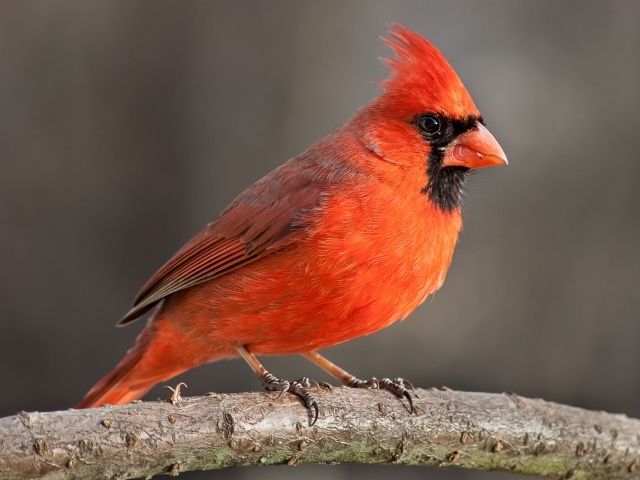
A favorite at backyard feeders, the Northern Cardinal is instantly recognizable. The male’s brilliant scarlet plumage contrasts with his black face mask, while the female is a lovely, warm red-brown with red accents. Their clear, whistled song is one of the first sounds of spring, making them an unmistakable presence throughout Oklahoma’s urban and wooded areas.
2. Blue Jay (Cyanocitta cristata)
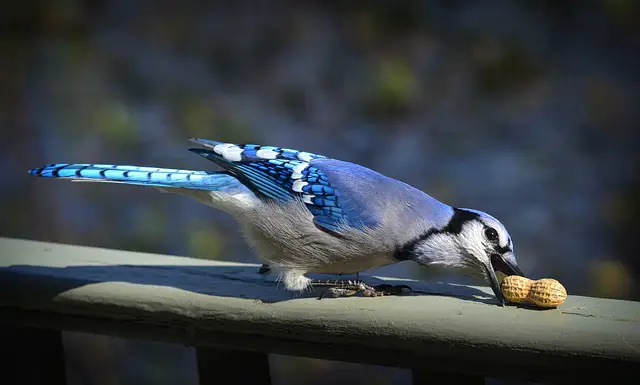
Bold, intelligent, and loud, the Blue Jay is hard to miss. Its striking blue, black, and white plumage, combined with its distinctive crest and harsh “jay-jay!” call, mark it as a prominent resident of deciduous and mixed forests. Known for its habit of caching acorns, it plays an important role in forest regeneration.
3. Carolina Chickadee (Poecile carolinensis)
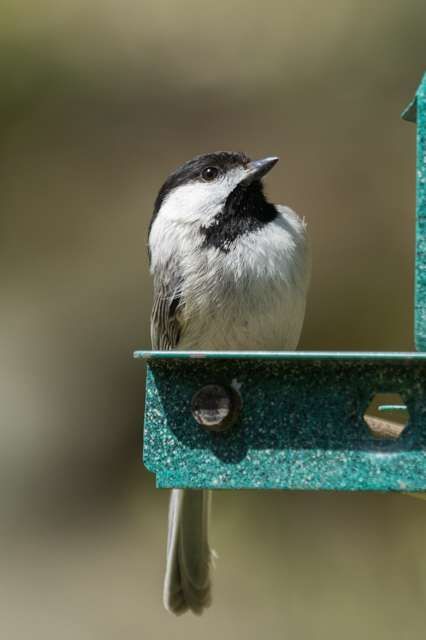
Small, hyperactive, and perpetually curious, the Carolina Chickadee is a familiar sight in Oklahoma’s woodlands. Its small size, black cap, black bib, and white cheeks are classic features. Its familiar “chick-a-dee-dee-dee” call is a constant companion during the winter months, and it readily visits feeders.
4. Eastern Meadowlark (Sturnella magna)
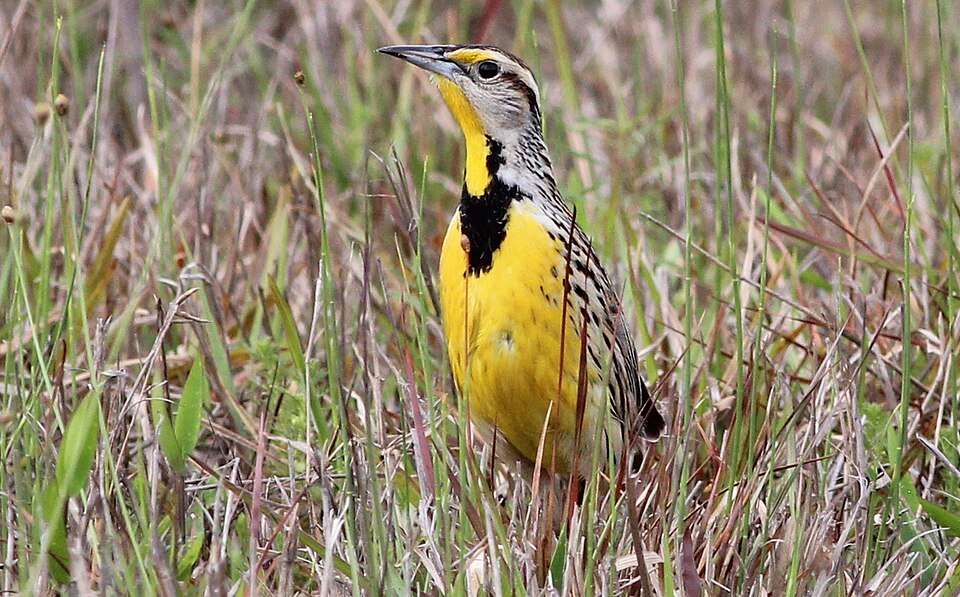
A bird of the open grasslands and prairies, the Eastern Meadowlark is celebrated for its beautiful, flute-like song. A stocky bird with a bright yellow breast crossed by a distinctive black V, it is one of the defining songbirds of the Tallgrass Prairie ecosystem.
5. Red-tailed Hawk (Buteo jamaicensis)

The most widespread raptor in North America, the Red-tailed Hawk is a frequent sight soaring high above Oklahoma’s highways and fields, or perched atop telephone poles. Its broad, rounded wings and distinctive rusty-red tail (in adults) are key identifiers, making it the apex predator of the skies.
Migratory Wonders: Riding the Central Flyway
Oklahoma lies squarely on the Central Flyway, making it a critical stopover and breeding ground for millions of birds traveling between North and South America.
6. Scissor-tailed Flycatcher (Tyrannus forficatus)
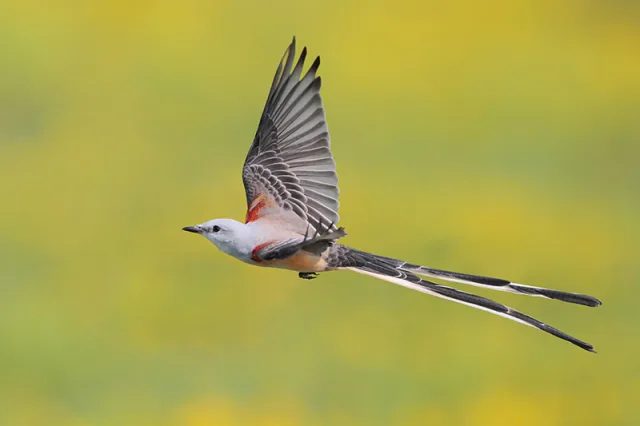
The official state bird of Oklahoma, the Scissor-tailed Flycatcher is the darling of the plains. A neotropical migrant, it arrives in spring to breed, bringing with it an unmistakable elegance. The male's incredibly long, deeply-forked black and white tail, which he uses with spectacular precision during aerial courtship displays, makes it one of the most beloved and identifiable birds of the state. It is common in open grasslands and along tree-lined roads.
7. Ruby-throated Hummingbird (Archilochus colubris)

Tiny, iridescent, and energetic, the Ruby-throated Hummingbird is the only hummingbird species that regularly breeds in eastern Oklahoma. Males sport a dazzling red gorget (throat patch). They arrive in spring, often to the delight of backyard gardeners who put out nectar feeders, before making their incredible, non-stop migratory journey across the Gulf of Mexico in the fall.
8. Painted Bunting (Passerina ciris)
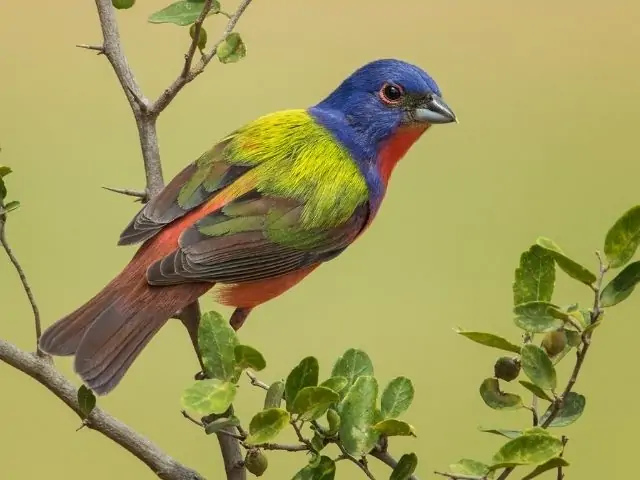
Often called the "nonpareil," or "unrivaled," the Painted Bunting is a spring/summer spectacle in Oklahoma’s shrubby habitats and dense thickets. The male is arguably the most colorful bird in North America, sporting a blue head, red underparts, and a green back—a riot of color that makes it a highly sought-after sighting.
9. Mississippi Kite (Ictinia mississippiensis)
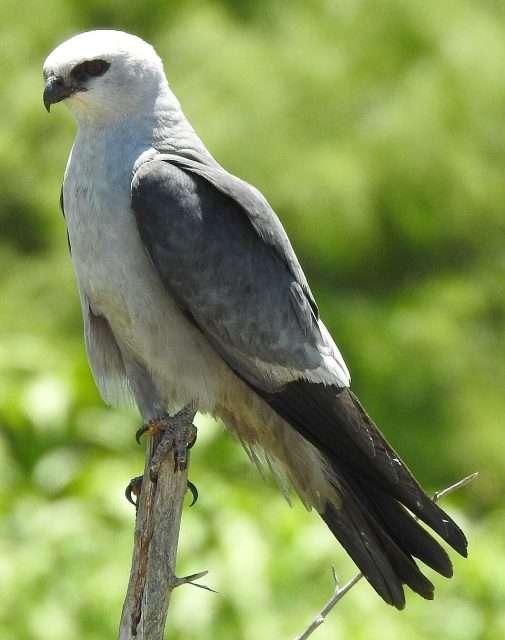
A graceful, slender raptor, the Mississippi Kite is an elegant summer visitor. They are easily spotted soaring high over cities and forests, often circling effortlessly on thermals while hunting large insects in flight. Their pale gray body, darker wings, and white head are distinguishing features.
10. Sandhill Crane (Antigone canadensis)

Every autumn and winter, huge flocks of Sandhill Cranes descend upon Oklahoma's wetlands and agricultural fields, particularly in the western and central parts of the state. These very large, gray birds with a distinctive red forehead are known for their spectacular, noisy communal roosts and their ancient, rattling calls as they fly overhead.
Rare and Irregular Visitors: The Thrill of the Unexpected
These species offer a glimpse of avian life from distant regions, appearing in Oklahoma either due to weather-related factors, navigational errors, or range expansion, creating excitement among local birding communities.
11. Whooping Crane (Grus americana)
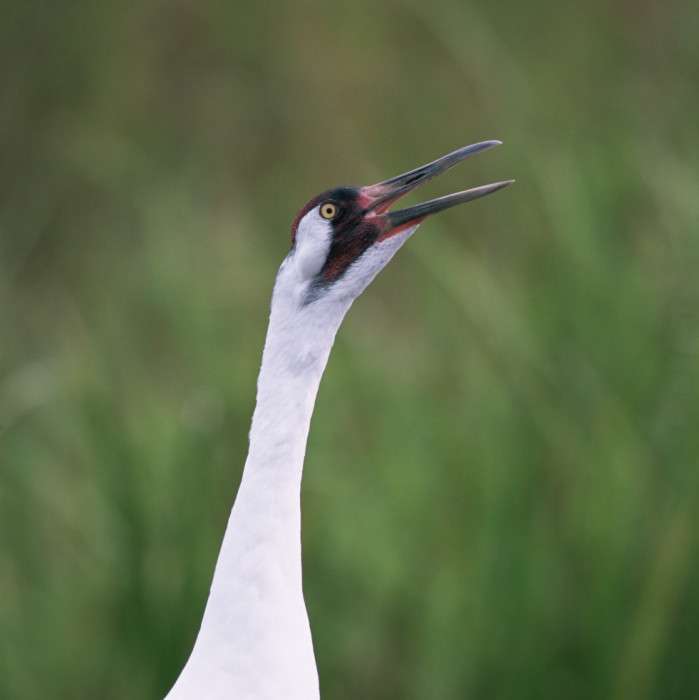
One of North America's rarest birds, the critically endangered Whooping Crane occasionally passes through Oklahoma during its migration. Far larger and whiter than the Sandhill Crane, these majestic birds are closely monitored. Any confirmed sighting is a significant event, often occurring along major rivers or at national wildlife refuges like Salt Plains.
12. Burrowing Owl (Athene cunicularia)

While a resident in the extreme western Panhandle, the Burrowing Owl is rare and locally endangered in the rest of Oklahoma. Unlike most owls, it is active during the day and nests underground, typically in old prairie dog burrows. Its presence is a crucial indicator of healthy, undisturbed prairie ecosystems.
13. Limpkin (Aramus guarauna)

Historically a southeastern U.S. resident, the Limpkin has recently been expanding its range north and west. This marsh bird, known for its distinctive, loud, wailing cry and its specialized diet of apple snails, has become an increasingly rare but recorded visitor in Oklahoma, delighting birders with its unusual appearance and call.
14. White-winged Dove (Zenaida asiatica)

While becoming more common due to a range expansion from the Southwest, the White-winged Dove is still considered an irregular or rare visitor in much of Oklahoma, particularly in the eastern regions. It is identified by the striking white patch on the edge of its wing, which is visible both in flight and when perched.
15. Varied Thrush (Ixoreus naevius)
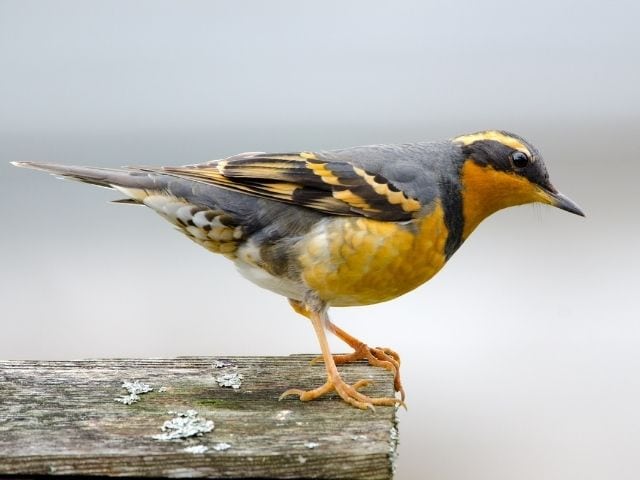
A stunning thrush primarily native to the Pacific Northwest, the Varied Thrush is an extremely rare but recurring winter visitor to Oklahoma. Birders treasure its appearance, which is characterized by a bold black breast band on an orange-breasted body, creating a wonderful contrast against a snowy or bare winter landscape.
A Crossroads of Birdlife
The 15 birds detailed here—from the ubiquitous Northern Cardinal to the ephemeral Whooping Crane—only scratch the surface of Oklahoma's avian diversity. The state's location at the heart of the continent, bridging eastern woodlands and western grasslands, ensures a dynamic and ever-changing environment. This ecological complexity makes every season a new chapter in Oklahoma birding, promising both reliable sightings of common friends and the occasional, heart-stopping encounter with a rare feathered guest.
