

New York State, situated along the Atlantic Flyway, is an ecological crossroads that hosts an exceptional diversity of avian life. From the dense urban parks of New York City to the vast wilderness of the Adirondacks and the coastal habitats of Long Island, the state’s varied landscapes support over 480 recorded bird species. This rich avifauna includes common backyard residents, spectacular long-distance migrants, and occasional, thrilling rarities.
Common Year-Round Residents
These birds have successfully adapted to New York's four seasons, forming the familiar soundtrack of the state’s parks, forests, and suburban yards.
1. Black-capped Chickadee (Poecile atricapillus)
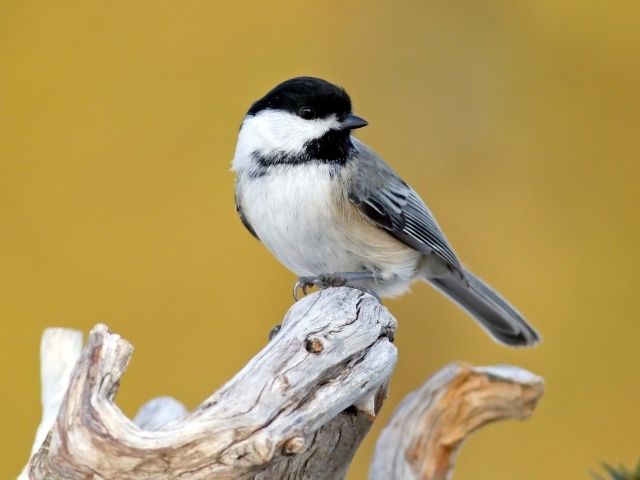
Small, plump, and endlessly energetic, the Black-capped Chickadee is one of the Northeast’s most recognizable and beloved year-round residents. Distinguished by its black cap and bib contrasting with white cheeks, this tiny songbird is remarkably hardy, surviving harsh winters by caching seeds and insects. Its namesake "chick-a-dee-dee-dee" call and its cheerful, whistled "fee-bee" song are a constant presence.
2. Blue Jay (Cyanocitta cristata)

Unmistakable with its striking blue, black, and white plumage, the Blue Jay is a noisy, intelligent, and adaptable bird. They are year-round residents throughout the state, often found in forests and suburban areas, where they aggressively defend their nests. Known for their varied vocalizations, they can mimic the calls of raptors, particularly the Red-shouldered Hawk.
3. Northern Cardinal (Cardinalis cardinalis)

A splash of crimson against a snowy backdrop, the male Northern Cardinal is a brilliant sight. Females are a subtle reddish-brown with red accents. They are common, non-migratory visitors to backyard feeders across New York, easily identified by their prominent crest and thick, cone-shaped bill. Their loud, repeated whistles are one of the first songs heard in spring.
4. Downy Woodpecker (Dryobates pubescens)
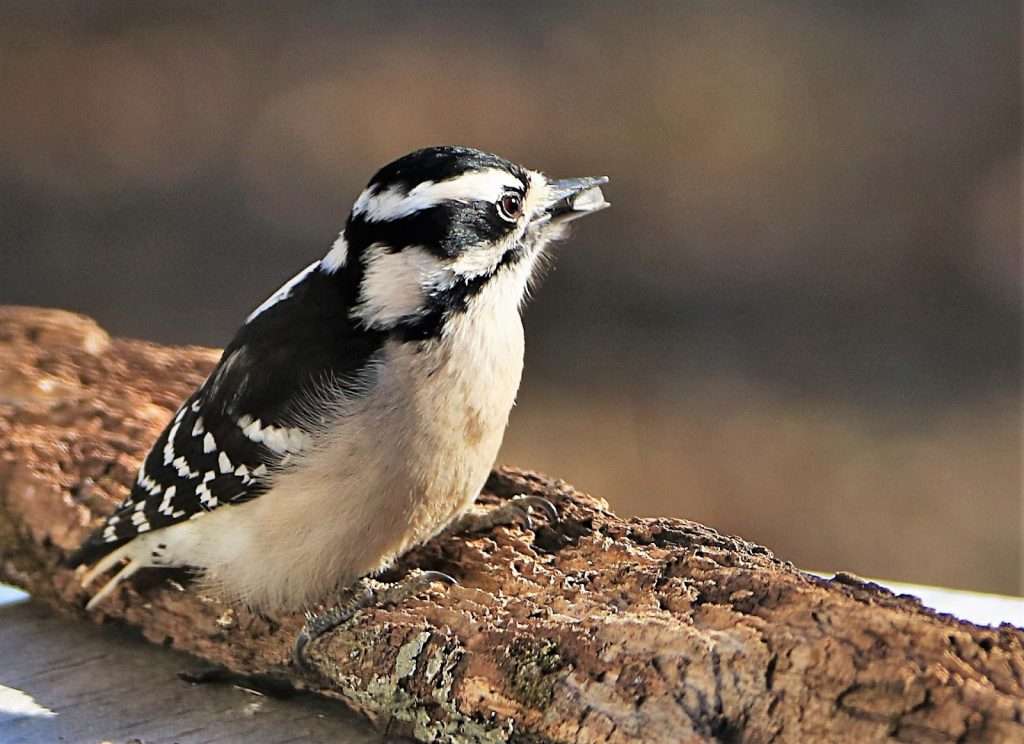
The smallest and perhaps most widespread woodpecker in New York, the Downy Woodpecker is a frequent visitor to suet feeders and small tree branches. They are black and white, with a ladder-like pattern on their back, and males sport a small red patch on the back of the head. Their diminutive size allows them to forage on thinner branches than their larger relatives.
5. White-breasted Nuthatch (Sitta carolinensis)

Often seen spiraling down tree trunks headfirst, the White-breasted Nuthatch is a peculiar and endearing resident. They possess a blue-gray back, a prominent black cap, and a pure white breast. Their nasal, oft-repeated “yank-yank-yank” call is a signature sound of New York's deciduous and mixed forests.
Seasonal Migratory Visitors
New York’s location on the Atlantic Flyway makes it a crucial breeding ground, stopover point, and wintering destination for millions of migrating birds.
6. American Robin (Turdus migratorius)
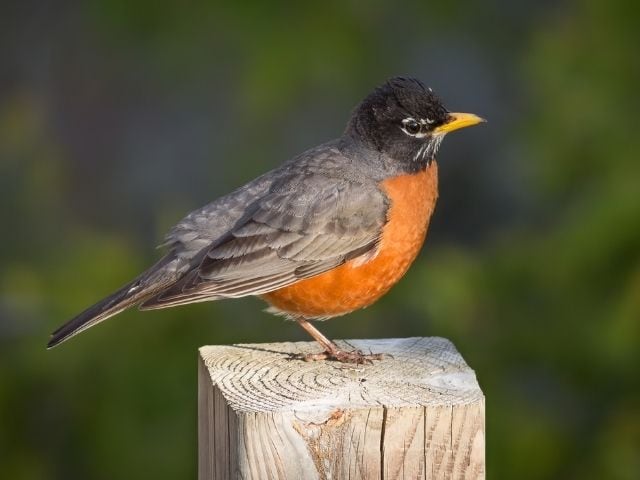
Although some individuals may overwinter, the return of the American Robin in large numbers is one of the most reliable harbingers of spring. This familiar thrush, with its gray back and rusty-orange breast, breeds across the state and forages actively on lawns for worms and insects.
7. Baltimore Oriole (Icterus galbula)

An electric sight in the canopy, the male Baltimore Oriole flashes brilliant orange and black plumage. These long-distance migrants arrive in late spring to breed, often building distinctive, elaborate pendulous sack-nests high in mature deciduous trees. They feed heavily on insects, nectar, and fruit.
8. Common Yellowthroat (Geothlypis trichas)

A secretive but widespread warbler, the Common Yellowthroat is a common summer resident. The male is easily identified by its striking black mask that contrasts with its bright yellow throat and olive-green back. They prefer dense, low vegetation in wetlands and thickets, where their energetic “wichity-wichity-wichity” song reveals their presence.
9. Red-winged Blackbird (Agelaius phoeniceus)

A common breeding bird in New York’s marshes and wetlands, the Red-winged Blackbird is highly conspicuous. The glossy black male displays brilliant red and yellow epaulets (shoulder patches) during his famous “conk-la-ree” song display. These birds form massive flocks during migration and winter, often numbering in the thousands.
10. Wood Thrush (Hylocichla mustelina)

A beloved forest songster, the Wood Thrush is recognized by its rusty-brown head, brown upperparts, and heavily spotted white breast. While it often forages quietly on the forest floor, its ethereal, flute-like song, composed of distinct, paired phrases, is considered one of the most beautiful in North America, ringing through New York’s mature woodlands in summer.
11. Osprey (Pandion haliaetus)
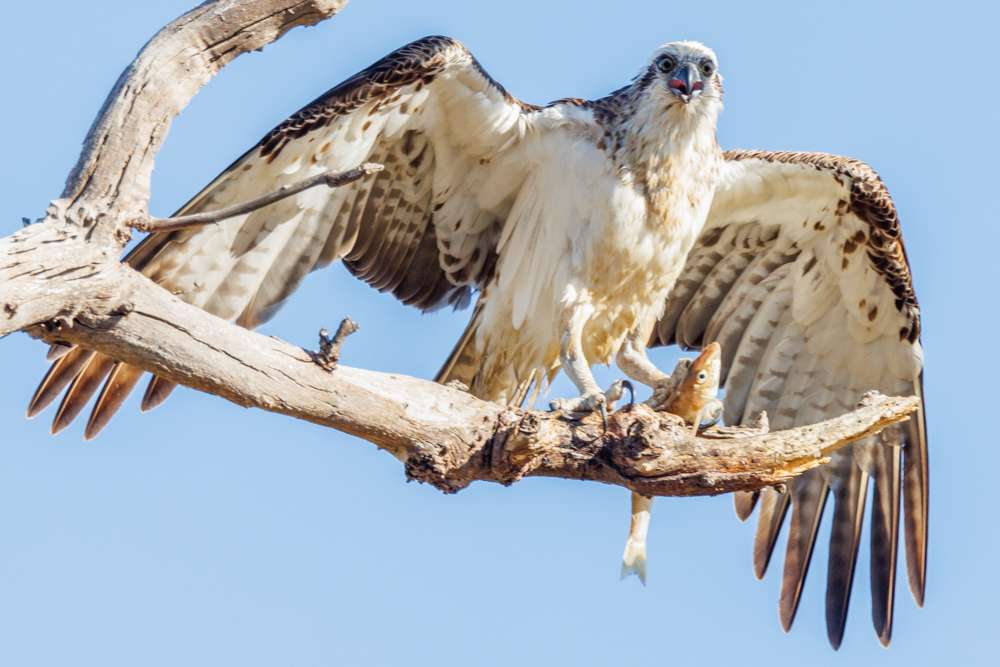
This magnificent fish-eating raptor is a striking sight along New York’s coastlines, rivers, and large lakes, particularly Long Island and the Great Lakes. The Osprey has a white head with a dark eye stripe, a dark brown back, and long, angled wings that form a characteristic "M" shape in flight. They return to the state in spring to nest on high platforms or snags, often constructing huge stick nests.
Rare and Accidental Sightings
New York’s position on the flyway means that strong winds, storms, or navigational errors can bring in accidental species far outside their normal range, turning a routine birding day into an exceptional one. Some of these species are also rare State-Endangered breeding birds due to habitat loss.
12. Piping Plover (Charadrius melodus)

Though technically a migratory breeder, the Piping Plover is listed as State and Federally Threatened due to its rarity and precarious existence. These small, pale shorebirds breed exclusively on the sparsely vegetated beaches and barrier islands of Long Island. Their well-camouflaged nests are vulnerable to human disturbance and predators, making every New York sighting precious.
13. American Goshawk (Accipiter gentilis)

A fierce, large raptor of deep, mature forests, the American Goshawk is a rare and secretive permanent resident in the Adirondacks and Catskills, often listed as a Species of Special Concern. Spotting this powerful hunter, known for its slate-gray plumage, prominent white eyebrow, and broad wings, is a rare treat for even seasoned birders.
14. Kirtland's Warbler (Setophaga kirtlandii)
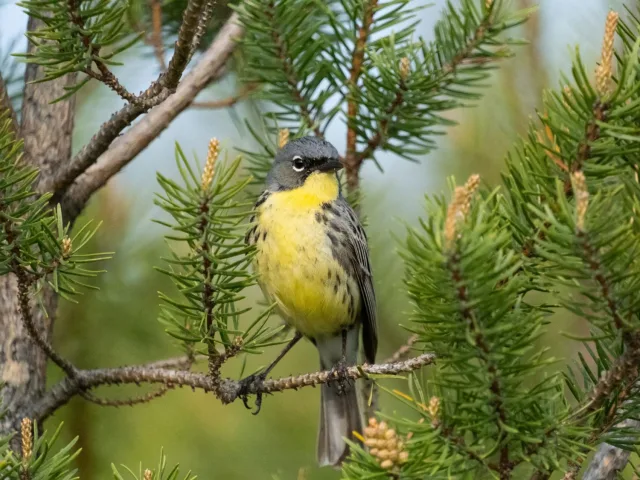
One of North America's rarest songbirds, the Kirtland's Warbler breeds almost exclusively in a small region of Michigan. Its appearance in New York, while extremely uncommon, happens during migration as an accidental vagrant. When a solitary, yellow-breasted male is spotted, it causes an immediate stir in the birding community, underscoring the thrill of the Atlantic Flyway's unpredictability.
15. Wood Stork (Mycteria americana)
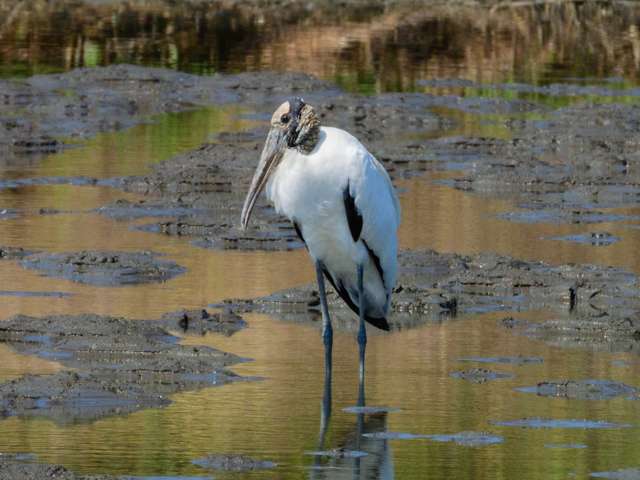
A giant wading bird primarily found in the southeastern U.S. and tropics, the Wood Stork is a stunning example of an accidental vagrant in New York. A sighting of this massive white bird, with its bare, dark head and thick, down-curved bill, is often a consequence of severe weather systems pushing the bird hundreds of miles north of its expected range. Such rare finds illustrate the dynamic nature of avian migration and the state's potential to host a true spectacle of nature.
New York as a Birding Destination
From the ubiquitous "yank-yank" of the Nuthatch to the rare appearance of a Wood Stork, New York offers a rich and diverse experience for bird enthusiasts. The state's geographical diversity—from the Great Lakes to the Atlantic Coast and the Appalachian uplands—ensures a constant turnover of species. Conservation efforts are vital, especially for threatened birds like the Piping Plover and other grassland species, to ensure that the complex tapestry of New York’s birdlife continues to thrive for generations to come.
