
Nevada, a state largely defined by its high desert and rugged mountain ranges, may not immediately spring to mind as a birding hotspot. However, its diverse habitats—from the vast sagebrush steppe and pinyon-juniper woodlands to high-elevation forests and crucial riparian corridors—support a surprisingly rich avian population. These varied landscapes serve as year-round residences, vital migratory stopovers along the Pacific Flyway, and the occasional landing spot for truly rare vagrants. A closer look reveals an enchanting mix of common residents, transient travelers, and extraordinary rarities that call the Silver State home.
Common Residents of the Sagebrush and Suburbia
Many species have adapted to thrive in Nevada's often arid and challenging environments. They form the backbone of the state’s birdlife, encountered regularly in both natural areas and developed regions.
Mountain Bluebird

The Mountain Bluebird (Sialia currucoides), Nevada's official state bird, is a dazzling sight. The male’s brilliant sky-blue plumage is unmistakable against the backdrop of open grasslands and sagebrush, particularly at higher elevations. A cavity-nester, it's a beloved symbol of the state's wild beauty.
House Finch
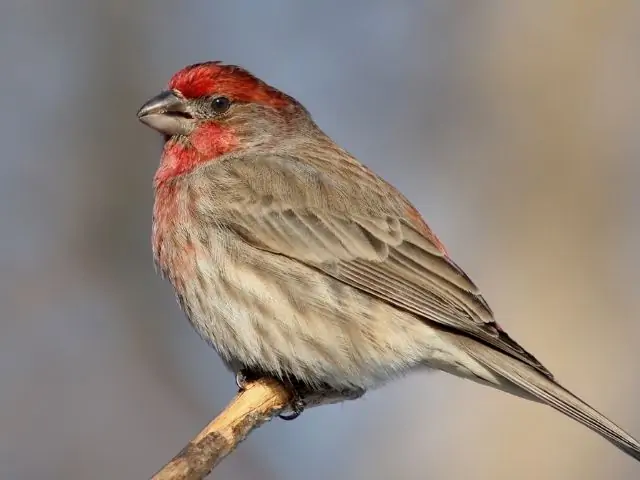
In the urban and suburban areas, a few species dominate the backyard scene. The House Finch (Haemorhous mexicanus) is a familiar sight, with males exhibiting varying shades of red on the head, breast, and rump. They are vocal and frequent visitors to feeders.
Mourning Dove

Alongside them, the Mourning Dove (Zenaida macroura) is ubiquitous, recognized by its slender form and the soft, mournful cooing that is a characteristic sound of the desert morning.
Pinyon Jay

In the pinyon-juniper woodlands, the striking Pinyon Jay (Gymnorhinus cyanocephalus) can be found, though its presence is often nomadic, following the abundance of pine nuts—its primary food source. These social birds move in large, noisy flocks, crucial for dispersing the seeds of the Pinyon Pine.
Verdin

Another common resident, especially in the Mojave Desert, is the small, pale-yellow Verdin (Auriparus flaviceps). Despite their diminutive size, they construct large, messy, globe-shaped nests in thorny shrubs.
Mountain Chickadee

In the higher elevation coniferous forests and mountain woodlands, you'll find the Mountain Chickadee (Poecile gambeli). Easily recognized by its black cap, white eyebrow stripe, and persistent "chick-a-dee-dee-dee" call, this small, energetic songbird is a common year-round resident, perfectly adapted to Nevada’s snowy winters and cool summers.
Pacific Flyway Travelers: Nevada's Migratory Birds
Nevada lies squarely on the Pacific Flyway, one of the major North American migration routes. Wetlands, in particular, such as those in the Lahontan Valley, become critical stopovers, offering life-saving resources for birds making monumental journeys.
Wilson's Phalarope

Wilson's Phalarope (Phalaropus tricolor) is a prime example of a shorebird utilizing Nevada’s wetlands. Unique among shorebirds, the female is the more brightly colored and initiates courtship, leaving the duller male to incubate the eggs. These birds can be seen spinning in the water to stir up invertebrates before continuing their southbound journey to South America.
White-crowned Sparrow
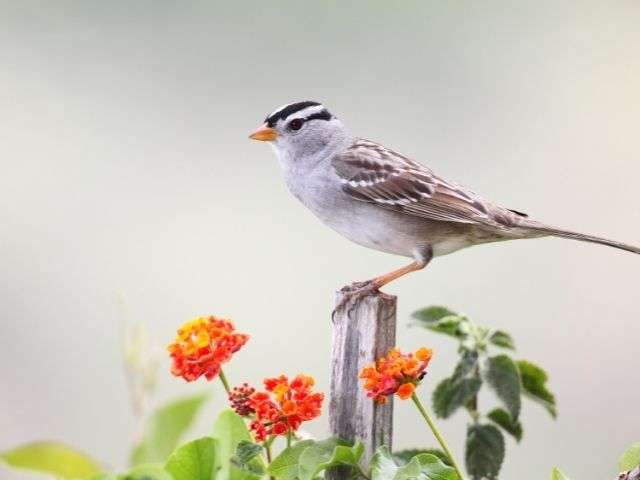
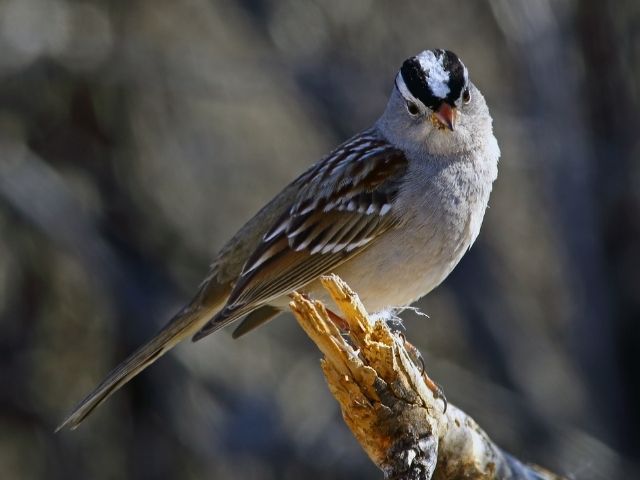
Another important migrant is the White-crowned Sparrow (Zonotrichia leucophrys). Distinguishable by its crisp black and white head stripes, this sparrow is a common winter visitor and transient, often hopping along the ground in search of seeds and insects before heading north to breed.
Swainson's Hawk

Raptors also use the Silver State as a migratory corridor. The Swainson's Hawk (Buteo swainsoni), a bird of prey with long, pointed wings, breeds in North America and undertakes one of the longest raptor migrations, flying all the way to wintering grounds in South America. They are often seen soaring high over open country in search of rodents and large insects.
Ruby-crowned Kinglet

In the riparian areas and mountain forests, the tiny Ruby-crowned Kinglet (Corthylio calendula) passes through. Though difficult to spot high in the canopy, its surprisingly loud, complex song is often the first clue to its presence.
Yellow-rumped Warbler

For insectivorous songbirds like the Yellow-rumped Warbler (Setophaga coronata), Nevada provides essential refueling spots. These energetic birds are noted for the flash of yellow on their rump, often visible as they flutter among branches.
The Unexpected Guests: Rare and Accidental Sightings
Nevada's location, combined with the occasional severe weather event, leads to incredible "vagrants"—birds blown off course or extending their range into the state. Birding records are constantly being updated with these rare sightings, which generate excitement among the state’s birding community.
Yellow-billed Loon
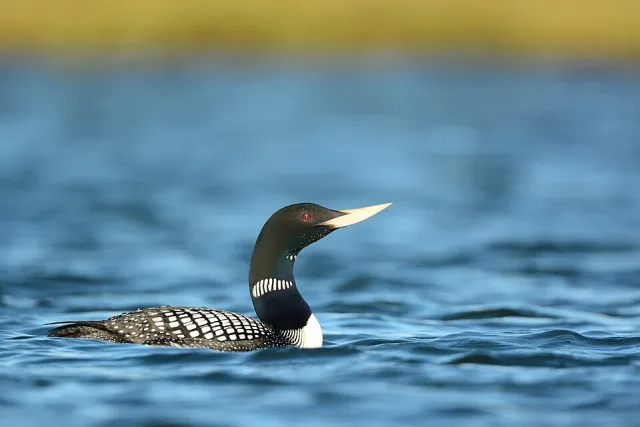
One such highly unusual visitor was the Yellow-billed Loon (Gavia adamsii). In an astonishing 2024 event, one of these Arctic-breeding seabirds, extremely rare for the interior U.S., was famously found at the Bellagio Hotel fountains on the Las Vegas Strip, far from its typical saltwater habitat. Although relocated, the event underscored the potential for rare sightings in the state.
Black Rail
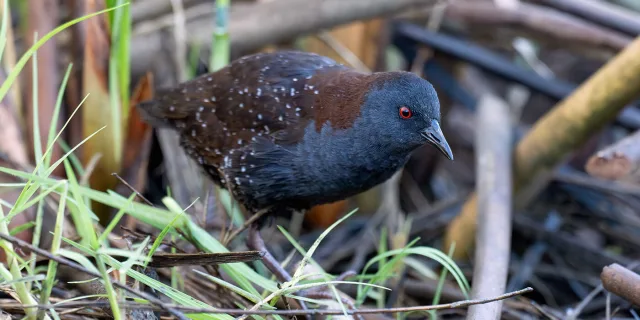
Further illustrating the state's potential for unexpected visitors, the Black Rail (Laterallus jamaicensis) is classified as rare and difficult to detect due to its secretive nature within dense marsh vegetation. Its tiny size and elusive calls make sightings extremely infrequent, adding to the mystique of Nevada’s wetlands.
Painted Bunting
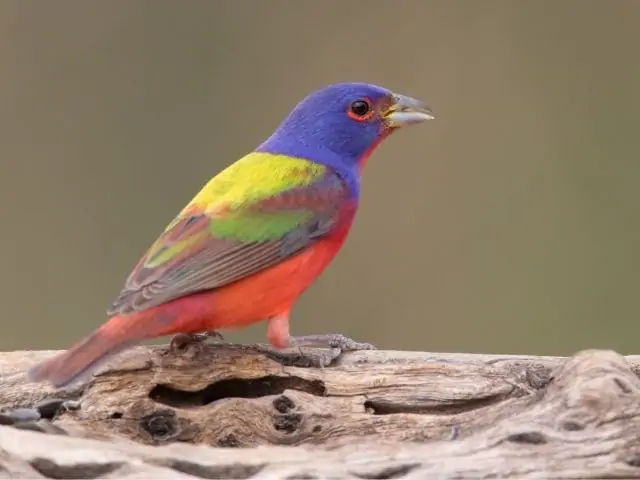
A truly striking—and much smaller—vagrant that has made multiple appearances in Nevada is the Painted Bunting (Passerina ciris). The male of this species is often called the "nonpareil" (without equal) due to its brilliant plumage, featuring a blue head, green back, and red underparts. This bird has two distinct breeding populations: one in the southeastern U.S. and one in the south-central plains, with wintering grounds in Florida, the Caribbean, and Mexico. Any sighting in Nevada, such as historical records in Clark County, is considered far outside of both populations' normal migration routes and is a testament to the unpredictable nature of avian travel.
Common Crane

Finally, the Common Crane (Grus grus), a large crane species primarily found in Europe and Asia, has been documented in Nevada. Such a massive vagrant, traveling far outside its usual range, represents a significant and extraordinary record for the state, captivating ornithologists and dedicated birders alike.
Conservation and the Future of Nevada's Birds
From the common Greater Sage-Grouse (Centrocercus urophasianus), a sensitive species whose lekking displays draw birders, to the rarest vagrants, Nevada’s birds face a range of conservation challenges, including habitat loss due to development, fire, and climate change. Protecting the state’s crucial desert wetlands and riparian corridors remains vital for the survival of both resident and migratory populations. Nevada’s rich birdlife—an intricate weave of the resident, the itinerant, and the utterly unexpected—offers an unending source of fascination and a constant reminder of the state’s ecological importance.

