
Kansas, the geographical heart of the contiguous United States, is a land of sweeping prairies, riverine woodlands, and crucial wetlands. This unique position places it squarely in the center of the continent’s most vital avian travel corridor, the Central Flyway, making it a spectacular crossroads for birds. From the backyard feeder to the remote grasslands, the state’s diverse habitats support an astonishing variety of birdlife, encompassing everything from familiar year-round residents to magnificent, globe-trotting migrants and species so rare that their sighting is a lifelong goal for many a devoted birder.
This look into the Sunflower State’s skies explores 15 remarkable species, showcasing the rich avian tapestry woven across the Kansas landscape, categorized by their relationship with the state: common residents, essential migrants, and elusive rarities.
Common Year-Round Residents: The Steadfast Kansans
The year-round residents of Kansas are the familiar faces of the state’s bird community, adapting to the hot summers and cold, snowy winters. These six species define the everyday soundtrack and sightlines of Kansas’s suburban and rural areas.
1. Northern Cardinal (Cardinalis cardinalis)
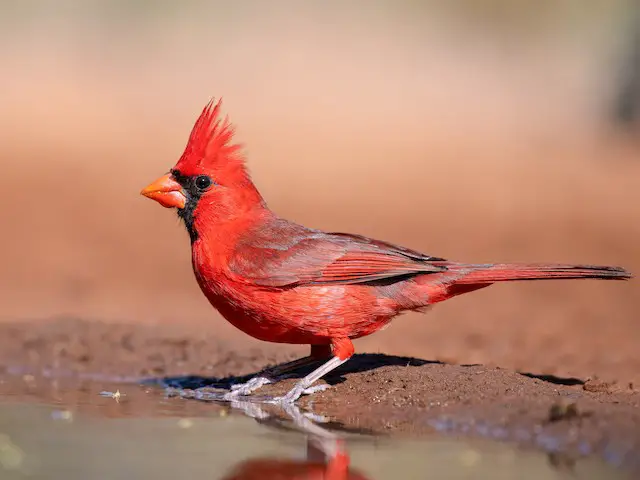
A splash of brilliant red against a snowy backdrop, the male Northern Cardinal is arguably the most recognizable bird in Eastern Kansas. Its strong, conical bill is perfect for cracking seeds, and its cheerful, whistled songs, which it sings year-round, make it a beloved backyard visitor and a symbol of persistence through the seasons.
2. Blue Jay (Cyanocitta cristata)
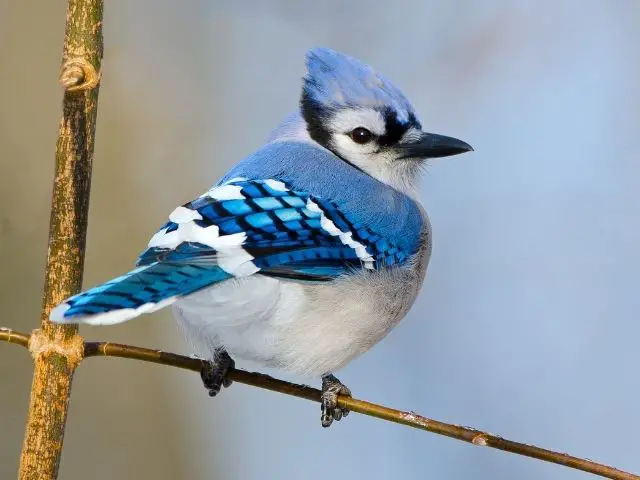
The Blue Jay is a bold, boisterous corvid known for its striking blue, black, and white plumage and its complex, aggressive calls. Highly intelligent and adaptable, Blue Jays are crucial in forest regeneration, often caching acorns and other nuts, which they forget, allowing the seeds to sprout. They are a common sight in woodlands and suburban parks across the state.
3. Black-capped Chickadee (Poecile atricapillus)
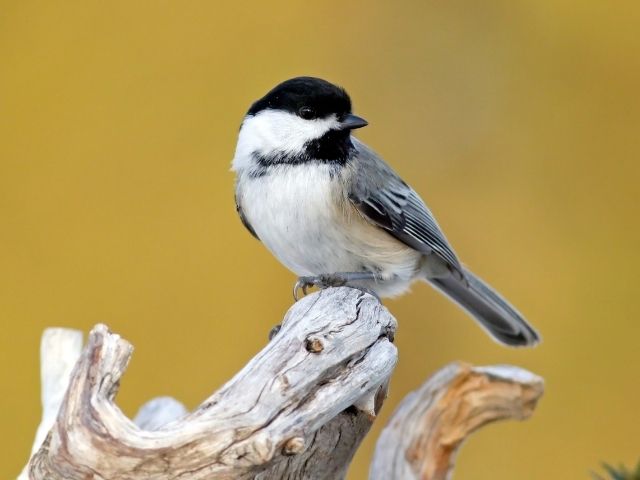
Small in size but immense in character, the Black-capped Chickadee is one of the cheeriest birds in Kansas. Identified by its namesake black cap and bib, white cheeks, and general curiosity, its distinctive chick-a-dee-dee-dee call is a staple of winter woods. They are acrobatic foragers, often seen hanging upside-down to peck at insects and seeds.
4. Mourning Dove (Zenaida macroura)
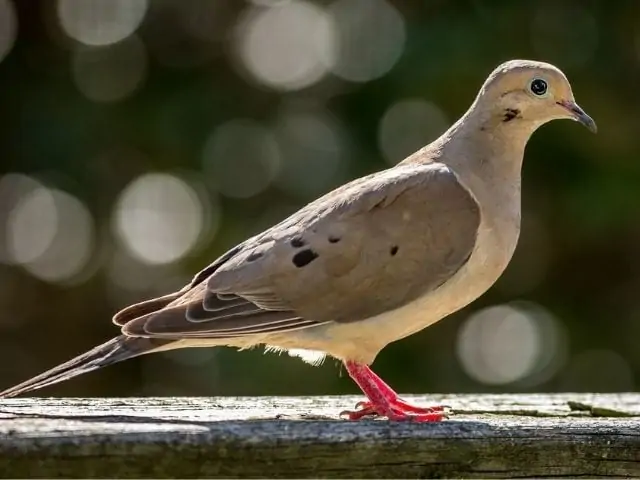
With its soft, mournful cooing, the Mourning Dove is a gentle, slender bird common in nearly every habitat. It is the most widespread and abundant game bird in North America and a constant presence in Kansas fields, yards, and telephone wires, where its elegant tail and subtle, buff-colored plumage are easily noted.
5. Red-bellied Woodpecker (Melanerpes carolinus)

Contrary to its name, the red belly is often difficult to see, but its striking barred black-and-white back and bright red nape (and cap on the male) make it easy to identify. This woodpecker is a noisy, conspicuous resident of Kansas woodlands, often heard drumming on dead trees or utility poles to communicate and mark territory.
6. Western Meadowlark (Sturnella neglecta)

The official State Bird of Kansas, the Western Meadowlark is a treasured symbol of the prairie. With its bright yellow breast marked by a distinctive black V, this robin-sized bird is a ground-nesting obligate of open grasslands. Its flutelike, melodic song, distinct from its eastern counterpart, is the quintessential sound of the Kansas plains.
Migratory Species: Central Flyway Travelers
Kansas’s central location makes it an indispensable stopover point along the Central Flyway, a massive migratory route. Millions of birds rely on the state's wetlands and prairies to rest and refuel. These six species highlight the spectacular nature of Kansas migration.
7. Sandhill Crane (Antigone canadensis)

Each spring and fall, hundreds of thousands of Sandhill Cranes pass through Kansas, their bugling calls announcing their presence long before they are seen. They stop at major wetland complexes like Quivira National Wildlife Refuge, where their gray bodies and red foreheads create an unforgettable spectacle as they fly in V-formations.
8. Whooping Crane (Grus americana)
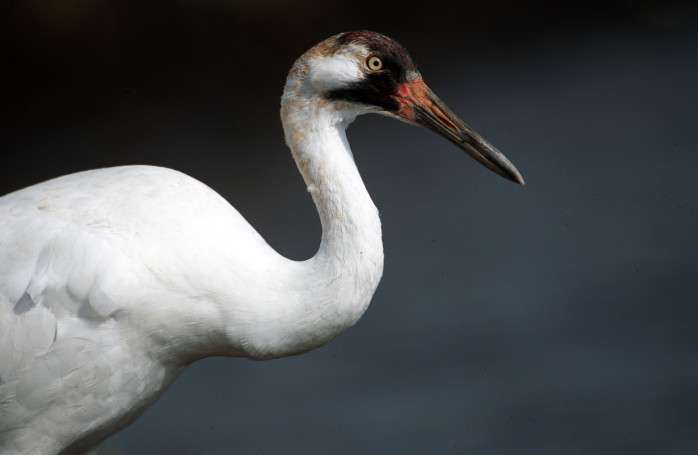
Among the rarest birds in North America, the federally endangered Whooping Crane makes a critical stop in Kansas. Standing nearly five feet tall, these majestic white birds with black wingtips are monitored intensely. Their safe passage through the state's wetlands is a central component of continental conservation efforts, making their rare sighting a cause for celebration.
9. American White Pelican (Pelecanus erythrorhynchos)
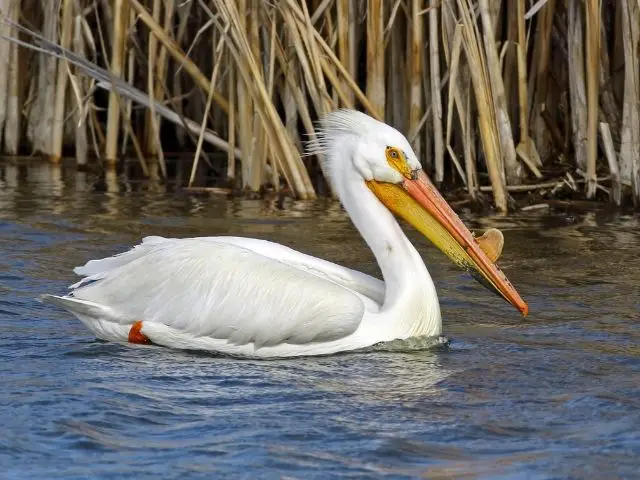
Unlike their coastal cousins, the American White Pelicans are freshwater birds. During migration, massive flocks—sometimes numbering in the thousands—stop at Kansas reservoirs and lakes. Easily identified by their enormous orange bill and striking black-and-white wingspan of up to nine feet, they are often seen cooperatively herding fish for an easier catch.
10. White-rumped Sandpiper (Calidris fuscicollis)
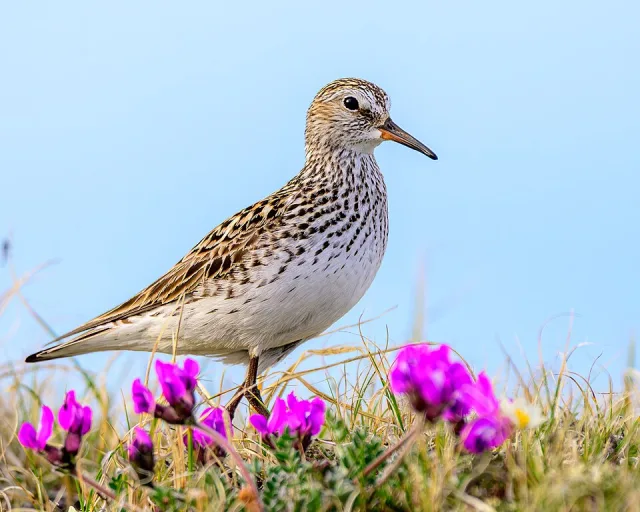
A tiny powerhouse of migration, this shorebird is a long-distance champion, breeding in the Arctic and wintering in South America. The crucial wetlands of Kansas, such as Cheyenne Bottoms, are estimated to host up to 90% of the species’ world population during peak spring migration, highlighting the international importance of Kansas habitat.
11. Baltimore Oriole (Icterus galbula)

The male Baltimore Oriole is a flash of brilliant orange and black, a vibrant summer resident that announces its arrival from Central America with a rich, flute-like song. They are often found in mature deciduous trees in eastern Kansas, where they weave their remarkable sock-like nests high on the slender branches.
12. Snow Goose (Anser caerulescens)

As a form of "light goose," the Snow Goose and its close relatives migrate in huge, sometimes overwhelming, numbers through Kansas during the winter and early spring. Their massive white flocks can cover fields and wetlands, creating a dynamic spectacle as they take to the air in swirling white masses, their numbers sometimes exceeding a quarter-million birds in a single location.
Rare and Elusive Species: The Thrill of the Chase
For the dedicated Kansas birder, a sighting of one of the state's rare species is the ultimate reward. These birds are either geographically marginal, highly imperiled, or simply accidental visitors (vagrants) whose presence is a testament to the unpredictable nature of avian travel.
13. Lesser Prairie-Chicken (Tympanuchus pallidicinctus)
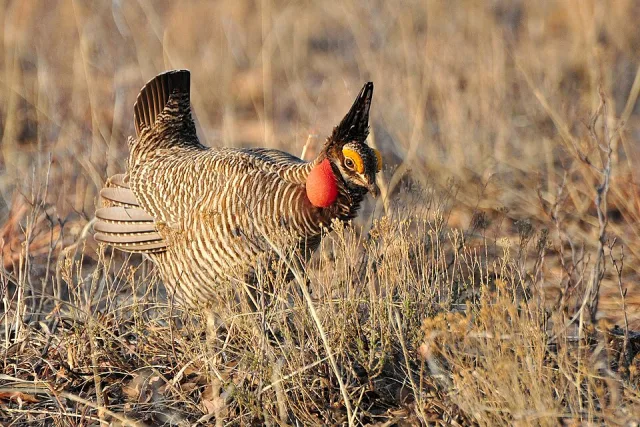
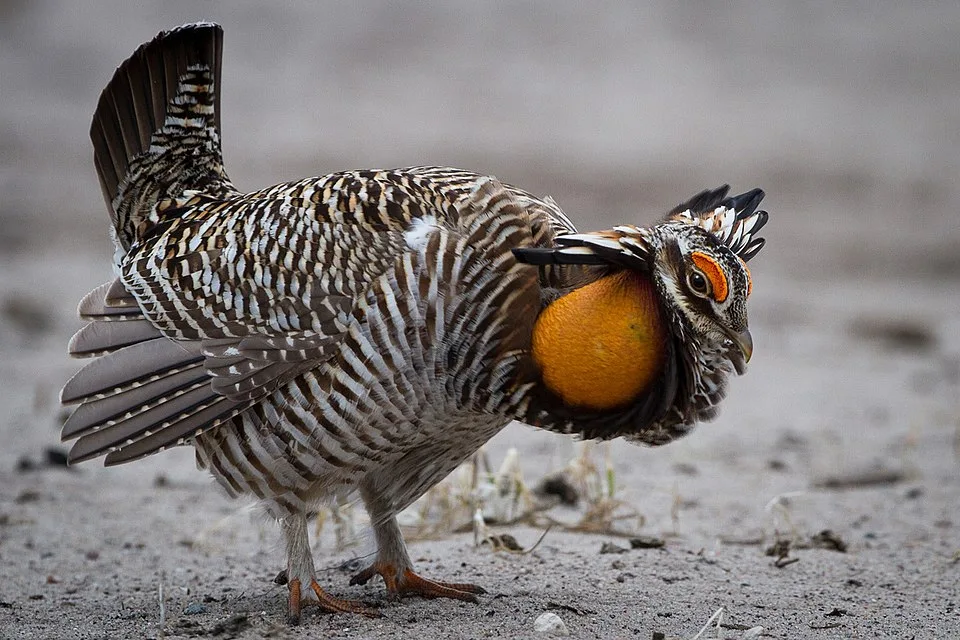
The Lesser Prairie-Chicken is a highly vulnerable, iconic grassland bird of the American Southwest. Its numbers have plummeted due to habitat fragmentation, making it one of the rarest resident species in Kansas. Found in the short-grass prairies of the western part of the state, its stunning courtship ritual, a booming dance performed on a communal display ground called a lek, is one of nature's great spectacles, seen only by the most patient and dedicated observers.
14. Roseate Spoonbill (Platalea ajaja)

Truly an accidental vagrant, the Roseate Spoonbill is a stunning tropical bird whose normal range is the Gulf Coast. Periodically, these birds wander far north of their breeding grounds. A sighting in Kansas—with its vibrant pink plumage, bald green head, and unmistakable spatulate bill—is a rare and exotic event, a brief flash of the tropics in the plains.
15. Snowy Owl (Bubo scandiacus)

A truly spectacular sight, the ghostly white Snowy Owl is an irregular and rare winter visitor from the Arctic tundra. Its presence in Kansas is tied to a biological phenomenon called an irruption, typically occurring when its primary food source, the lemming, crashes in the far north. During these winters, a lucky few Kansans may spot this massive, magnificent owl perched on a fence post or hay bale in open country, a dramatic and ephemeral reminder of the wild, distant North.
Wrapping Up
From the cheerful chick-a-dee-dee-dee to the shadow of the soaring American White Pelican and the remote booming of the Lesser Prairie-Chicken, the birds of Kansas embody the diverse heart of the American landscape. They are a constant source of wonder, a barometer of environmental health, and a powerful reminder of the global connections that bind the Sunflower State to the rest of the Western Hemisphere. For any who venture out, the skies and prairies of Kansas promise a truly rewarding avian adventure.
Birds Of Kentucky: 28 Species Col. Sanders (May Have) Loved!
