

Every spring and autumn, the skies above the United States become a bustling highway. From the tiny Ruby-throated Hummingbird crossing the Gulf of Mexico in a single flight to the Bar-tailed Godwit performing transoceanic marathons, billions of birds navigate with a precision that puts modern GPS to shame.
How does a bird, weighing no more than a few ounces, find its way from a specific backyard in Ohio to a specific patch of rainforest in the Amazon? It isn't just one "map"—it is a sophisticated, multi-layered system of biological hardware and environmental cues.
1. The Genetic Blueprint: Instinct and "Zugunruhe"

For many species, the urge to migrate is hardcoded into their DNA. Even birds raised in isolation without parents to guide them will exhibit Zugunruhe—a German term for "migratory restlessness." As the days shorten, their internal clocks trigger a hormonal shift, causing them to flutter toward the direction they are supposed to travel.
This "vector navigation" tells a young bird: "Fly South-Southwest for three weeks, then stop." While this gets them to the general wintering grounds, it is the combination of the following tools that provides the pin-point accuracy required for a successful journey.
2. Magnetoreception: The Quantum Compass
Perhaps the most "alien" sense birds possess is the ability to perceive the Earth’s magnetic field. Scientists believe birds use two distinct systems to "see" magnetism.
The Eye-Based Radical Pair Mechanism
Research suggests that birds have specialized proteins in their eyes called cryptochromes. When blue light hits these proteins, it creates a quantum reaction involving "radical pairs" that are sensitive to the angle of the Earth’s magnetic field. In essence, birds may literally "see" the magnetic field as a visual overlay—similar to an Augmented Reality (AR) display on a pilot’s HUD.
The Iron-Mineral System
In addition to the visual compass, many birds have microscopic clusters of magnetite (an iron-rich mineral) in their beaks or inner ears. These act like tiny internal compass needles, providing the bird with "magnetic maps" that help them determine their latitude and longitude based on the intensity of the field.
3. Celestial Navigation: Following the Stars
For the millions of songbirds that migrate under the cover of night to avoid predators and stay cool, the stars are their primary guide.
In a classic experiment in the 1960s, researchers placed Indigo Buntings in a planetarium. They discovered that the birds don't recognize individual stars, but rather the rotation of the night sky. They identify the one point that does not move—the North Star (Polaris)—and use the surrounding constellations to determine which way is South.
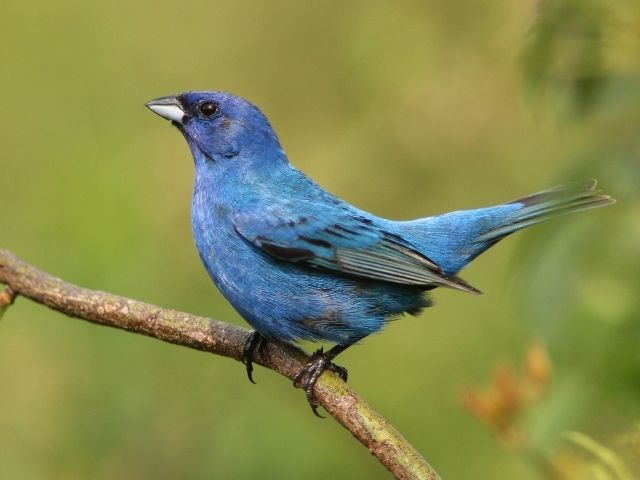
During the day, birds use a Solar Compass. By combining the position of the sun with their internal circadian rhythm (their biological clock), they can maintain a straight heading even as the sun moves across the sky from East to West.
4. Landmarks and Olfactory Maps
As birds gain experience over several years, they build a mental "topographical map" of the landscape.
Visual Landmarks: Major geographical features like the Appalachian Mountains, the Mississippi River, and the Atlantic coastline serve as "leading lines." Birds follow these corridors to minimize the energy spent crossing difficult terrain.
Olfactory Cues (Smell): Some species, particularly seabirds and pigeons, utilize an "olfactory map." They can recognize the chemical "signature" of the air—the scent of pine forests, salt spray, or even urban pollution—to recognize when they are nearing home.
5. Infrasound: The Voice of the Earth
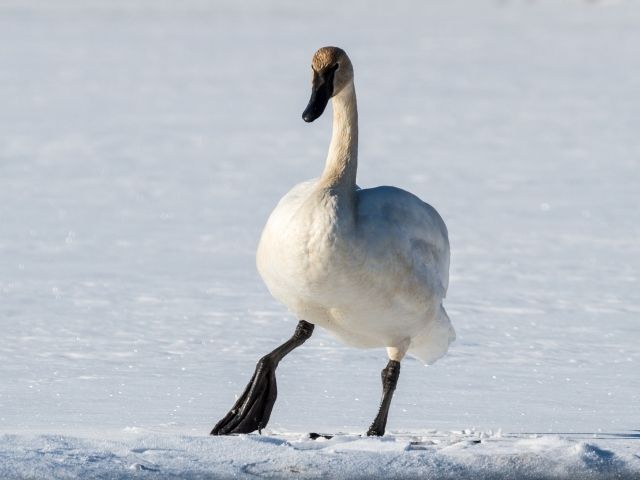
Recent studies suggest birds can hear infrasound—extremely low-frequency sound waves that travel thousands of miles. These sounds are generated by deep-ocean waves, wind rushing over mountain ranges (like the Rockies), and even severe weather systems. By "listening" to the Earth, a bird might hear the roar of the Atlantic Ocean while still hundreds of miles inland, allowing it to adjust its course long before the coast is visible.
The "Flyways" of the United States
Because of these navigation systems, bird migration in the U.S. follows four primary "Flyways." Think of these as the interstate highways of the sky:
| Flyway | Geographical Features | Key Species |
| Atlantic Flyway | Follows the coast and the Appalachian Range. | Canada Geese, Tundra Swans, Warblers. |
| Mississippi Flyway | Uses the Great Lakes and Mississippi River. | Mallards, Wood Ducks, Prothonotary Warblers. |
| Central Flyway | Crosses the Great Plains and the Rockies. | Sandhill Cranes, Peregrine Falcons. |
| Pacific Flyway | Follows the Pacific Coast and the Sierra Nevada. | Western Tanagers, Pintails, Brant Geese. |
The Modern Challenge: Light and Magnetic Pollution
While birds have mastered these natural cues over millions of years, human civilization has introduced "noise" that disrupts their navigation.
Light Pollution: Bright city lights can "wash out" the stars, causing night-migrating birds to become disoriented and fly into buildings (the "Fatal Light Attraction" phenomenon).
Electromagnetic Noise: There is emerging evidence that radio-frequency interference from electronic devices can disrupt the delicate quantum compass in a bird’s eye, making it harder for them to find North.

Wrapping Up: A Masterclass in Physics
The next time you see a flock of geese in a perfect 'V' formation or a tiny warbler in your garden, remember that you are looking at a master of physics. They are utilizing quantum mechanics, celestial mechanics, and geophysics to achieve a feat of travel that remains one of the greatest mysteries of the natural world.
By turning off unnecessary outdoor lights during migration peaks (April–May and September–October) and supporting the preservation of stopover habitats along our major flyways, we can ensure these ancient navigators continue to find their way home.
The Amazing Abilities of North American Birds You Never Knew
