
Birds are incredibly perceptive creatures, often seeming to vanish just as a person gets close. This is not due to a sixth sense, but rather a sophisticated combination of highly developed sensory organs and a finely tuned understanding of their environment.
Birds have evolved to be exceptionally aware of their surroundings, and their ability to detect a human's presence is a testament to their survival instincts.
The science behind this phenomenon lies in their acute vision, remarkable hearing, and a behavioral understanding of threats that has been honed over millions of years of evolution. This article will delve into the science behind how birds sense your presence.
1. The Power of Avian Vision
The primary way birds sense you is through their extraordinary eyesight. A bird's vision is far superior to a human's in several key ways:
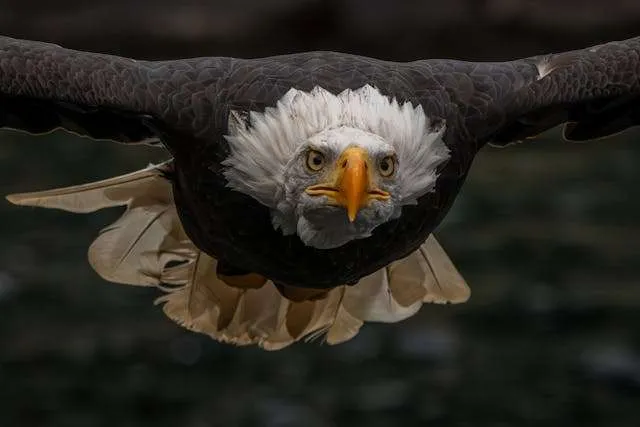
- Exceptional Acuity: Many birds of prey, such as the Bald Eagle (Haliaeetus leucocephalus) and the Red-tailed Hawk (Buteo jamaicensis), have vision up to eight times sharper than a human's. They can spot a rabbit or a fish from a great distance, and this same acuity allows them to pick out a person from a far-off trail or a moving car. Their eyes are large relative to their head size and are packed with a higher density of photoreceptor cells (rods and cones) in the retina.
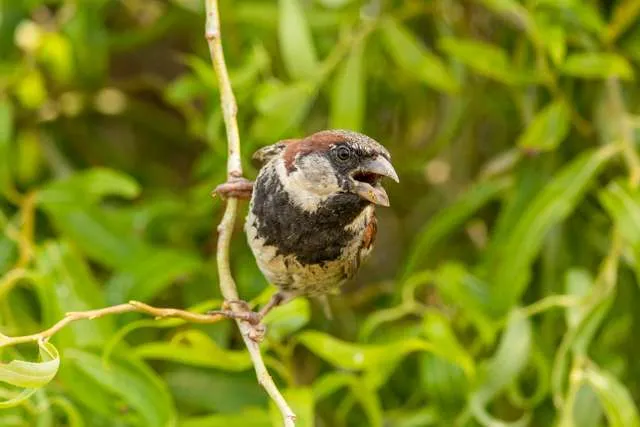
- Wider Field of View: Unlike humans, whose eyes are forward-facing, many birds have eyes on the sides of their heads. This gives them a nearly 360-degree field of view, meaning they can see things behind and to the side of them without turning their heads. A House Sparrow (Passer domesticus) foraging for seeds can watch the ground for food while simultaneously keeping a lookout for an approaching predator or person from almost any direction.

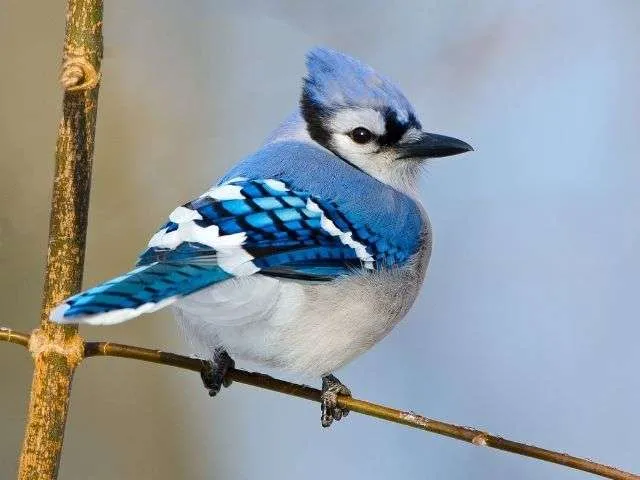
House Sparrow - Tetrachromatic Vision: While humans see in three primary colors (red, green, and blue), many birds are tetrachromats, possessing a fourth type of cone cell that allows them to see ultraviolet (UV) light. This means they see a world of color and light that is invisible to us. UV vision allows them to spot prey, locate food sources, and identify mates, but it can also help them detect subtle changes in their environment, such as the glare from a watch or a phone screen, or the way human-made fabrics reflect light differently than natural surroundings. A Blue Jay (Cyanocitta cristata) may see a person's jacket not just as a color but as a combination of colors and UV wavelengths that signal an unusual presence.

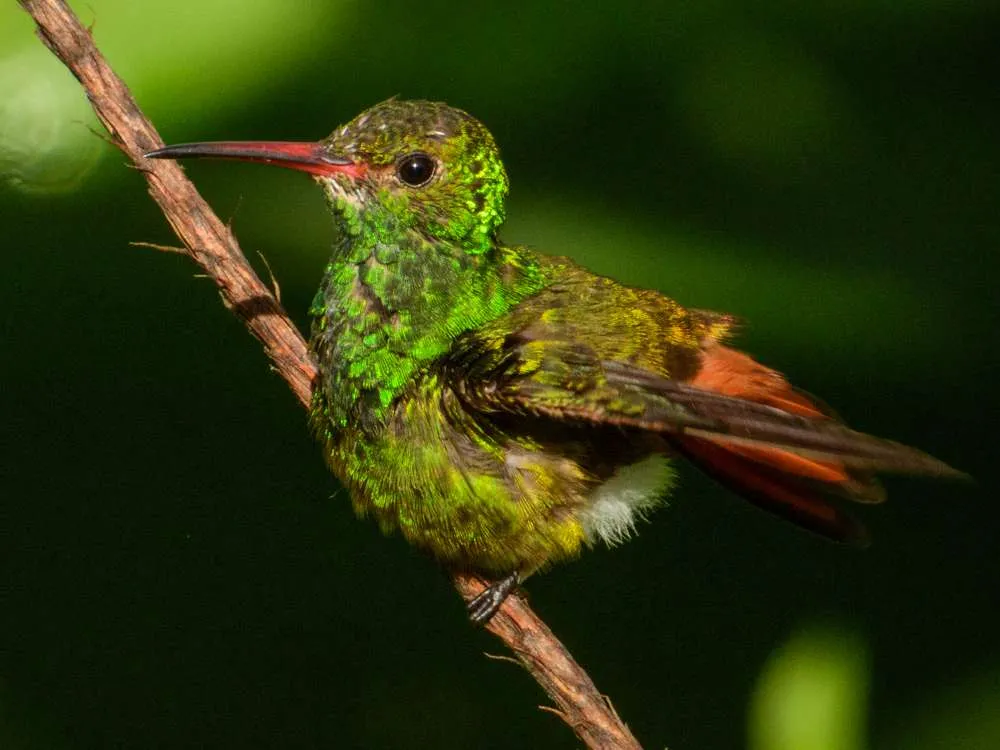
Blue Jay - Rapid Flicker Fusion Rate: Birds can process visual information at a much faster rate than humans. This means they can detect rapid movements and changes in their environment that would appear as a blur to us. This is why a bird can so easily dodge a moving object or a sudden gesture. A Hummingbird (Family: Trochilidae) can track a tiny insect in mid-air, and this same ability helps them perceive even the slightest motion from a person trying to get closer for a photo.

Allen's Hummingbird

2. The Nuances of Avian Hearing
While sight is paramount, a bird's sense of hearing is also a critical tool for detecting an approaching threat. Their hearing is not just for listening to other birds; it's for listening to the world around them.
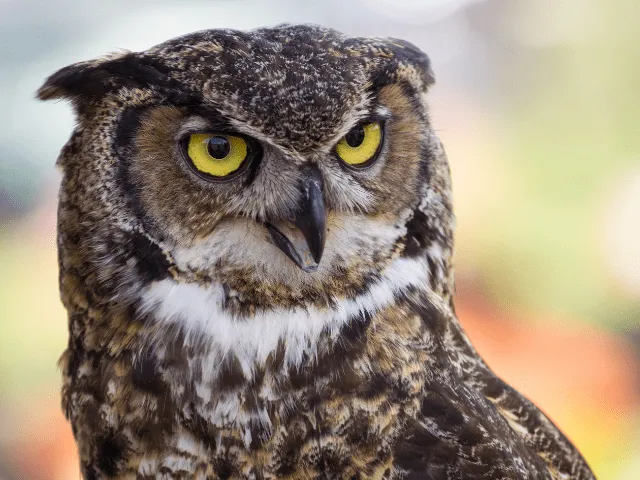
- Pinpointing Sounds: Birds have an extraordinary ability to pinpoint the location of a sound source, often more accurately than humans. This is due to the way their ears are structured and the rapid processing of sound information by their brains. A Great Horned Owl (Bubo virginianus), a nocturnal predator, can locate a mouse rustling in the grass in complete darkness using its acute hearing alone. A Chickadee (Genus: Poecile) can hear the quiet snap of a twig from a person walking on a forest trail long before the person is in sight.
Great Horned Owl - Recognizing Threat Calls: Birds are highly social animals that communicate through a complex system of calls. A bird's alarm call, often a high-pitched, short note, can instantly alert every other bird in the vicinity to a perceived threat, including a person. This is why if you spook one bird, others nearby often follow suit. The loud, persistent alarm calls of a robin can cause all the other birds in a park to become wary and cease their activities.
- Sensitivity to Frequency: Birds can hear a wider range of frequencies than humans, which allows them to pick up on very low-frequency sounds. They can hear the sound of a person's footsteps vibrating through the ground, or the low hum of distant traffic, long before a human can.
3. Behavioral and Learned Responses
Beyond their sensory organs, birds' ability to sense a person is also rooted in a deep, evolutionary understanding of what a threat looks like.
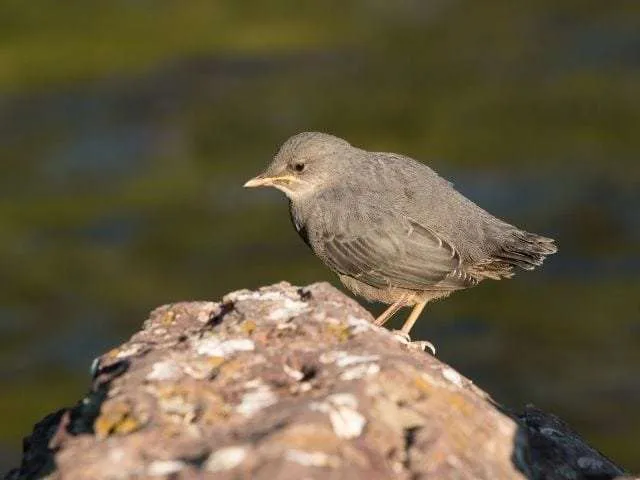
- Understanding Predator Shapes: Many birds instinctively recognize the shape and size of common predators, including humans. A large, upright figure moving through a field is an immediate visual cue that signals a potential threat. Birds that are accustomed to human activity, such as those in a city park, may have a higher flight initiation distance, meaning they will let you get closer before flying away. However, birds in more remote or rural areas, like the American Dipper (Cinclus mexicanus) in a mountain stream, will be much more wary, as they have not become habituated to human presence.
- The Element of Surprise: Birds are not just sensing a person; they are sensing a change in their environment. A sudden noise, a rapid movement, or a shadow cast in a new place can all trigger an immediate flight response. Birds are constantly monitoring their surroundings for these changes. This is why a person walking slowly and quietly is less likely to spook a bird than someone who moves erratically or makes sudden gestures.
- Learning and Memory: Birds are intelligent creatures with good memories. A bird that has had a negative encounter with a person, such as being chased or startled, will remember that experience. It may associate a certain type of clothing, sound, or location with a threat and become more skittish in the future. This is particularly true for migratory birds that return to the same breeding grounds year after year.
4. The Science of the "Flush"
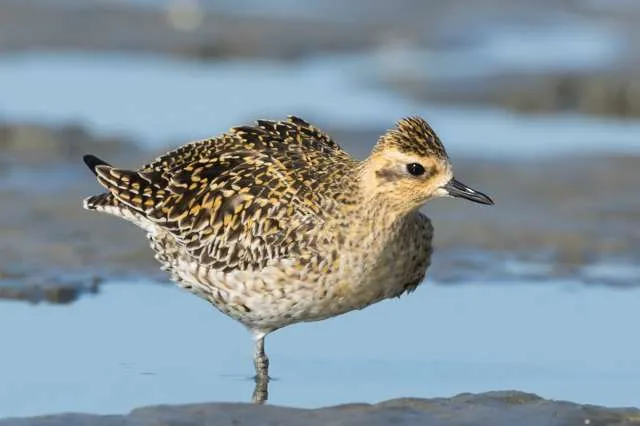
The moment a bird flies away from an approaching person is a key survival behavior known as the flush response. The distance at which a bird decides to flush is called the flight initiation distance (FID). This distance is not random; it's a careful calculation of the risk versus the energy expenditure. A bird will typically flush when the perceived threat gets within its FID.
Several factors influence the FID of a bird:
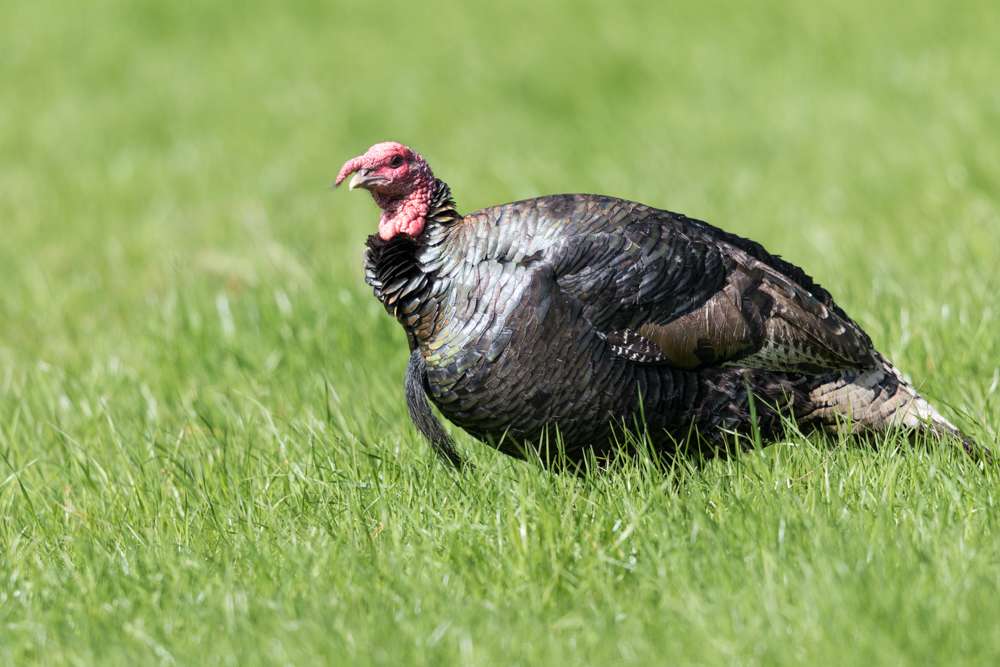
- Species and Size: Larger birds often have a shorter FID because they are less vulnerable to many predators. A Wild Turkey (Meleagris gallopavo) might let a person get much closer than a small songbird like a Goldfinch (Spinus tristis).
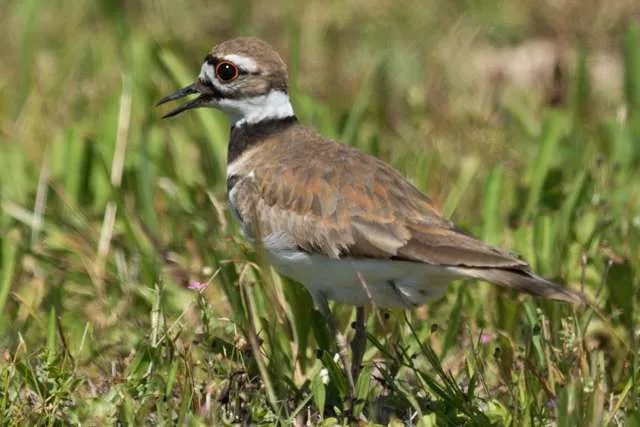
- Habitat: Birds in open habitats, like a Killdeer (Charadrius vociferus) on a gravel lot, will often have a longer FID because there is nowhere to hide. Birds in dense forests, like a Wood Thrush (Hylocichla mustelina), may have a shorter FID because they can quickly disappear into the foliage.
- Context: A bird that is feeding or caring for young may have a shorter FID, prioritizing the safety of its young or its food source over its own immediate escape.
Wrapping Up
The ability of birds to sense a human's presence is not a mystical ability, but a marvel of evolutionary biology. It is a result of highly specialized sensory systems, particularly their phenomenal vision and hearing, combined with a behavioral understanding of their environment.
By understanding the science behind how birds perceive the world, we can not only appreciate their remarkable adaptations but also learn how to be more mindful and respectful observers of wildlife. The next time a bird flies away just as you approach, know that it's not a personal rejection, but a testament to its finely tuned senses and its ancient, ingrained survival instincts.
If you were amazed by these birds, have a look at the oddest birds we could find.
