
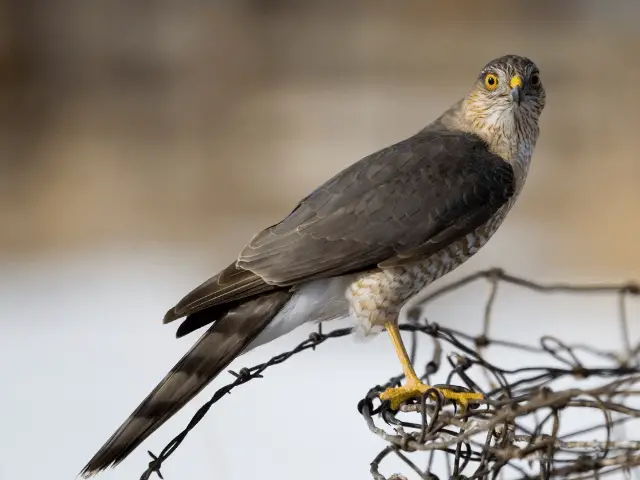
To truly appreciate the majesty and complexity of raptors—the birds of prey—a specialized vocabulary is essential. For U.S. birdwatchers, particularly those who frequent hawk watches, mountains, and coastal migration flyways, mastering the terminology of these apex avian predators is the key to unlocking the field identification challenges posed by these swift, often distant flyers.
Raptor identification (ID) relies heavily on recognizing structural and behavioral patterns, many of which have specific names derived from ornithology, falconry, and years of hawk-watching tradition. This article breaks down the indispensable terminology needed to successfully identify, describe, and discuss the hawks, eagles, falcons, owls, and vultures that grace the skies of the United States.
I. General Group and Classification Terms
These terms define the broad categories of birds of prey and their general characteristics.
Raptor
The collective term for all birds of prey. It comes from the Latin rapere, meaning "to seize or take by force," referring to their predatory lifestyle. In the U.S., raptors include falcons, eagles, hawks, kites, vultures, and owls.
Accipitriformes
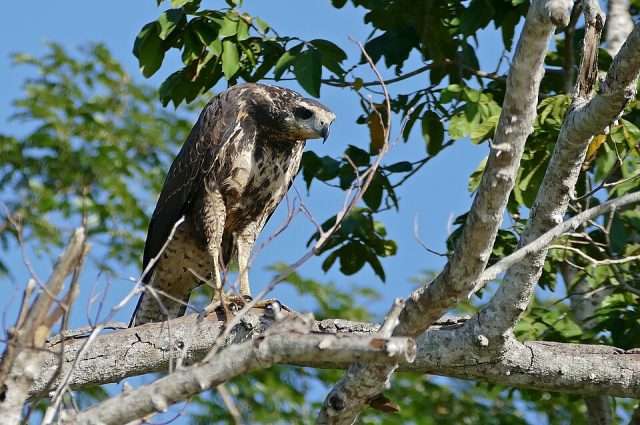
The scientific order containing most New World vultures, eagles, hawks, and kites. When a birder refers to the "true hawks," they are usually talking about the family Accipitridae within this order (e.g., Cooper's Hawk, Red-tailed Hawk).
Falconiformes
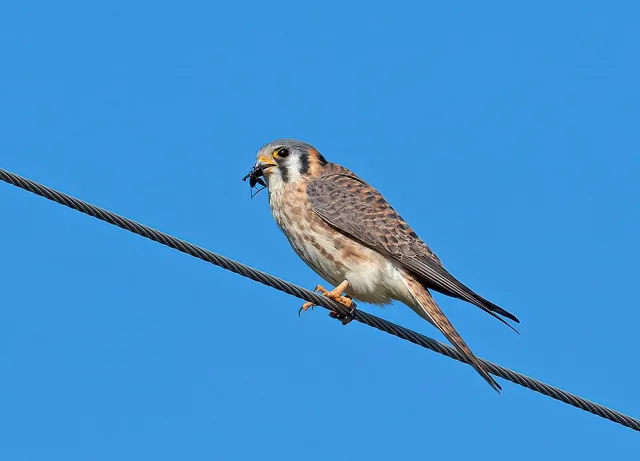
The scientific order containing the Falcons (family Falconidae). They are distinct from the Accipitriformes due to significant genetic and structural differences (e.g., they kill with their beaks, not their feet).
Diurnal vs. Nocturnal
Raptors are often divided by when they hunt:
- Diurnal: Active during the day (e.g., hawks, eagles, falcons).
- Nocturnal: Active during the night (e.g., owls).
Sexual Dimorphism

A noticeable difference in size, color, or shape between the male and female of the same species. In many North American raptors, particularly Accipiters and Falcons (e.g., Sharp-shinned Hawk, Merlin), the female is significantly larger than the male.
II. Morphology: The Language of Structure and Shape
When raptors are flying high, identification often comes down to minute differences in wing shape and tail length.
Aspect Ratio
A measure of the wing's length relative to its width.
- High Aspect Ratio (Long and narrow wings): Characteristic of soaring birds like Eagles (e.g., Golden Eagle) and oceanic species like Albatrosses (though not raptors), designed for gliding efficiency.
- Low Aspect Ratio (Short and broad wings): Common in forest-dwelling hawks like Accipiters (e.g., Cooper's Hawk), designed for quick bursts and maneuverability.
Leading and Trailing Edges
These terms describe the contours of the wing:
- Leading Edge: The front edge of the wing that cuts through the air.
- Trailing Edge: The rear edge of the wing. These are critical for ID; for instance, the trailing edge of a juvenile Red-tailed Hawk can appear dark and defined.
Patagial Marks
Dark marks on the underwing coverts (the feathers covering the bone structure of the inner wing). The dark patagial marks on the underside of a Red-tailed Hawk's wing are one of the most reliable field marks for adults and immatures.
Tarsus and Toes
- Tarsus: The lower leg bone (often called the "shanks").
- Toes: Raptors possess four toes (three forward, one back). Raptors that hunt feathered prey (like falcons) have long toes for grasping, while those hunting mammals (like eagles) have thicker, shorter toes for crushing.
Cere

The waxy, fleshy membrane at the base of the upper beak, covering the nostrils. Its color (often yellow, blue, or gray) is a field mark for many species, particularly Falcons .
Hallux
The backward-pointing toe (digit I). The talon on the hallux is often the largest and is used to pierce the vital organs of prey, delivering the killing blow.
III. Flight Behavior and Silhouette: How They Move and Look in the Sky
Observing a raptor's flight style is the single most important element of field ID.
Kettling (or Kettles)
A term used to describe a group of migrating raptors soaring upward together on a thermal (a column of rising warm air). The circular motion created by riding the thermal makes the group resemble steam rising from a kettle. This behavior is highly characteristic of Broad-winged Hawks and Turkey Vultures .
Thermal
A column of rising warm air, essential for soaring raptors to gain altitude without expending energy. Hawk watch sites are often situated where thermals form reliably.
Gliding vs. Soaring
- Gliding: Forward flight with wings held stationary, losing altitude over a long distance.
- Soaring: Maintaining or gaining altitude using thermals or updrafts, often with wings held motionless.
Buteo
A general term for broad-winged, short-tailed hawks that specialize in soaring and catching prey on the ground (e.g., Red-tailed Hawk, Rough-legged Hawk, Swainson's Hawk). Their flight is often slow and buoyant.
Accipiter
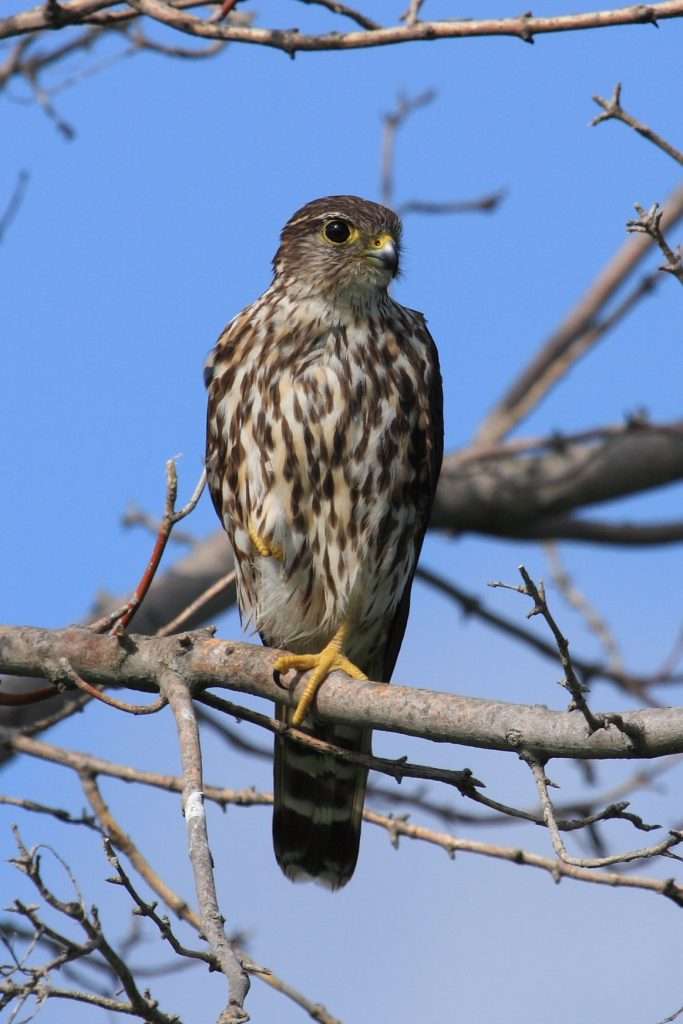
A general term for slender, medium-to-long-tailed hawks with short, rounded wings. They specialize in rapid, maneuverable flight through woodlands, alternating between short bursts of flapping and short glides (e.g., Sharp-shinned Hawk, Cooper's Hawk, Northern Goshawk).
Intercept Migration
A weather phenomenon where strong winds (often cold fronts) push migrating raptors close to geographical features like coastlines or ridges, making them highly visible to hawk watchers. This is the goal of most hawk-watching efforts.
Mantling

A behavioral term used to describe a raptor spreading its wings and tail over captured prey to shield it from view of competitors or scavengers.
Harassing (or Mobbing)
The act of smaller, non-raptorial birds (like crows, jays, or smaller raptors) flying close to a larger raptor to drive it away from a territory or nest site.
IV. Falconry Terms Adopted by Birders
Many useful ID terms come directly from the centuries-old practice of falconry.
Tiercel
The traditional falconry term for the male bird of prey. As noted in sexual dimorphism, males are often about one-third smaller than females.
Passage Bird
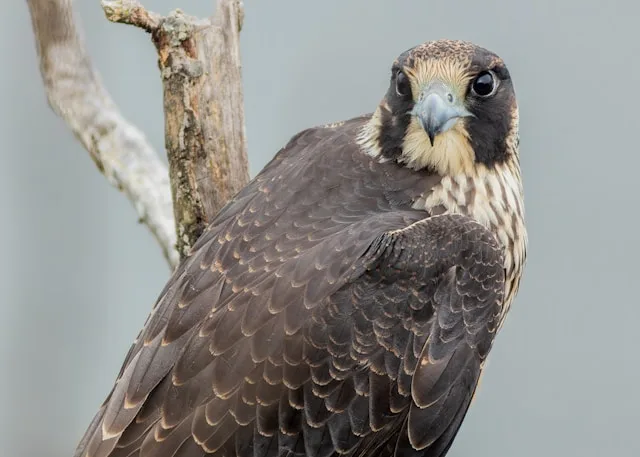
A raptor that is captured while it is migrating (in passage). In birding, it generally refers to any migrating individual.
Eyass (or Eyss)
A term for a nestling or fledgling (a young bird still dependent on its parents). In ID, it's synonymous with Juvenile or Immature.
Stoop
The unique, high-speed, vertical dive used by Falcons (especially the Peregrine Falcon) to strike prey in mid-air. It is the fastest maneuver performed by any animal on Earth. .
Full Crop
The bulge visible in a raptor's throat or chest after it has eaten a large meal. The crop is a pouch in the digestive tract used for storing food.
V. Age and Plumage Terminology

Correctly aging a raptor is often more important than identifying the species, as plumage changes dramatically with age.
Juvenile (or Immature)
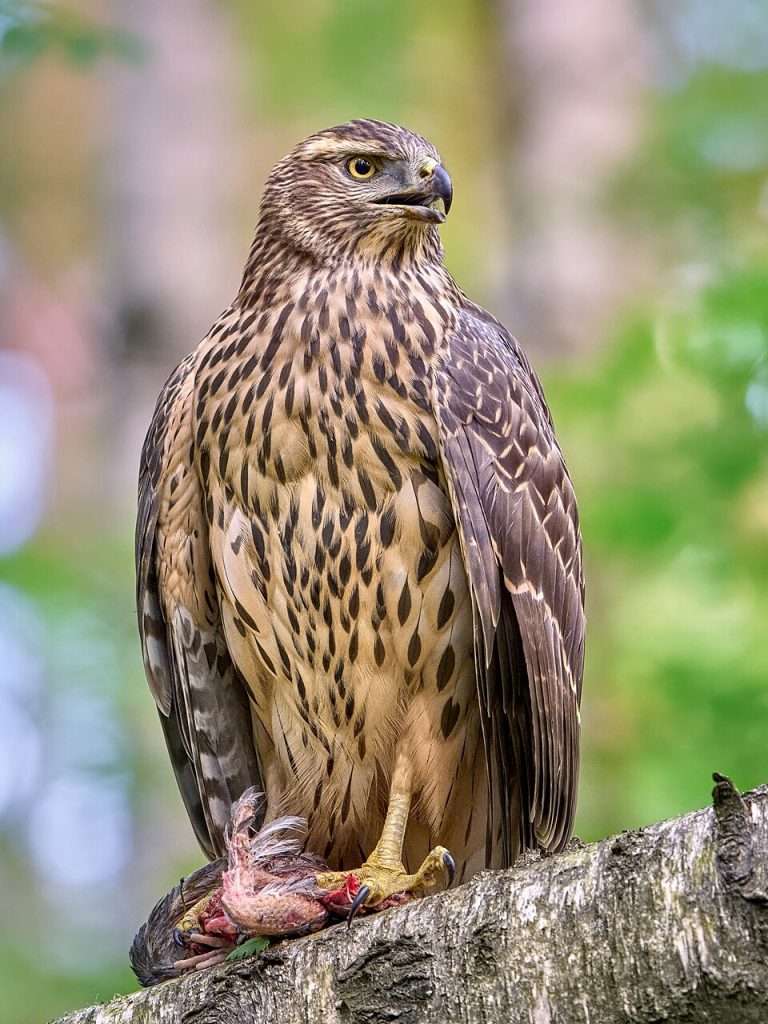
A young bird that has recently left the nest and is in its first plumage. Juvenile plumage is usually held for one year (e.g., Accipiters and Falcons) or sometimes longer (e.g., Eagles, which take four to five years to reach adult plumage). Juvenile plumage is often streaked and distinct from the adult's.
Sub-Adult
Used specifically for large raptors (like eagles) that take multiple years to mature. This term describes birds that are older than juveniles but have not yet attained full Definitive Adult plumage (e.g., a three-year-old Bald Eagle).
Definitive Adult (or Adult)
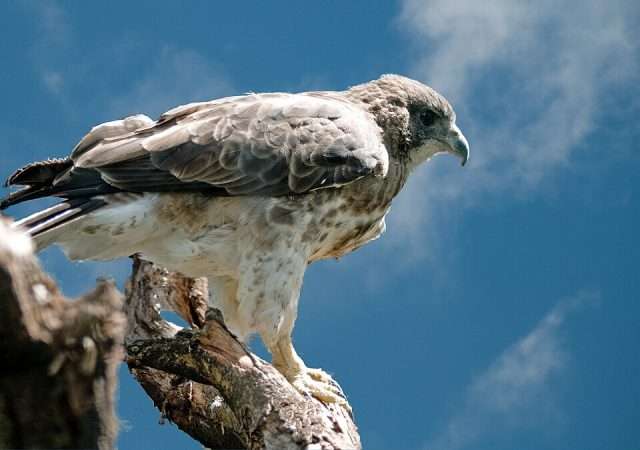
A bird that has attained its final, breeding-capable plumage. The classic "field guide" coloration.
Molt
The process of shedding and replacing feathers. Raptor molt is often a slow, symmetrical process lasting many months, allowing the bird to maintain flight capability. Observing the progression of molt is sometimes key to aging a sub-adult raptor.
Morph
A naturally occurring color variant within a single species, not related to sex, age, or season. The most common example is the Dark Morph vs. Light Morph found in species like the Rough-legged Hawk or Ferruginous Hawk. Dark morph individuals are much rarer and pose a fun identification challenge.

Mastering this terminology provides the birder with the precise language needed to communicate a sighting effectively and confidently, transforming a simple observation into a detailed, identifiable record. From the soaring Buteos and stooping Falcons to the mysterious Kettles high above the ridge, a firm grasp of raptor vocabulary is the essential tool in every hawk watcher's arsenal.
