
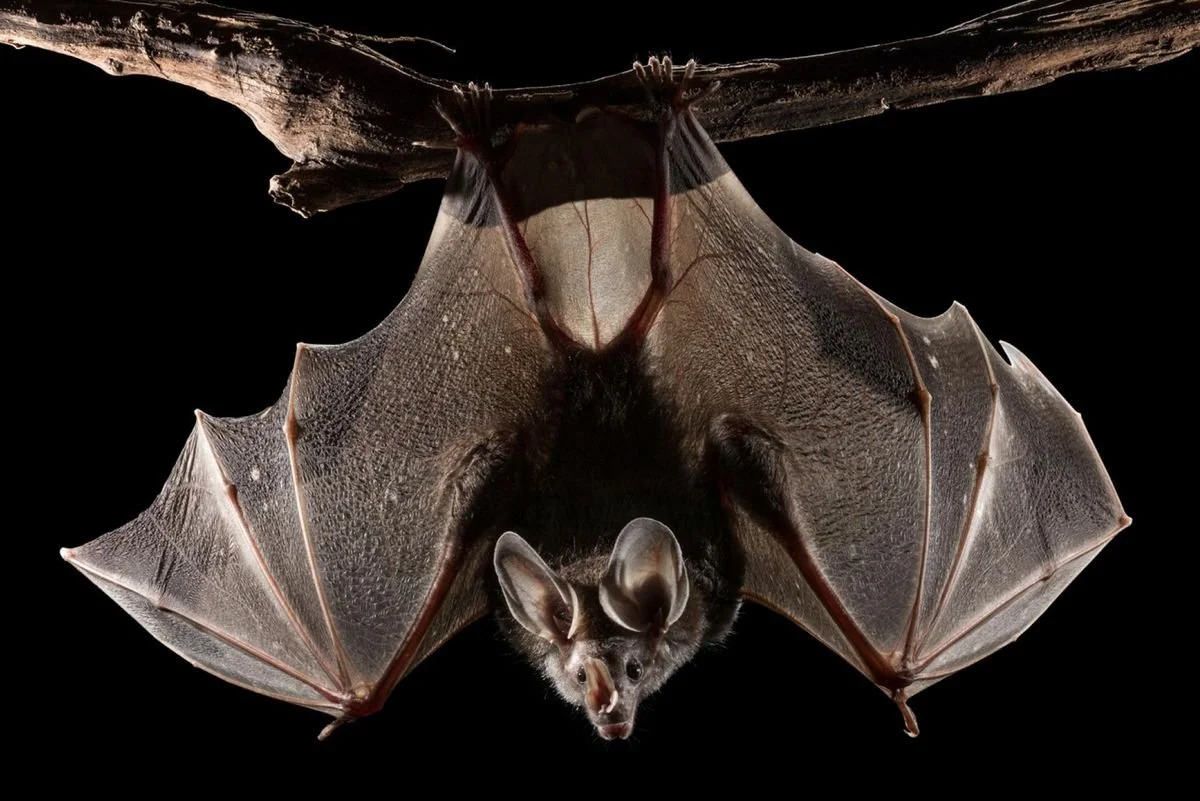
For years, the tales of bats preying on birds in the skies above Central and South America were considered rare occurrences, isolated incidents, or even ornithological folklore. But recent, groundbreaking scientific research has not only confirmed the existence of this avian predator, the Spectral Bat (Vampyrum spectrum), but has also cracked the code of how and when it hunts, solving a long-standing ecological mystery. This revelation carries profound implications for the survival and migratory patterns of Neotropical songbirds, challenging previous assumptions about their greatest threats.
The Cryptic Predator: Vampyrum spectrum
The Spectral Bat is the largest bat in the Americas, boasting a wingspan of up to three feet. With large, powerful claws, impressive dentition, and the ability to fly silently, it is one of the few bat species that actively hunts and consumes vertebrates, including rodents, other bats, and famously, birds.
While the bat's diet was known to include birds, quantifying this predation was extremely difficult. This bat is a solitary, elusive, and nocturnal hunter that operates high in the forest canopy, making direct observation a near-impossible task. For decades, the evidence was mostly circumstantial: bat-chewed bird remains found in roosts or anecdotal sightings. The mystery was not if the bat ate birds, but when, where, and to what extent this predation occurred, particularly against migratory songbirds making perilous seasonal journeys.
The Breakthrough: Combining Technology and Tenacity
The "mystery solved" moment arrived through a confluence of dedicated field work and cutting-edge bio-logging technology. A team of researchers from institutions like the Smithsonian Tropical Research Institute used a strategic, multi-pronged approach to track the elusive hunter:
Acoustic Monitoring: By using specialized audio recorders sensitive to the bat's low-frequency calls, researchers could pinpoint foraging areas.
GPS Telemetry: This was the crucial breakthrough. The team successfully captured and affixed tiny GPS trackers and accelerometers to several Vampyrum spectrum individuals. These devices, which weighed less than a penny, provided unprecedented detail on the bats' flight paths, hunting frequency, and behavior.
DNA Analysis: Fecal matter collected from the bats' roosts was subjected to molecular analysis. By identifying the DNA fragments of prey species, scientists could definitively confirm the species and frequency of bird consumption.

Spectral Bat

The Unsettling Findings: Solving the How and When
The data retrieved from the trackers and DNA analysis painted a startlingly clear picture of the bat's predatory strategy, finally explaining the mechanics of the "bird-eating bat."
The How—A Master of Ambush
The GPS data revealed that Vampyrum spectrum does not chase birds in open air like a falcon. Instead, it utilizes a sophisticated ambush strategy. The bats patrol the edges of the forest canopy and the understory near known bird roosting sites.
Silent Detection: The bat relies less on echolocation for avian prey and more on its hyper-sensitive hearing to detect the subtle sounds of sleeping birds adjusting their perches or the soft rustling of leaves.
The Strike: The accelerometer data showed a sudden, powerful dive followed by a brief, heavy struggle—the moment of capture. The bat appears to snatch the bird directly from its roost without a prolonged chase, confirming its role as a nocturnal, perching predator.
The When—A Migratory Trap
The DNA analysis provided the most worrying piece of the puzzle for conservationists. A significant portion of the bird DNA recovered belonged to Neotropical migratory songbirds—species like warblers, vireos, and thrushes that breed in North America and spend their winter in Central and South America.
Crucially, the highest peaks in bird predation occurred during the peak migratory months of spring and autumn. This indicates that the bats are not simply eating resident birds but are actively capitalizing on the influx of exhausted, vulnerable, and often disoriented migratory species. These birds, often roosting low in unfamiliar or suboptimal locations after an arduous flight, become easy targets for the waiting bat.
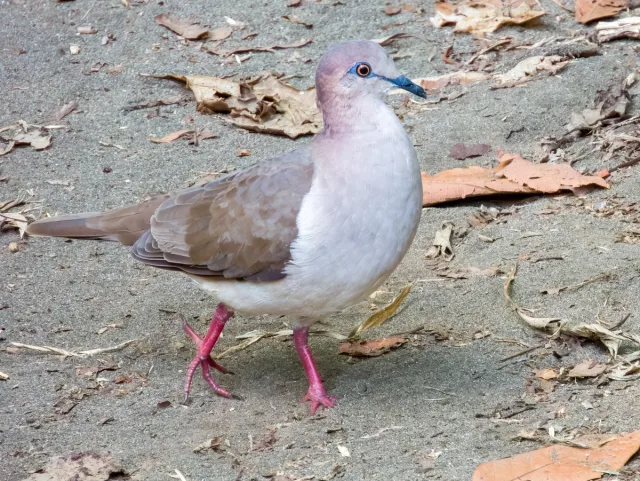
Doves (including White-tipped Dove - Leptotila verreauxi): Doves are frequently consumed, likely because they are relatively heavy and may be an efficient meal. The White-tipped Dove, at up to $150 \, \text{g}$, is a particularly large prey item.
Cuckoos: These birds, which often have a strong odor, are frequently documented in the bat's diet, potentially indicating that the bat uses smell to locate them.
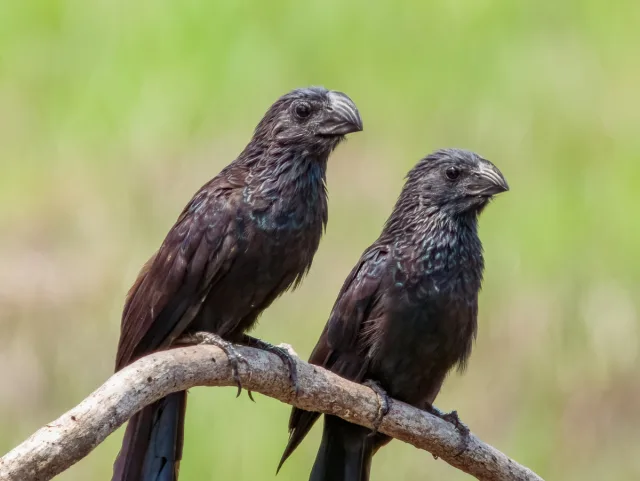
Groove-billed Ani: This species is noted as a particularly common prey item, likely because it is a gregarious bird that roosts in groups, making it an easy target for an ambush predator.
Parakeets (e.g., Orange-fronted and Orange-chinned Parakeets): These smaller, gregarious birds are also snatched from their roosts.
Wrens (e.g., Rufous-naped Wren, Banded Wren): These represent the smaller end of the bat's avian diet, demonstrating the bat's ability to catch smaller, perching birds.
Scissor-tailed Flycatcher
Trogons and Motmots: Like cuckoos, these birds are noted for having a distinct odor, which may aid the bat in locating their roosts.
While the specific names above include some resident Neotropical birds, the broader, critical takeaway from the recent research is that a significant proportion of the DNA found in the bats' diet belongs to Neotropical migratory songbirds during the spring and autumn migratory seasons.
This suggests that the bats exploit the temporary influx of species like:
Warblers (like Wilson's Warbler or Yellow Warbler)
Vireos
Thrushes (like Wood Thrush or Gray-cheeked Thrush)
These are the species that breed in North America and are most vulnerable when fatigued and roosting in unfamiliar trees during their long journey south, or just before their return north. The bats are not picky about the exact species, but rather prey on any small-to-medium bird (Passeriformes) that is accessible and within the typical prey weight range of 20-150g.
Implications for Songbirds: A New Conservation Challenge

The resolution of this mystery fundamentally shifts the conservation calculus for migratory songbirds. For years, the major threats identified in their wintering grounds were habitat loss (deforestation), pesticide use, and feral cat predation. While these remain critical issues, the discovery reveals a significant, quantifiable natural predation pressure that peaks precisely when the birds are most vulnerable.
1. Re-evaluating Stopover and Roosting Ecology
Conservation efforts may now need to focus on protecting and managing specific roosting and stopover habitats that offer maximum protection from nocturnal canopy predators. Forest edges, once considered beneficial for providing sun and quick access to foraging areas, may now be viewed as dangerous "high-risk zones" during migration.
2. The Source vs. Sink Dynamic
For migratory populations already struggling due to declining resources in their North American breeding grounds, elevated predation by the Spectral Bat in their wintering grounds or along migratory corridors could exacerbate population decline. This natural predation, while part of the ecosystem, could become a disproportionately large drain on populations already stressed by human-caused factors.
3. A Fragile Ecological Balance
This research underscores the delicate and complex relationship between predator and prey in a pristine ecosystem. The Spectral Bat is a crucial, apex predator, helping to maintain the health of the tropical forest ecosystem. Its role is essential. The new data, however, highlights the fact that when human activity (like fragmentation of forests) forces songbirds into closer contact with these natural predators, the result can be an unsustainable burden on the prey population.
Wrapping Up
The successful solving of the bird-eating bat mystery is a testament to modern ecological science. It transforms Vampyrum spectrum from a shadowy legend into a quantifiable ecological factor. For conservationists, it’s a clear call to action: understanding and mitigating the threats to songbirds must now include the complex interplay of natural predation, especially during their most vulnerable migratory phases. Protecting the forests that these songbirds and this magnificent bat call home is the only way to ensure the long-term survival of both.
Familiarity Breeds Contempt - Overlooking The Beauty Of Common Birds
