

The sheer diversity of birds in the United States, from the tiny Ruby-throated Hummingbird to the massive California Condor, is a source of endless fascination. But how do scientists and birders make sense of this incredible variety? The answer lies in the science of taxonomy, the system used to classify and name organisms.
While the basic principles of classification are universal, the systems used to organize birds have evolved dramatically, reflecting a shift from simple physical traits to complex genetic relationships. Understanding these systems is key to appreciating the interconnectedness of avian life and the ongoing work of ornithologists.
The Linnaean Hierarchy: The Foundation of Classification
At the heart of all modern biological classification is the Linnaean system, a hierarchical structure developed by Swedish botanist Carl Linnaeus in the 18th century. This system organizes organisms into a series of nested ranks, from the very broad to the very specific. For birds, this hierarchy looks like this:
- Domain: Eukarya (all organisms with a cell nucleus)
- Kingdom: Animalia (all animals)
- Phylum: Chordata (all vertebrates)
- Class: Aves (all birds)
- Order: A group of related families (e.g., Anseriformes - ducks, geese, and swans)
- Family: A group of related genera (e.g., Anatidae - the family for ducks, geese, and swans)
- Genus: A group of related species (e.g., Anas - the genus for dabbling ducks like the Mallard)
- Species: A group of organisms that can interbreed and produce fertile offspring (e.g., Anas platyrhynchos - the Mallard)
The scientific name of a bird, such as Anas platyrhynchos for the Mallard, is a binomial nomenclature, or a two-part name consisting of the genus and the species. This provides a universal, unambiguous way to identify a species, regardless of local common names. For example, a bird called a "Green-winged Teal" in the U.S. is recognized globally by its scientific name, Spatula carolinensis.

This hierarchical system provides a stable framework, but the groupings within it are constantly being refined. The Linnaean system, while foundational, was originally based on physical similarities. Today, we know that appearance can be deceiving, and two birds that look alike may not be closely related at all.
The Sibley-Monroe Taxonomy: A Pre-Genomic Revolution
For much of the 20th century, the classification of birds was primarily based on morphology (physical characteristics), behavior, and biogeography. This approach culminated in the influential Sibley-Ahlquist taxonomy, which was published in the late 1980s.
Charles Sibley and Jon Ahlquist used a groundbreaking technique called DNA-DNA hybridization to compare the genetic similarity of different bird species. This involved heating DNA from two different species, allowing the strands to separate and then cool, where they would recombine. The more closely related the species were, the more the DNA strands would "stick" together.

This system revolutionized avian classification, confirming some traditional groupings while upending others. For example, it showed that New World vultures, like the Turkey Vulture, are not closely related to Old World vultures, but are instead closer relatives of storks and herons. This was a shocking discovery that changed the way we thought about these birds.
The Sibley-Ahlquist taxonomy introduced new orders and families that were organized very differently from previous systems. While it was highly influential, it was also controversial, and many of its proposals were not widely adopted. However, it laid the groundwork for the next major leap in avian classification: the use of modern genomic sequencing.
Modern Classification Systems: The Genomic Era
Today, avian classification in the United States and globally is guided by the use of phylogenetics, which studies the evolutionary relationships among organisms. Instead of relying on DNA-DNA hybridization, scientists now use advanced techniques to sequence the entire genomes of birds. This allows for a far more detailed and accurate comparison of their genetic makeup.
Two primary organizations are responsible for maintaining the official checklists and taxonomic order of birds in the U.S.:
- The American Ornithological Society (AOS): The AOS (formerly the American Ornithologists' Union) is the authority for North and Middle America. Their "Check-list of North American Birds" is the gold standard for birders and ornithologists alike. The AOS's Committee on Classification and Nomenclature publishes regular supplements to the checklist, which often include changes based on new genetic evidence. For example, based on genetic analysis, the Northern Flicker has been moved into the genus Colaptes, while its distinct subspecies, the "Yellow-shafted" and "Red-shafted," have had their relationship clarified through DNA analysis, which confirmed they are indeed a single species.
- eBird/Clements Checklist: eBird, a citizen science platform run by the Cornell Lab of Ornithology, uses the Clements Checklist for its global taxonomic framework. This checklist is a comprehensive and frequently updated list of the world's birds. While it is global in scope, its U.S. examples are numerous and essential for birders who use the eBird platform.

The modern consensus is that avian classification should reflect evolutionary history. This means that groups of birds should be monophyletic, meaning they include a common ancestor and all of its descendants. This principle has led to many taxonomic changes that have reorganized traditional groups.
For example, the old family "Emberizidae" (the sparrows and buntings) has been split based on genetic evidence. The White-crowned Sparrow, for example, remains in the Emberizidae family, but many other species have been moved to different families.
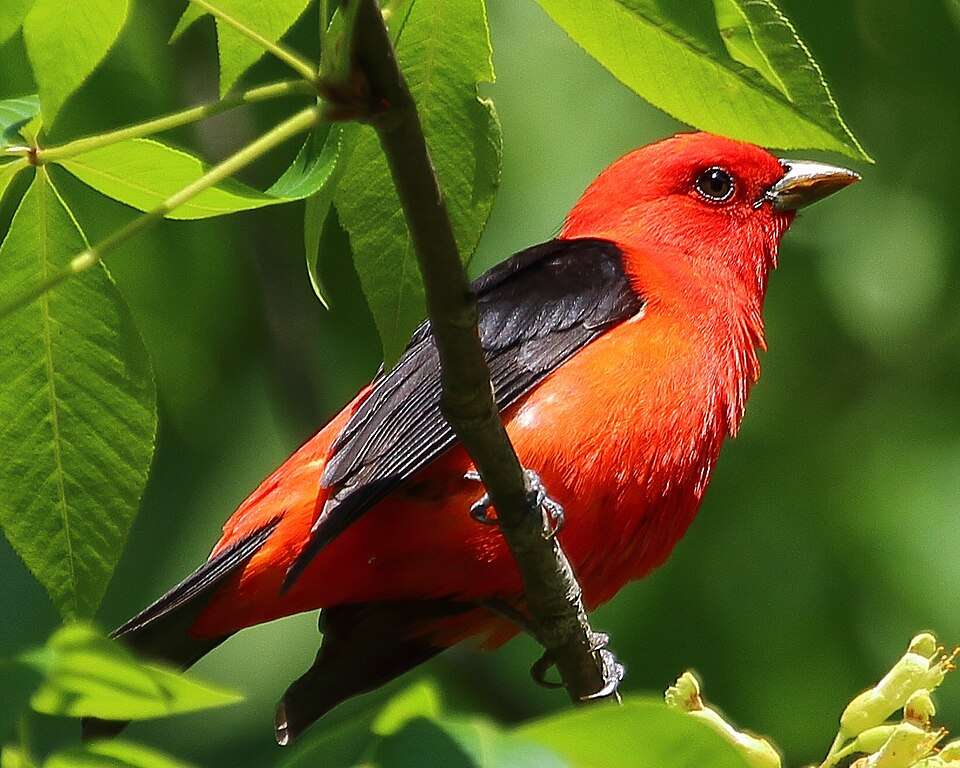
The Scarlet Tanager , once considered a finch relative, is now classified in the family Cardinalidae, alongside cardinals and grosbeaks, based on genetic evidence. This is a classic example of how modern techniques reveal true evolutionary relationships, even when external appearance is misleading.
How to Use These Systems: A Practical Approach for Birders
For the average U.S. birder, keeping up with taxonomic changes can feel overwhelming. However, it's not necessary to memorize every new family and order. The key is to understand the logic behind the changes and to use a reliable, up-to-date field guide or app. Most modern field guides, such as those from the American Birding Association (ABA), follow the AOS checklist.
- Field Guides: Modern guides are organized by taxonomic order, so birds that are more closely related (e.g., all the thrushes) will be grouped together. This is a helpful tool for learning and remembering relationships.
- Birding Apps: Apps like eBird and the Merlin Bird ID app from the Cornell Lab of Ornithology are excellent resources. They are constantly updated to reflect the latest taxonomic changes, so your sightings will be logged correctly.
- The Power of Observation: Even with these systems, the principles of observation remain paramount. Paying attention to a bird's physical traits, its song, its habitat, and its behavior—the same things used in older classification methods—is still the foundation of bird identification.
Wrapping Up
The field of avian classification is a dynamic and exciting one. What was once based on simple observation is now a sophisticated science driven by genetic data. The Whooping Crane, for instance, has long been classified in the family Gruidae (cranes), a grouping that has been consistently supported by both physical and genetic evidence. As we continue to unlock the secrets hidden in a bird's DNA, we are gaining a richer and more accurate understanding of the evolutionary history and remarkable diversity of the birds that grace our skies and landscapes.
If you enjoyed this post, find out why birds stand on one leg.
