
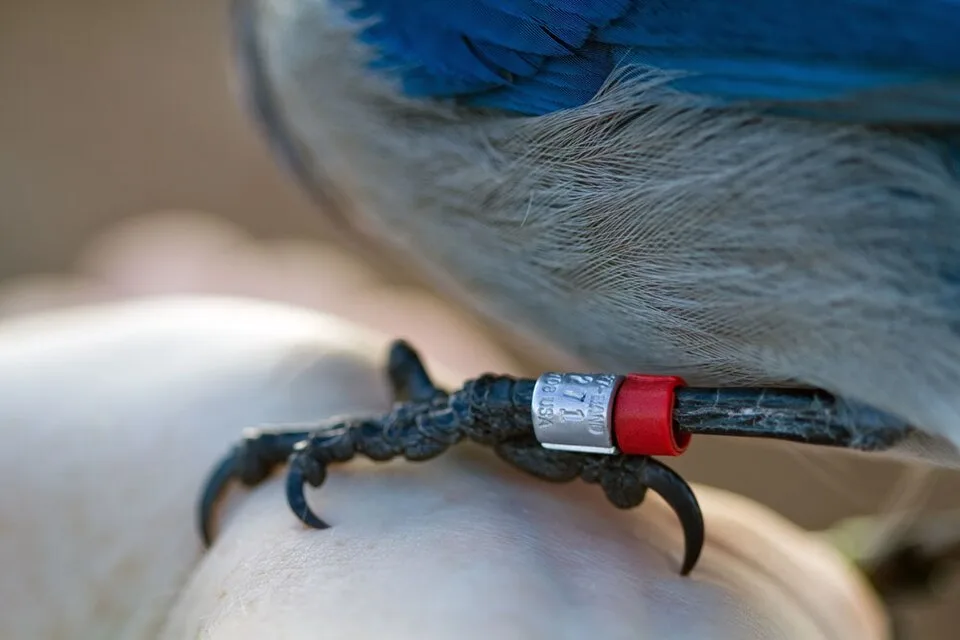
Bird banding, the practice of attaching a small, individually numbered metal ring to a bird's leg, stands as one of the most fundamental and enduring tools in avian science and conservation. For over a century, this simple act has transformed our understanding of North America's birds, providing the empirical data necessary to manage populations, set hunting regulations, and protect critical habitats. The success of this technique is rooted in the North American Bird Banding Program (NABBP), a collaborative effort between the United States and Canada that manages millions of banding and recovery records. By examining the why, who, where, and how of bird banding in the U.S., we can appreciate its monumental contribution to ornithology.
Why Do We Band Birds? (The Scientific Imperative)
The primary purpose of bird banding is to provide a unique, lasting identifier for an individual bird. Without this marker, scientists cannot distinguish one bird from another, making it impossible to study individual life histories. When a banded bird is later recaptured by a researcher or recovered (found dead) by a member of the public, the band’s unique number unlocks a treasure trove of information.

The core scientific questions answered by banding include:
- Dispersal and Migration: By tracking where a bird is banded and where it is recovered, scientists can precisely map migration routes, determine the speed and timing of travel, and identify critical stopover and wintering grounds. For instance, banding data was essential in establishing the four major North American Flyways, which now underpin migratory bird management.
- Longevity and Survival Rates: Banding allows for the determination of the minimum lifespan of a species. We know, for example, that small songbirds can live surprisingly long lives (some hummingbirds have been recorded living for over a decade) and that certain species like the Laysan Albatross have individuals living past 70 years. This data is critical for assessing population health.
- Population Studies: Banding helps estimate survival rates and reproductive success in a given population. By comparing the ratio of newly banded birds to previously banded birds (recaptures), biologists can model population trends and predict the effects of environmental changes or human activities, such as hunting.
- Harvest Management: For game birds like waterfowl, banding is a crucial conservation tool. Data on band recoveries from hunters are used to calculate harvest rates and, in turn, set annual, scientifically sustainable hunting regulations.
- Disease and Toxicology Research: Banding allows researchers to track individual birds that may be sampled for diseases (like West Nile virus or Lyme disease) or environmental toxins, helping to monitor disease prevalence and the overall health of the ecosystem.
Who Conducts Bird Banding in the U.S.? (The Regulated Network)
Bird banding is a highly regulated activity in the U.S., governed by the U.S. Geological Survey (USGS) Bird Banding Laboratory (BBL). Under the Migratory Bird Treaty Act, only authorized individuals can legally capture, handle, and mark wild birds.
The practice is conducted by a disciplined network of individuals and organizations:
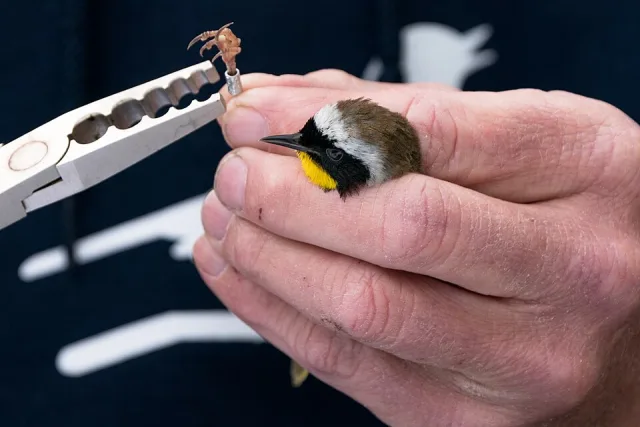
- Master Banders: These are highly trained individuals—often professional ornithologists, wildlife biologists, or dedicated volunteers—who hold federal banding permits issued by the BBL. They are responsible for all aspects of the banding operation, including training assistants, maintaining meticulous data records, and ensuring the safety and ethical treatment of the birds.
- Federal and State Agencies: Agencies like the U.S. Fish and Wildlife Service (USFWS), state wildlife departments, and the USGS itself conduct major, often large-scale, banding operations, particularly for waterfowl and other game birds, as this data is used to set harvest regulations.
- University Researchers and Bird Observatories: Academic institutions and non-profit bird observatories operate numerous fixed-site banding stations. These stations often conduct standardized, long-term monitoring projects like the Monitoring Avian Productivity and Survivorship (MAPS) program, which provides essential, localized data on bird populations.
- Trained Volunteers (Sub-Permittees): Many banding stations rely on dedicated, trained volunteers who assist Master Banders. These individuals gain invaluable field experience and contribute thousands of hours to data collection.
Small Feet, Big Adaptations: The Evolutionary Reasons for Tiny Bird Feet
Where Does Bird Banding Occur? (From Coast to Coast)
Banding takes place wherever birds congregate, and thus occurs across all 50 states and across every major ecosystem in the U.S. Banding stations are strategically located to capture specific bird groups or study key migratory movements:
- Migration Stopover Sites: Many permanent banding stations are located along the coastlines, Great Lakes, or major river valleys—areas that serve as crucial resting and refueling stops on major migratory routes. Examples include the Atlantic and Pacific Flyway coasts, the southern tip of Texas, and the Gulf Coast.
- Bird Observatories: These fixed sites, like those operated by the Bird Conservancy of the Rockies or the Audubon network, operate year after year in the same location, offering standardized, long-term datasets on local productivity and transient migrants. They are often placed in excellent habitat areas, such as the wooded areas near the Great Lakes or forested canyons in the West.
- Breeding and Wintering Grounds: Targeted banding efforts are conducted on the birds' breeding territories (e.g., in the boreal forests of the north) to assess reproductive success, or in their wintering grounds (e.g., the southern U.S. and Central America) to study survival and habitat use during the non-breeding season.
- Waterfowl Concentration Areas: Large-scale operations, often involving specialized traps, are executed in marshlands, refuges, and other wetlands where ducks and geese congregate to molt or stage before migration.
How Is Bird Banding Done? (Safety and Protocol)
The safety and minimal impact on the bird are the paramount concerns in all banding operations. The process follows a strict protocol to ensure scientific rigor and ethical handling:
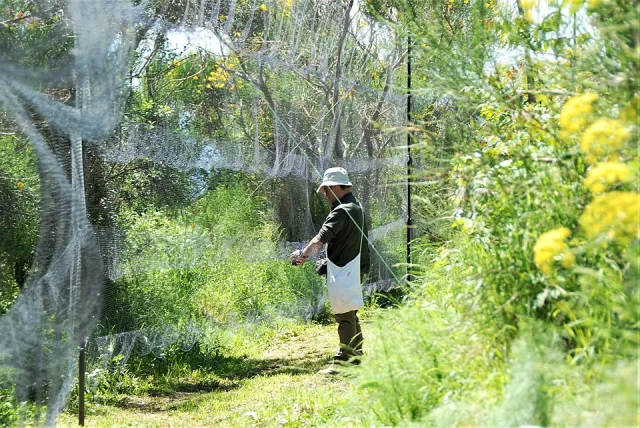
- Capture: Birds are typically captured using mist nets—nearly invisible, fine-mesh nets stretched between two poles in a wooded or shrubby area. These nets harmlessly entangle the birds, which are then quickly extracted by trained personnel. Specialized ground traps are often used for ground-foraging species and waterfowl.
- Extraction and Processing: Once removed from the net, the bird is gently placed in a soft cloth bag and taken to the banding station. The entire process is extremely rapid, often taking less than two minutes per bird, to minimize stress.
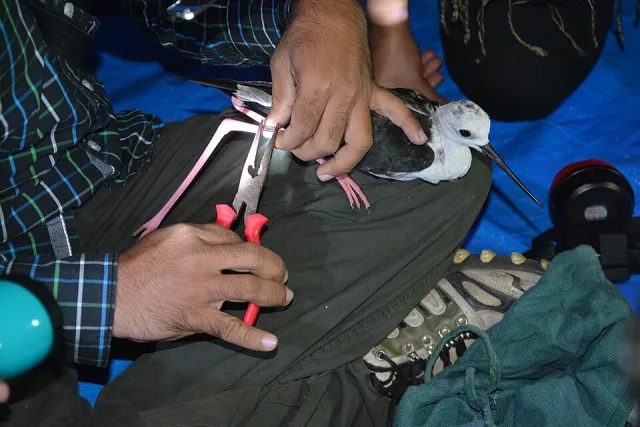
- Banding: A Master Bander selects a lightweight, pre-sized aluminum or stainless steel band from a sequential series provided by the BBL. Using specialized pliers, the band is carefully applied to the bird's tarsus (lower leg) . The band is loose enough to spin freely, ensuring it does not impede the bird’s movement or cause injury.
- Data Collection: Before release, the bander collects a standardized set of morphological data:
- Species Identification
- Age and Sex (determined by plumage, feather condition, or breeding status)
- Measurements (including wing chord, tail length, and tarsus length)
- Mass (using a specialized scale)
- Fat Stores (a crucial indicator of the bird's energy reserves for migration)
- Release and Data Submission: After processing, the bird is immediately released. All banding data is then meticulously recorded and submitted to the USGS Bird Banding Laboratory, where it is archived and shared with researchers across North America.
The success of the entire program hinges on the public. Hunters and citizens who find a banded bird are encouraged to report the band number and location to the BBL, which is the final step in closing the loop on a bird’s life story. This simple report turns a tiny metal ring into a data point, further enriching the continental dataset that guides conservation for future generations.
This video on MAPS Banding: Bird Banding for Research and Education further illustrates the techniques and purpose of bird banding at a monitoring station.

