

With its deep, resonant call echoing through dense woods — “Who cooks for you? Who cooks for you all?” — the Barred Owl (Strix varia) is one of North America’s most recognizable and widespread owls. Known for its soulful eyes, striped plumage, and nocturnal hunting habits, this species captivates birdwatchers and nature lovers alike. Though once confined to the eastern United States, the Barred Owl has expanded its range westward, prompting both ecological intrigue and conservation concern.
This article explores the life, habits, and growing impact of this mysterious forest dweller.
Identification
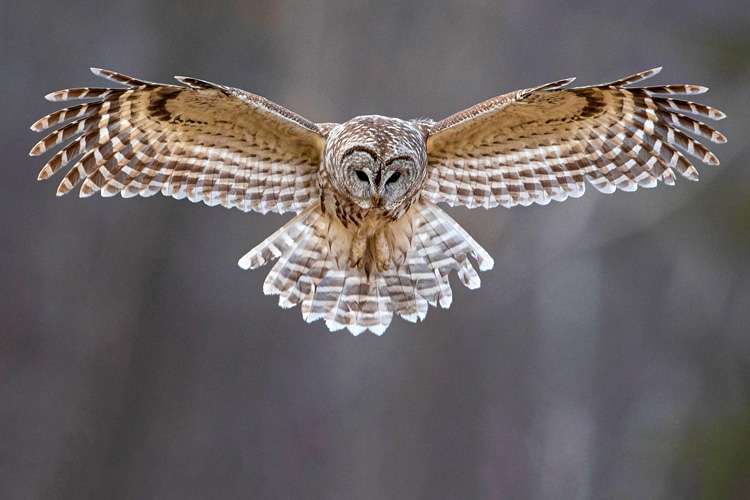
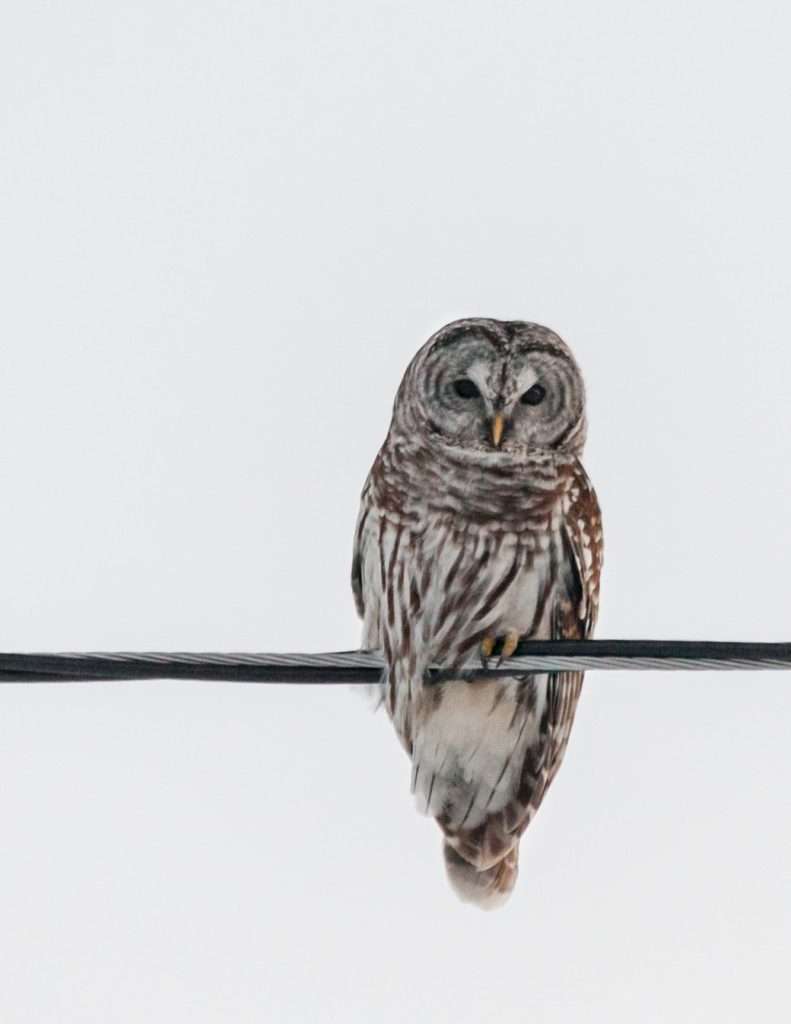
The Barred Owl is a large, stocky owl with a rounded head and no ear tufts — unlike the Great Horned Owl. Adults typically measure 16 to 25 inches in length with a wingspan of 38 to 49 inches, and weigh 1 to 2.5 pounds, with females larger than males.
Key physical features include:
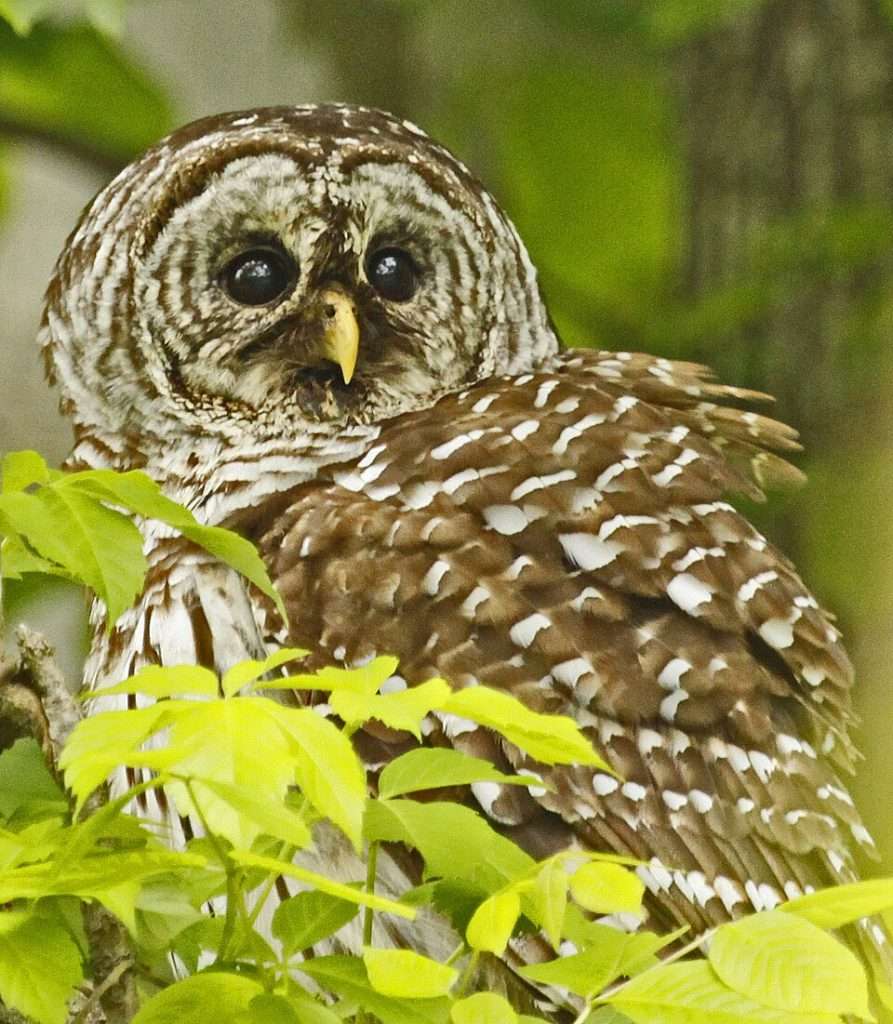
Brown and white striped plumage, with vertical bars on the belly and horizontal bars on the chest (hence the name "barred")
Large, dark brown to black eyes — unique among most North American owls, which have yellow eyes
A yellow beak, nestled between a heart-shaped facial disc
Short, broad wings and a rounded tail, ideal for maneuvering silently through forested environments
Their muted colors allow them to blend seamlessly into the tree trunks and shadows of the forest, especially during the day.
Range and Habitat
Originally native to eastern North America, the Barred Owl has dramatically expanded its range westward over the past century. It now occupies a wide territory stretching from eastern Canada to Florida, west across the Great Lakes and into the Pacific Northwest, even into southern Alaska.
Preferred habitats:
Mixed deciduous and coniferous forests
Swamps and wooded wetlands
Riparian corridors (forested areas near streams and rivers)
Old-growth forests, though they’ve adapted to younger stands and suburban woodlands as well
Barred Owls are non-migratory and typically remain in their home range year-round, often using the same roosting and nesting areas for many years.
Vocalizations
Barred Owls are among the most vocal owls in North America, with a classic, haunting hoot that is both comical and eerie. The most well-known call is a rhythmic 8-syllable phrase:
“Who cooks for you? Who cooks for you all?”
But their repertoire goes far beyond this, including:
Loud hoots and barks
Cackles, shrieks, and gurgles during courtship
Duets between mated pairs, especially in early spring
Their calls can carry for over a mile, especially on calm, humid nights, making them a dominant soundscape in the forests they inhabit.

Diet and Hunting Behavior
The Barred Owl is an opportunistic carnivore and skilled nocturnal hunter. Like other owls, it uses its exceptional hearing and night vision to detect prey even in total darkness.
Typical diet includes:
Small mammals such as mice, voles, rats, and rabbits
Birds, including smaller songbirds and sometimes other owls
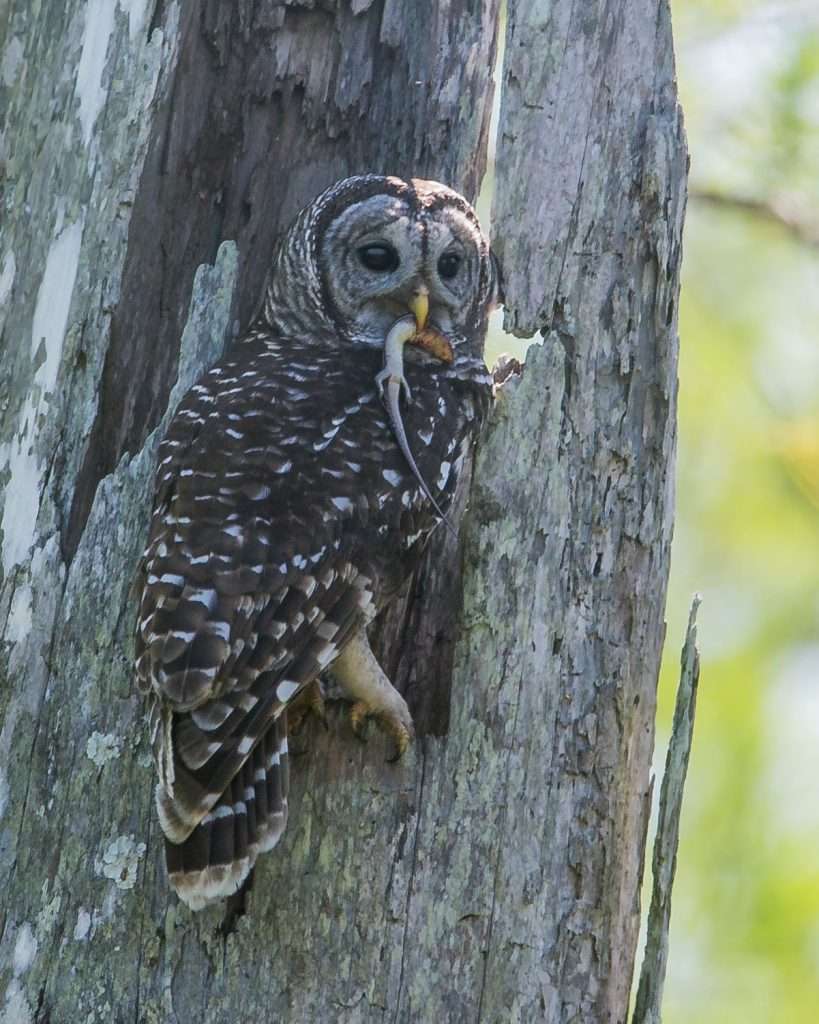
Amphibians and reptiles, particularly frogs, snakes, and salamanders
Insects and invertebrates, especially in warmer months
Crayfish and other aquatic creatures in wetland habitats
They hunt from a perch, swooping silently down to snatch prey with their powerful talons. Their soft, fringed flight feathers allow them to fly almost silently — a deadly advantage in the dark.
Reproduction and Nesting
Barred Owls are monogamous and form strong pair bonds that may last for life. Breeding season begins in late winter to early spring, with courtship rituals that include singing duets, mutual preening, and aerial displays.
Nesting habits:
They do not build their own nests but instead use natural tree cavities, abandoned hawk or squirrel nests, or nest boxes
Preferred sites are 20–40 feet above ground in mature trees
The female lays 2–4 white eggs, which she incubates for about 28 to 33 days
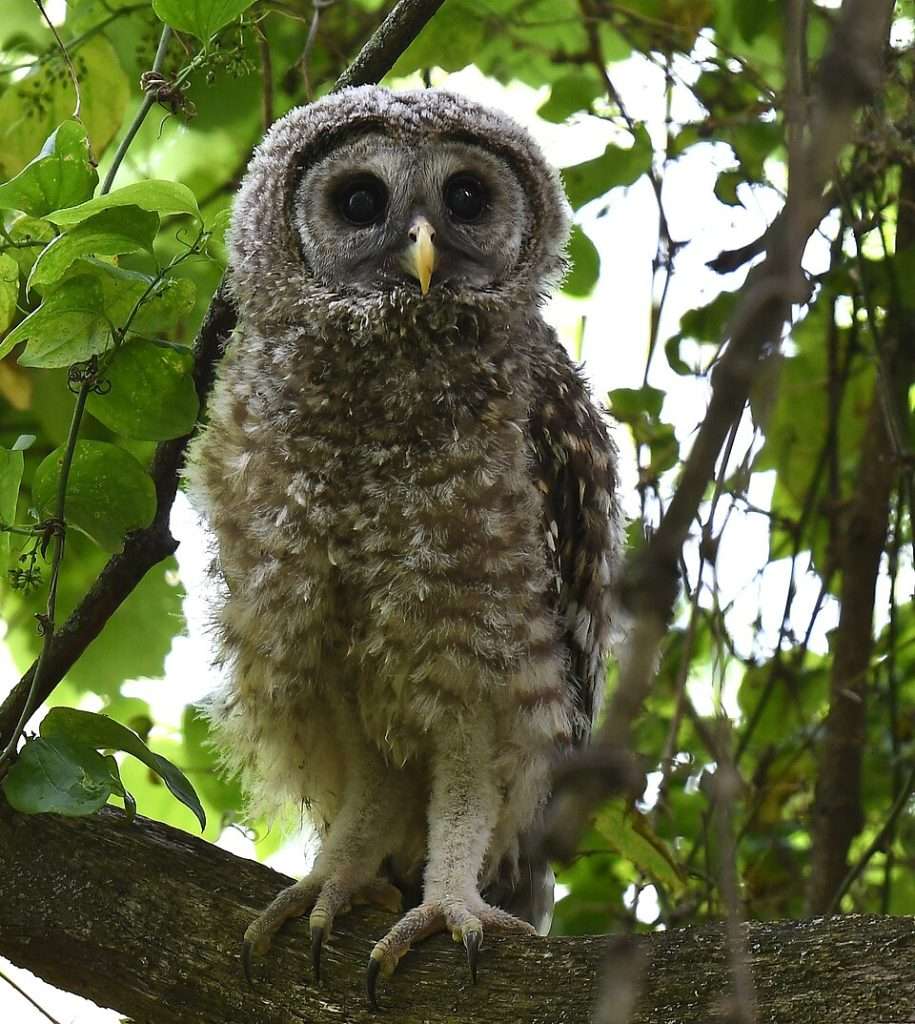
While the female incubates, the male provides food. After hatching, chicks (called owlets) stay in the nest for about 4–6 weeks, then begin to climb out onto nearby branches — a behavior called “branching.” They are capable of short flights around 6 weeks old but may remain dependent on their parents for food and protection for several more weeks.
Adaptability and Range Expansion
One of the Barred Owl’s most fascinating characteristics is its adaptability. Though it prefers large, undisturbed forests, it can live in suburban woodlots and secondary growth forests. This flexibility has helped it expand its range westward — a journey that has taken place over the past century, partly facilitated by fire suppression, tree planting, and climate changes.
By the mid-20th century, Barred Owls had reached the Great Plains and by the 1970s, they had crossed the Rocky Mountains into the Pacific Northwest. There, however, their presence has raised significant conservation concerns.
Conflict with the Spotted Owl
In the Pacific Northwest, the Barred Owl’s arrival has posed a serious threat to the Northern Spotted Owl (Strix occidentalis caurina), a closely related but more habitat-specialized species already under pressure from logging and habitat loss.
Barred Owls outcompete Spotted Owls for nesting sites and prey, and they sometimes hybridize with them. This has further reduced the Spotted Owl’s already declining population, leading to controversial management decisions, including controlled removal (lethal management) of Barred Owls in critical Spotted Owl habitat.
This situation presents a difficult ethical and ecological dilemma: how to protect one endangered native species without overly harming another.
Lifespan and Mortality
In the wild, Barred Owls can live up to 10–15 years, with some reaching over 20 years in captivity. Mortality is highest in the first year of life due to starvation, predation, and accidents.
Common causes of death include:
Vehicle collisions
Predation by Great Horned Owls
Starvation during harsh winters
Disease and parasites
Habitat loss and tree cutting during nesting season
Despite these threats, the species overall remains widespread and relatively stable.
Conservation Status
The Barred Owl is currently classified as a species of Least Concern by the IUCN. Its population has increased over the past several decades, thanks to its adaptability and expansion into new areas.
However, its impact on more vulnerable species like the Spotted Owl has prompted regional conservation strategies. Overall, the Barred Owl’s success story is both inspiring and complicated — a reminder of how species interactions shift in response to human-driven environmental change.
Cultural and Ecological Significance
Owls have long held symbolic importance in cultures around the world, and the Barred Owl is no exception. Its eerie calls and nocturnal habits have earned it a reputation in folklore as both wise and ominous.
Ecologically, Barred Owls serve as important indicators of forest health. As apex predators of the woodland understory, they help maintain balance by controlling rodent and small animal populations.
Observing Barred Owls
Barred Owls are among the easier owls to observe, especially in the eastern U.S.
Tips for finding them:
Listen at dusk or dawn for their distinctive hooting
Look near swamps, rivers, or mature forests
Watch for roosting birds in trees during the day — they often sit still and are well-camouflaged
Avoid using recorded calls to lure them, as this can stress birds and disrupt breeding behavior
With patience and respect, watching a Barred Owl glide silently through the forest is one of birding’s most magical experiences.
Wrapping Up
The Barred Owl is a fascinating blend of beauty, adaptability, and ecological importance. Its distinctive voice echoes through North America’s woodlands, serving as a haunting anthem of the wild. Whether roosting in a moss-draped cypress swamp or hunting mice under moonlight in a suburban backyard, the Barred Owl remains one of nature’s most compelling predators.
As forests change and wildlife adapts, the story of the Barred Owl reminds us of the complex dynamics of species expansion, competition, and conservation in a rapidly shifting world.
