

Graceful, fast, and agile, the Barn Swallow (Hirundo rustica) is a true aerial acrobat of the bird world. With its long, forked tail, sleek silhouette, and tireless flight, the Barn Swallow is a familiar sight over open fields, farms, and water bodies across much of the globe. In North America, these summer visitors are a welcome sign of warmer days, zipping through the sky in pursuit of flying insects and chattering with a cheerful song.
But beyond their beauty and acrobatic skills, Barn Swallows tell a story of close human connection, adaptation, and long-distance migration. Let’s explore the fascinating world of this iconic bird.
Physical Description
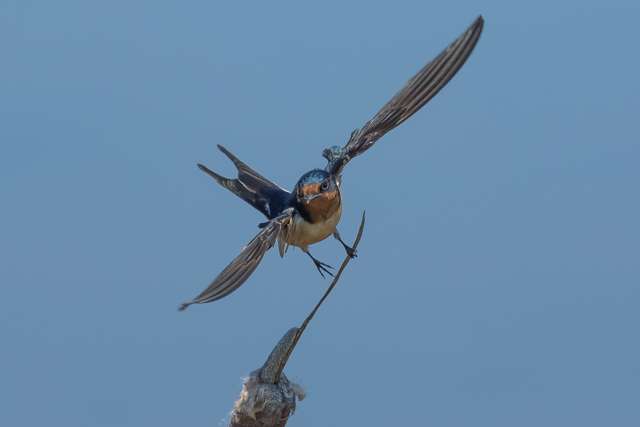
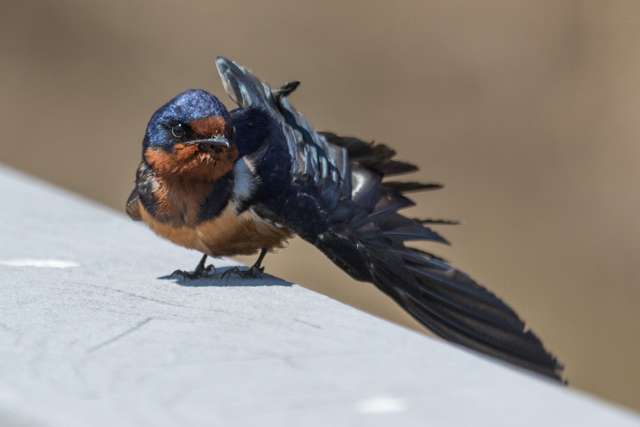
The Barn Swallow is a small, sleek songbird, measuring about 6.5 to 7.5 inches (17–19 cm) in length, including its long tail streamers, with a wingspan of 11.5 to 12.5 inches (29–32 cm). It weighs around 0.6 to 0.7 ounces (17–20 grams).
Distinctive features include:
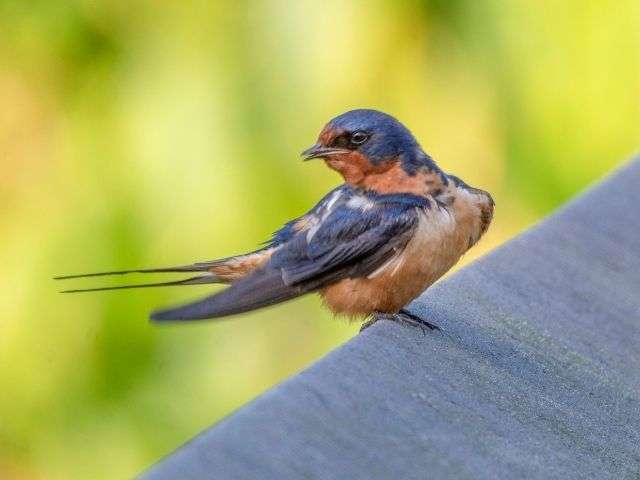
Glossy blue-black back and wings
Cinnamon to rusty-colored throat and forehead
Buff to orange underparts
Deeply forked tail with long outer feathers, often called “streamers”
Pointed wings that give it excellent maneuverability in flight
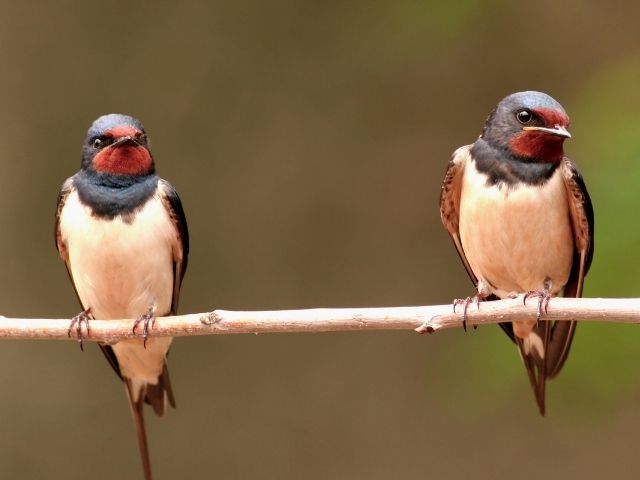
Males typically have longer tail streamers than females and slightly brighter plumage. Juveniles appear similar to adults but are duller in color and lack the elongated tail feathers.
Range and Habitat
The Barn Swallow is one of the most widely distributed bird species in the world, found across North America, Europe, Asia, and parts of North Africa. It is the most widespread swallow species globally.
In North America:
Breeding range: All of the U.S. and much of Canada, from coast to coast
Wintering range: Central and South America, especially Brazil and Argentina
Preferred habitats:
Open country: farmland, grasslands, meadows
Water edges: lakes, ponds, rivers
Human structures: barns, bridges, sheds, and other buildings
Barn Swallows thrive near people, and their name reflects their common nesting sites—barns and other outbuildings. Their success is partly due to this close association with human-altered landscapes.
Behavior and Diet
Barn Swallows are highly social, often seen in pairs, small groups, or large flocks. They are almost constantly in motion during the day, performing acrobatic maneuvers as they chase insects mid-air.
Feeding:
Barn Swallows are insectivores, feeding almost exclusively on flying insects, including:
Flies
Beetles
Wasps
Moths
Grasshoppers
Dragonflies
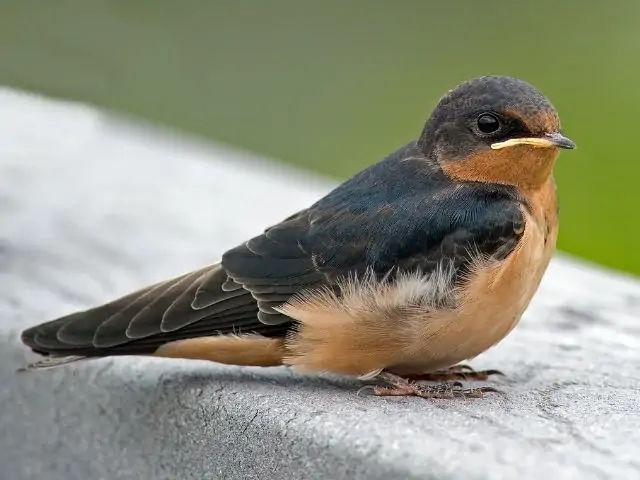
They feed by swooping low over fields, water, or roads, using their wide gapes to scoop up prey on the wing. Occasionally, they drink by skimming the surface of water while in flight.
Their remarkable aerial skills are among the best in the bird world, combining speed, agility, and precision.
Vocalizations
The Barn Swallow has a cheerful, twittering song, which often sounds like a series of liquid chirps, warbles, and trills. Their calls are sharp and frequent, especially during courtship and while defending nests.
The song is not melodious like a thrush’s, but it’s a lively, pleasant sound that adds a pastoral charm to rural areas in spring and summer.
Nesting and Reproduction
Barn Swallows are monogamous, although occasional extra-pair matings occur. They form strong pair bonds and are highly faithful to nesting sites, returning to the same locations year after year.
Nesting behavior:
Barn Swallows build cup-shaped nests out of mud pellets, mixed with grass and lined with feathers.
Nests are typically attached to vertical walls or horizontal beams in barns, under eaves, bridges, or culverts.
Both males and females help construct the nest.
Breeding cycle:
Clutch size: 3 to 7 white eggs with brown speckles
Incubation: 13–17 days, mostly by the female
Fledging: Young leave the nest at 18–23 days
Pairs may raise two broods per season, sometimes three in warmer regions
After fledging, juveniles continue to be fed by parents for about a week as they learn to forage for themselves.
Migration
Barn Swallows are long-distance migrants, undertaking incredible journeys between their breeding and wintering grounds.
North American populations migrate to Central and South America.
Migration distances can exceed 7,000 miles (11,000 km) each way.
They migrate in daylight, feeding as they travel, and often form large communal roosts at stopover sites.
This epic migration is one of nature’s most impressive feats and a testament to the bird’s endurance and navigation skills.
Relationship with Humans
Few wild birds are as closely associated with humans as the Barn Swallow. They have long been considered symbols of luck, loyalty, and love, and in many cultures, they are welcomed as harbingers of spring and guardians of farms.
Historically, farmers encouraged swallows to nest in their barns, recognizing their value in controlling insect populations. Even today, Barn Swallows help reduce pests like mosquitoes, flies, and crop-damaging bugs.
While their nesting can create messes on walls or ledges, many people continue to view them with affection and protect their nests.
Threats and Conservation
The Barn Swallow is currently listed as a species of Least Concern by the IUCN, with an estimated global population exceeding 190 million. However, populations have shown declines in parts of North America and Europe, likely due to:
Loss of nesting sites: Modern building materials and sealing practices reduce access to suitable nest locations.
Declines in insect populations due to pesticide use and habitat loss.
Climate change, which can affect timing of migration, breeding, and food availability.
Collisions with vehicles and buildings, especially near urban areas and highways.
Conservation efforts include installing nesting shelves, preserving old buildings, and promoting insect-friendly farming practices.
How to Help Barn Swallows
If you want to support Barn Swallows in your area:
Allow them to nest in open buildings or provide artificial nest platforms under eaves or porches.
Avoid disturbing active nests during breeding season.
Avoid pesticides and promote native insect populations by planting wildflowers.
Keep barns and sheds open during nesting season.
Educate others about their ecological value and the importance of insect-eating birds.
Barn Swallows are a joy to watch and play a valuable role in natural and agricultural ecosystems.
Cultural Significance
Throughout history, Barn Swallows have been symbols of homecoming, freedom, and devotion. Sailors once believed that a tattoo of a swallow would guarantee a safe return home, as these birds always returned to the same nesting site.
In literature and poetry, swallows often represent the arrival of spring, youthful energy, and the rhythms of life. Their presence across cultures reflects their widespread distribution and endearing nature.
Wrapping Up
The Barn Swallow is more than just a graceful bird of the sky—it’s a messenger of seasons, a partner to farmers, and a marvel of evolutionary adaptation. From building delicate mud nests on barn beams to flying thousands of miles between continents, Barn Swallows embody both the intimacy of rural life and the grandeur of global migration.
As these birds return each spring, zipping and darting through the air with purpose and poise, they remind us of the resilience of nature and the beauty of connection—between birds and people, land and sky, and past and present.
