
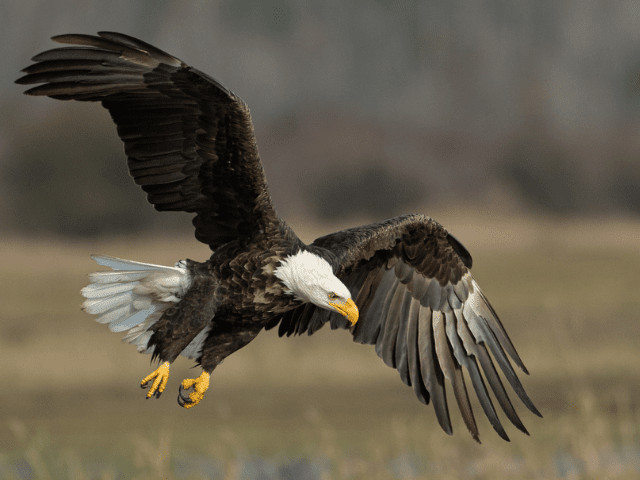
The Bald Eagle, a symbol of American strength and freedom, has long held a place of reverence in the national consciousness. Yet, a little more than half a century ago, this majestic raptor was teetering on the brink of extinction, its piercing cry silenced across much of its native range.
Its story is a powerful testament to the resilience of nature and the effectiveness of concerted conservation efforts. The journey of the Bald Eagle, from a species in peril to one that is now thriving, is a remarkable narrative of scientific discovery, public advocacy, and a collective commitment to protecting America's national emblem.
The Era of Decline: From a Symbol of Power to a Symbol of Peril
The Bald Eagle's decline began long before the 20th century. In the late 19th and early 20th centuries, as the American frontier expanded, Bald Eagles were often viewed as a threat to livestock, leading to widespread shooting. Bounties were even placed on them in some states. The destruction and degradation of their nesting habitats also contributed to the population's steady decline. However, the most catastrophic blow to the Bald Eagle population came in the mid-20th century with the widespread use of a powerful pesticide: Dichlorodiphenyltrichloroethane, more commonly known as DDT.

DDT was hailed as a miracle chemical following World War II, a highly effective tool for controlling mosquitoes and agricultural pests. The pesticide, however, had a devastating, unforeseen consequence on the food chain. When DDT was washed into waterways, it was absorbed by aquatic plants and fish. Bald Eagles, as apex predators, consumed these contaminated fish. While the DDT itself wasn't lethal to the adult birds, it interfered with their ability to metabolize calcium, a crucial element for producing strong eggshells.
Female eagles began laying eggs with shells so thin and brittle that they would crack under the weight of the incubating parent. As a result, nesting attempts consistently failed, and the Bald Eagle population plummeted. By 1963, the number of known nesting pairs in the contiguous United States had dropped to a perilous all-time low of just 417.
A Call to Action: The Rise of the Environmental Movement
The plight of the Bald Eagle and other birds of prey, such as ospreys and peregrine falcons, did not go unnoticed. The 1962 publication of Rachel Carson's groundbreaking book, Silent Spring, drew public attention to the devastating effects of pesticides like DDT on the environment. Carson's work became a catalyst for the modern environmental movement, sparking a national conversation about conservation and the interconnectedness of ecosystems.

This growing public awareness and scientific evidence spurred a series of crucial legislative and conservation actions. In 1940, even before the DDT crisis was fully understood, Congress passed the Bald Eagle Protection Act, which made it illegal to kill, sell, or possess Bald Eagles. In 1972, after years of research and advocacy, the U.S. Environmental Protection Agency took the landmark step of banning the use of DDT in the United States.
This was a turning point. The following year, the Endangered Species Act was passed, providing a powerful legal framework for protecting threatened and endangered species and their habitats. In 1978, the Bald Eagle was officially listed as endangered throughout most of the lower 48 states, cementing its status as a species in need of urgent intervention.
The Road to Recovery: A Coordinated Effort
The recovery of the Bald Eagle was a complex, multi-faceted effort that required the cooperation of federal and state agencies, non-profit organizations, and private citizens. The Endangered Species Act provided the springboard for these actions, which included a range of innovative and tireless programs.
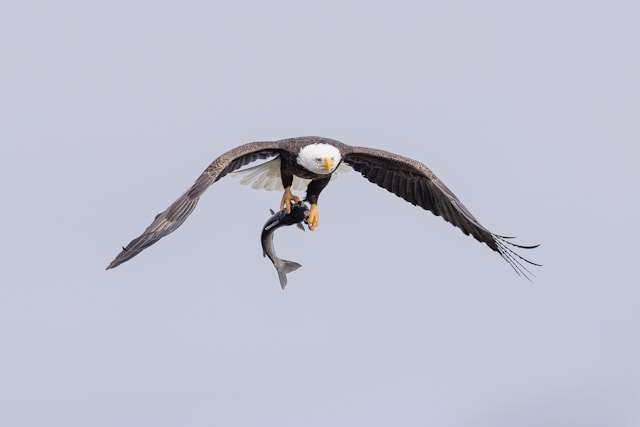
One of the most effective strategies was the use of "hacking" programs. Hacking involves placing young Bald Eagle chicks from healthy populations into artificial nests in areas where the species had been extirpated. These chicks are fed and cared for by humans, but with minimal contact to prevent them from imprinting. Once they fledge, they are free to fly and hunt on their own.
The hope, and the ultimate result, was that these birds would return to the release site to nest and breed once they reached maturity, thereby re-establishing a local population. This technique was highly successful, helping to restore Bald Eagles to states like New York and Massachusetts where they had been absent for decades.
Habitat protection was another cornerstone of the recovery plan. The government and private conservation groups worked to protect crucial nesting sites and feeding grounds, ensuring that the eagles had safe and undisturbed places to live and raise their young. Furthermore, the ban on DDT allowed the eagles' reproductive systems to recover, and with the new protections in place, they were once again able to successfully lay and hatch their eggs. The eagles, with their natural resilience, did the rest of the work.
A Soaring Success: A Symbol Restored
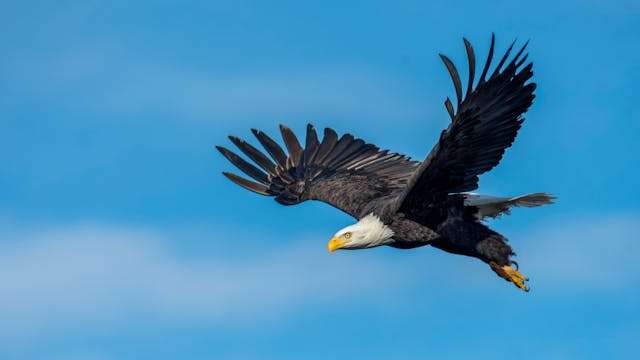
The collective efforts paid off spectacularly. The Bald Eagle population began to rebound steadily throughout the late 20th century. By 1995, the species had recovered sufficiently to be reclassified from "endangered" to "threatened" in the lower 48 states. The ultimate victory came in 2007, when the Bald Eagle was officially removed from the federal list of threatened and endangered species.
The recovery has continued to accelerate. A 2020 report by the U.S. Fish and Wildlife Service estimated that the Bald Eagle population in the lower 48 states had grown to an incredible 316,700 individuals, including more than 71,400 nesting pairs. This represents a quadrupling of the population since 2009. Bald Eagles can now be seen in every continental U.S. state, soaring high over rivers, lakes, and coastal areas, a common sight that was once a rarity.
Wrapping Up
The story of the Bald Eagle is more than just a conservation success; it is a powerful metaphor for what is possible when science, policy, and public will align. It demonstrates that even when a species is on the brink, dedicated action can bring it back from the edge. The Bald Eagle's soaring return is a beacon of hope and a reminder that our efforts to protect the natural world can, and do, make a profound difference. While they are no longer listed under the Endangered Species Act, Bald Eagles remain protected by the Bald and Golden Eagle Protection Act and the Migratory Bird Treaty Act, ensuring that America's national symbol will continue to thrive for generations to come.
Read more about falcons and hawks.
