

The Bald Eagle (Haliaeetus leucocephalus) stands as one of the world's most recognizable birds of prey, serving since 1782 as the national emblem of the United States. More than just a symbol, this magnificent raptor is a biological success story, having recovered from near extinction to thrive across North America.
Biology and Identification
The Bald Eagle is a large sea eagle, one of the most powerful and recognizable raptors in North America. A sea eagle is a large raptor belonging to the genus Haliaeetus. These birds are specialized fish and waterfowl hunters that inhabit coastal areas, large lakes, and major river systems globally. They are characterized by their massive size, broad wings, powerful beaks, and, crucially, unfeathered lower legs and feet, which are rough-textured for seizing slippery aquatic prey from the water's surface without diving completely underwater.
The Bald Eagle (Haliaeetus leucocephalus) is definitively classified as a sea eagle because it meets these criteria: it is a large, fish-eating bird that is strongly associated with water habitats, and its lower legs (tarsi) are bare and scaled, an adaptation perfectly suited for grasping fish, which form the majority of its diet.

Size and Appearance
Mature Bald Eagles are among the largest birds in the continent. They possess immense size and bulk:
- Size: Lengths typically range from to inches (70–102 cm).
- Wingspan: Their impressive wingspan is usually between and feet (1.8–2.3 m), allowing for effortless soaring.
- Plumage: Adults (typically to years old) are instantly recognizable by their striking contrast: a snow-white head and tail against a deep, dark brown body and wings. They have brilliant yellow eyes, beak, and legs.
- Juveniles: Younger eagles are almost entirely dark brown, often with irregular white mottling on the body and wings. It takes several years for them to acquire the full adult plumage, which can lead to confusion with the Golden Eagle.
Flight and Structure
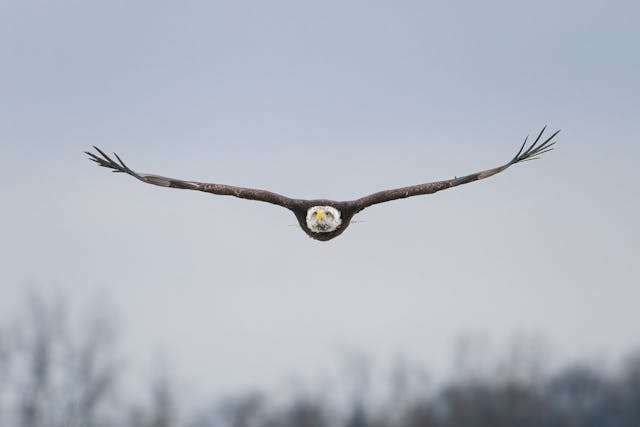
In flight, the Bald Eagle is a powerful and graceful sight. It holds its broad, rectangular wings flat or in a very slight dihedral, contrasting with the shallow 'V' shape of the soaring Turkey Vulture. Its large head and long, prominent beak extend well past the wing line, a key ID feature when viewing it from a distance.
Habitat and Range

The Bald Eagle's distribution is intimately tied to its primary food source: fish.
Geographic Distribution
Bald Eagles are found across most of North America, from Alaska and Canada down to northern Mexico, making them one of the most widespread raptors.
Preferred Habitat
They are nearly always associated with large bodies of water:
- Coastal Areas: Seashores, estuaries, and major bays.
- Inland Waters: Large lakes, reservoirs, and major river systems, especially those with abundant fish populations and old-growth trees for nesting and perching.
- Nesting Requirements: They require old-growth or mature trees with robust limbs to support their enormous nests.
Diet and Hunting Strategy
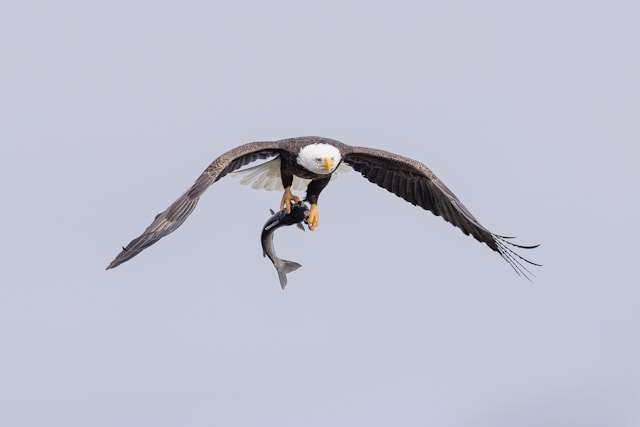
The Bald Eagle is an opportunistic predator and a generalist carnivore, with fish forming the majority of its diet.
A Master Fisher
As a piscivore, the Bald Eagle uses its sharp vision to spot fish near the water's surface. It executes a swift, shallow dive, extending its unfeathered legs and powerful talons to snatch the prey. Its legs are bare to avoid soaking feathers when seizing aquatic prey—a key morphological difference from the feathered legs of the terrestrial Golden Eagle.

Opportunism and Scavenging
Bald Eagles are highly opportunistic. They readily consume carrion (dead animals), particularly during the winter when fish are less accessible. They are also known for kleptoparasitism, a practice where they steal fish or other prey from smaller or less dominant raptors, such as Ospreys, with great success. This behavior often reveals their intelligence and dominance within their ecosystem.
Nesting and Life Cycle
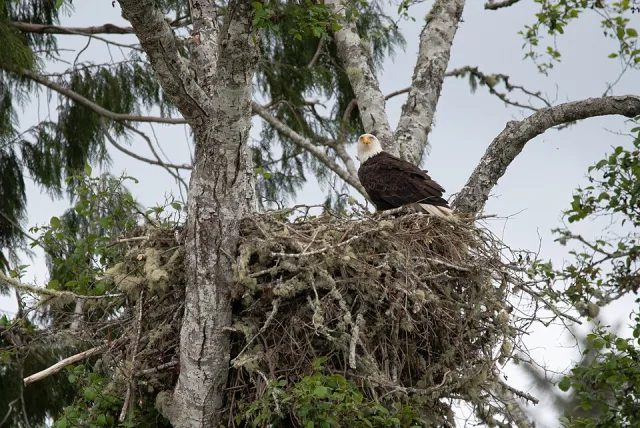
Bald Eagles are known for their monogamy and their impressive construction projects.
Nests (Eyries)
Eagle nests, or eyries, are colossal structures. They are built from sticks and lined with soft materials like grass and moss, often located high in the tallest trees or on remote cliff faces. Because a pair reuses and adds to the same nest year after year, some eyries can reach immense sizes, up to 10 feet ( meters) across and feet ( meters) deep, easily weighing a ton or more.
Reproduction
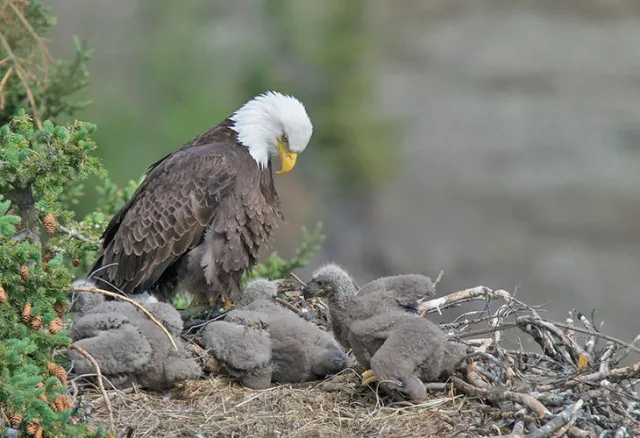
Bald Eagles typically lay one to three eggs per clutch. Both parents share the incubation duties, which last about days. The young, or eaglets, fledge (learn to fly) after 10 to 12 weeks but remain dependent on their parents for several weeks afterward. They are long-lived, often surviving for to years in the wild.
The Decision and the Seal
The official adoption of the Bald Eagle occurred on June 20, 1782, when the Great Seal of the United States was finalized by the Continental Congress.
- Central Role: The final design prominently featured the Bald Eagle clutching an olive branch (symbolizing peace) in its right talon and a bundle of thirteen arrows (symbolizing war and the thirteen original colonies) in its left. The motto E pluribus unum ("Out of many, one") is held in its beak.
- Symbolism to the Founders: The eagle's immense power, impressive size, and majestic appearance were seen as a perfect reflection of the new nation's desire to project power and sovereignty on the world stage. Its ability to soar high and its fierce, independent nature perfectly mirrored the ideals of a young country founded on the principles of liberty and self-governance.
Conservation Success Story
The Bald Eagle's history is marked by a dramatic decline and one of the most significant conservation rebounds in American history.
Near Extinction
In the mid-20th century, the Bald Eagle population plummeted across the lower 48 states. The primary cause was the widespread use of the pesticide DDT (dichloro-diphenyl-trichloroethane). When eagles consumed DDT-contaminated fish, the chemical interfered with their calcium metabolism, causing them to lay eggs with shells so thin they would break under the weight of the incubating parent. Habitat destruction also contributed significantly to their decline.
Recovery and Delisting
The ban on DDT in the U.S. in 1972 was the single most important factor in the eagle's recovery. Combined with the protection offered by the Endangered Species Act (ESA) and intense conservation efforts, the population soared.
- In 1963, only nesting pairs were left in the lower 48 states.
- By 2007, the population had recovered sufficiently for the Bald Eagle to be removed from the ESA's List of Endangered and Threatened Wildlife, a monumental achievement for wildlife conservation.
- Today, populations are strong and stable, a testament to effective environmental policy and public commitment.
The recovery of the Bald Eagle ensures that future generations will continue to witness the soaring flight and hear the distinctive cries of America's living symbol of majesty and freedom.
The Flames of Summer: A Guide to the Dazzling Orioles of the U.S.
