Love The Birds is reader-supported. When you purchase through one of our links we may earn an affiliate commission (at no cost to you).

Backyard Birding for Beginners: The 30-Day Starter Challenge

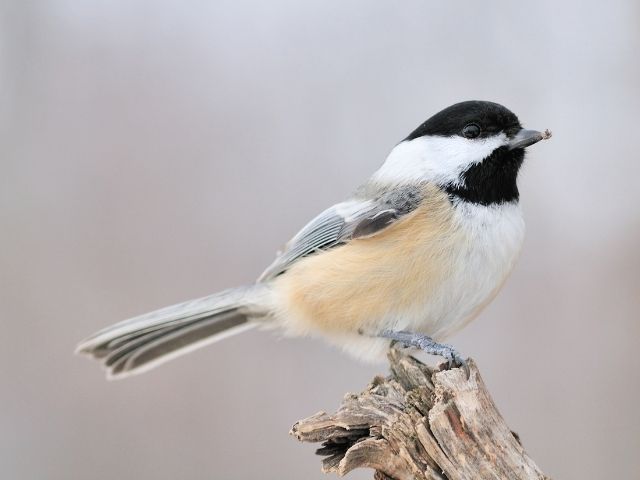
Black-Capped Chickadee perched on a tree branch

Birding, or birdwatching, is one of the fastest-growing and most accessible hobbies in the U.S. It requires minimal equipment, can be done anywhere from a fire escape to a sprawling suburban yard, and offers a profound, calming connection to nature. Yet, starting out can feel overwhelming. How do you tell a House Sparrow from a Chipping Sparrow? What should you feed them? And where do you even begin looking?

This 30-Day Starter Challenge provides a structured, month-long plan designed to take you from a curious novice to a confident, active backyard birder. It focuses on the three pillars of the hobby: Attraction (Days 1-10), Identification (Days 11-20), and Documentation & Community (Days 21-30).

By the end of the month, you won't just be watching birds; you'll be attracting them, identifying them by sight and sound, and contributing your observations to the global body of citizen science.

Male Purple Finch standing on a dead twig
Purple Finch

Phase I: Attraction and Setup (Days 1–10)

The first step is to turn your outdoor space into a welcoming bird oasis.

Week 1: Essential Gear and Water (Days 1–3)

DayAction ItemGoal
Day 1Invest in Binoculars.The most crucial tool. Buy a pair with 8x42 magnification. This is the sweet spot for beginners: 8x power (clear image) and 42mm lens (bright view).
Day 2Install a Water Source.Water is a stronger attractant than food. Install a simple bird bath (even a shallow saucer works). Keep the water clean and shallow (1-3 inches deep).
Day 3Start a Birding Journal.Get a small notebook. Start tracking the date, time, weather, and a simple sketch or description of any birds you see. This trains your observation skills.
Female Northern Cardinal sitting on a shephard's hook
Female Northern Cardinal

Week 2: Food and Safety (Days 4–10)

Once the basics are set, it’s time to offer the right food and ensure the birds' safety.

DayAction ItemGoal
Day 4Install Your First Feeder.Choose a simple hopper or tube feeder and place it about 10–15 feet from a tree or shrub for easy access and escape cover.
Day 5Buy Black Oil Sunflower Seed (BOSS).BOSS is the gold standard. It attracts the widest variety of backyard birds, including cardinals, chickadees, and finches.
Day 6Offer Suet.Install a wire cage feeder and fill it with suet cakes. This fatty food is essential for insect-eaters (woodpeckers, wrens) and is great in cold weather.
Day 7Add a Native Plant.Choose one local native plant (a shrub or flower) that produces berries or seeds in your region. Native plants provide food and habitat that birds rely on naturally.
Day 8Window Safety Check.365 million birds die from window collisions annually. Apply window decals, UV tape, or hang ribbons/paracord 2–4 inches apart to break up reflections on large windows.
Day 9The Cat Conversation.If you have outdoor cats, commit to keeping them indoors or securing them in a “catio.” This is the #1 conservation action you can take.
Day 10Sit and Wait.Spend 30 minutes with your binoculars and journal. Don't move. Just observe which birds have found your setup and note their behavior.

A small brown bird sits on a small branch. It has a bright pale brown cap.
Chipping Sparrow

Phase II: Identification Skills (Days 11–20)

Now that the birds are visiting, the challenge shifts to learning who they are. This phase requires a good field guide (physical or digital).

Birds In New Hampshire: 10 Cute Species You Hate Not To Love

Week 3: Mastering the Basics (Days 11–17)

This week focuses on recognizing the features that allow experts to rapidly identify birds. Use the acronym "S.H.A.P.E." to guide your observations.
DayAction ItemGoal
Day 11Study "S" (Size).Start comparing birds to common references. Is it Sparrow-sized, Robin-sized, or Pigeon-sized? Size comparison is often the first and best clue.
Day 12Study "H" (Habitat).Note where the bird is. Is it on the ground, in the canopy, or on a feeder? (e.g., Woodpeckers are almost always vertical on tree trunks).
Day 13Study "A" (Appearance).Focus on color patches and markings (e.g., wing bars, eye rings, streaks, crests). Compare the male and female of a common species (like the Cardinal).
Day 14Study "P" (Proportions/Pose).Look at bill shape (thick and conical for a finch, thin and pointed for a warbler), tail length, and body posture.
Day 15Study "E" (Ensemble/Erratic).Observe behavior. Does it hop (Sparrow) or walk (Robin)? Does it flick its tail (Phoebe)? Behavior is often the definitive ID trait.
Day 16Identify the "Big Four."Learn the common ID marks for the four most common backyard birds in your region (e.g., American Robin, Northern Cardinal, House Sparrow, and Blue Jay).
Day 17The Field Guide Deep Dive.Spend 30 minutes studying the S.H.A.P.E. of birds you haven't seen. Get familiar with the layout of your field guide.
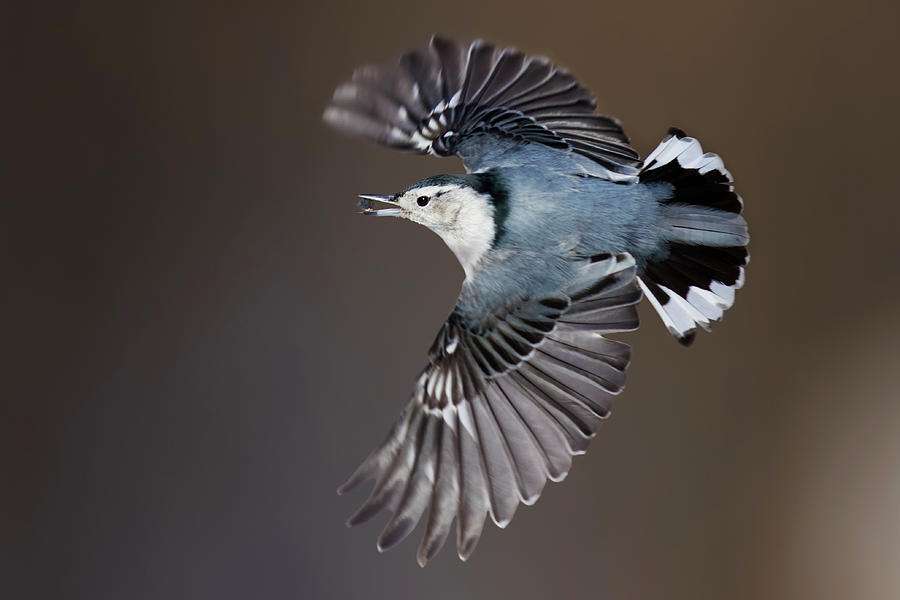
White-breasted Nuthatch

Week 4: Adding Sound to Sight (Days 18–20)

Experts hear the birds before they see them. Start training your ear.

DayAction ItemGoal
Day 18Listen to 3 Common Calls.Download a bird sound app (like Merlin Bird ID) and listen to the calls (short communication sounds) of three common birds in your yard (e.g., Blue Jay, Chickadee, Mourning Dove).
Day 19Listen to 3 Common Songs.Listen to the songs (longer, melodic breeding sounds) of the same three birds. Try to create a memorable mnemonic (e.g., the Robin’s cheer up, cheer up).
Day 20The Dawn Chorus Challenge.Get outside just before sunrise. Close your eyes and simply listen to how many distinct sounds you can hear. Try to separate the high pitches from the low pitches.

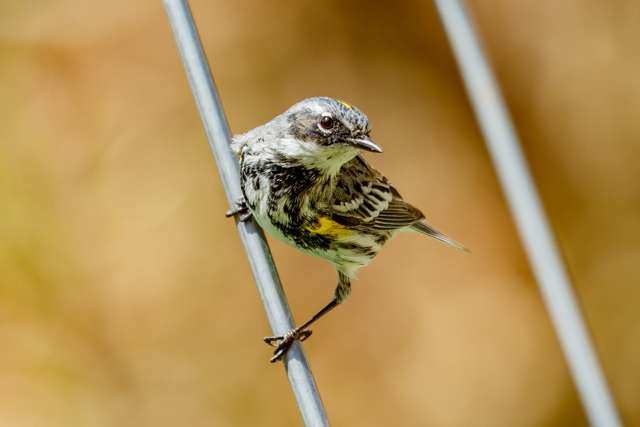
Small bird with gray flanks, white throat and belly, yellow flanks.
Yellow-rumped Warbler

The final phase moves beyond personal observation into the realms of citizen science and community networking.

Week 5: Logging Your Data (Days 21–25)

You're seeing and identifying birds; now it's time to contribute.
DayAction ItemGoal
Day 21Download the eBird App.eBird is the world’s largest citizen science project, managed by Cornell Lab of Ornithology. Create an account.
Day 22Submit Your First Checklist.Go birding for 15 minutes, count every bird you see, and submit your first eBird checklist. This makes your observations scientifically valuable.
Day 23Explore the eBird Hotspots.Look up your local city or county on the eBird website. Find the "hotspots" near you—these are the most productive places to find birds.
Day 24Set Up a Photo Trap.Use an old phone or camera to try and photograph a bird at your feeder. This is crucial practice for documenting rare sightings.
Day 25Track Your Yard List.Use eBird's tools to generate a "Yard List"—a running total of all species you have confirmed in your own backyard.
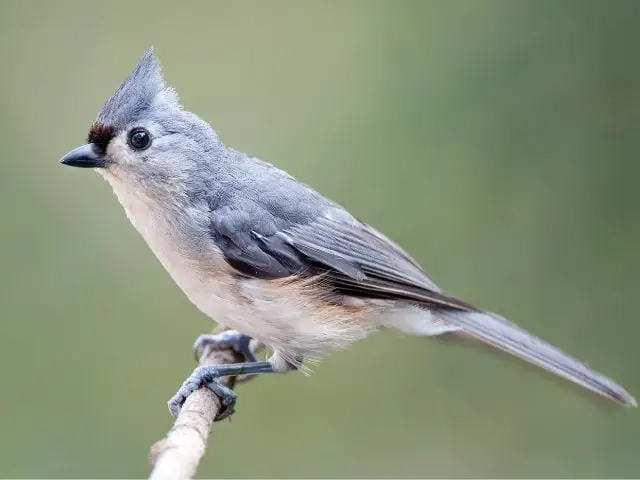
bird with grey and white feathers
Tufted Titmouse

Week 6: Community and Lifelong Learning (Days 26–30)

Birding is best done with others.

DayAction ItemGoal
Day 26Find Your Local Audubon Chapter.Google your local Audubon chapter or bird club. Find their online calendar for guided walks or meetings.
Day 27Go on Your First Group Walk.Attend a local beginner-friendly bird walk. The best way to learn IDs and tips is from experienced birders.
Day 28Learn One New Feeder Bird.Go beyond the "Big Four." Focus on a feeder bird you haven't identified yet (e.g., a specific sparrow or finch) and look up its key field marks.
Day 29Reflect and Plan.Review your journal and your eBird lists. Which birds surprised you? Which season (spring or fall) are you most excited to bird next?
Day 30The Final Countdown.Spend one hour actively birding your backyard. Identify everything by sight and try to name three birds by sound alone. Congratulations—you are now an official backyard birder!

Wrapping Up: The Journey Has Begun

Completing the 30-Day Starter Challenge means you've mastered the foundational skills of attraction, identification, and documentation. You now understand the difference between a feeder pest and a migrating gem, and you possess the tools to continue learning.

Birding is a lifelong journey. Every season brings new species, new challenges, and new discoveries. The most beautiful part of the hobby is that no matter how long you've been doing it, there is always another bird to find, another song to learn, and another piece of the wild world waiting to be uncovered right outside your door. Welcome to the flock!

Calling All Night Owls: Secrets of Nocturnal Bird Surveys in America 

Leave a Comment

Your email address will not be published. Required fields are marked *

Scroll to Top