Love The Birds is reader-supported. When you purchase through one of our links we may earn an affiliate commission (at no cost to you).
The Continuing Saga of Avian Vagrants in the United States and Canada
Share your love
In the world of birding, a "vagrant" is a traveler, a wanderer who has strayed far beyond its typical range. These are not merely lost birds; they are pioneers, explorers of the sky, whose improbable journeys ignite a passion in thousands of dedicated observers. While many vagrant sightings are fleeting, a select few birds have captivated the North American birding community by their sheer longevity.
These "continuing rarities," first sighted in late 2024 or early 2025, have become the avian celebrities of the year, transforming remote corners of the continent into pilgrimage sites for birders. From the rugged shores of Newfoundland to the arid canyons of Arizona, their stories are a testament to the unpredictable beauty of nature and the unyielding dedication of those who follow its every turn.
The Monarch of the North Atlantic: The Steller's Sea-Eagle
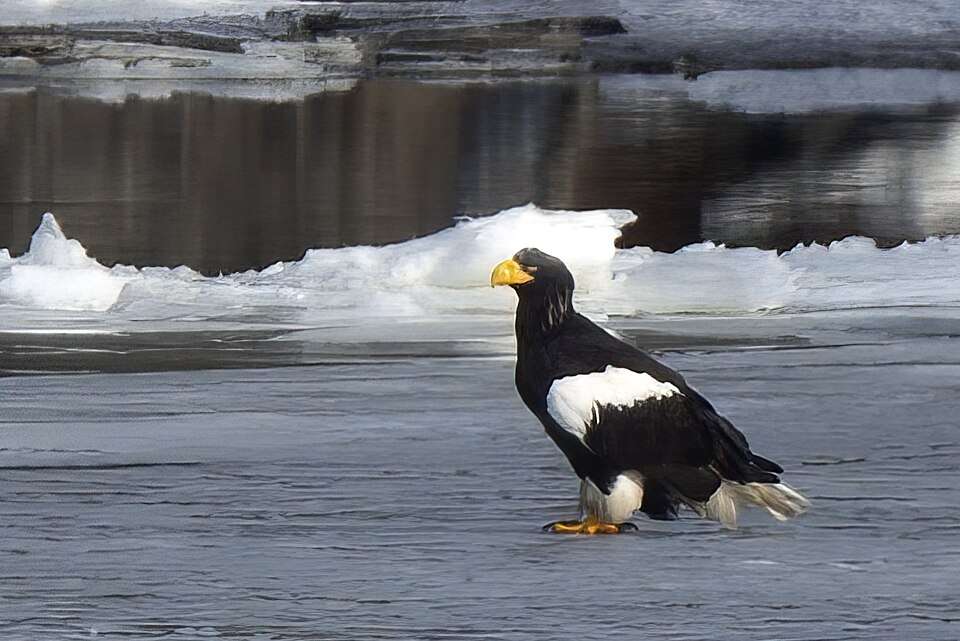
No bird on this list has a more epic and well-documented saga than the Steller's Sea-Eagle. This magnificent raptor, one of the world's largest birds of prey with a wingspan of up to eight feet, is a native of coastal northeastern Asia, with its breeding grounds in far eastern Russia, Japan, and Korea. The appearance of a single individual in North America several years ago sent shockwaves through the birding community, and its continued presence has made it a living legend. After a multi-year, continent-spanning odyssey, including stops in Alaska, Texas, and New England, this famous bird has now spent two consecutive summers in Newfoundland.
Steller's Sea-Eagle
The bird's residency in Newfoundland's Trinity Bay has turned the area into a focal point for bird tourism. For many, seeing this colossal, dark-plumaged eagle with its striking white shoulders and wedge-shaped tail is a once-in-a-lifetime experience. Local boat tour operators, who once focused solely on whales, now find themselves in the business of raptor-watching. This Steller's Sea-Eagle, affectionately tracked and photographed by thousands, represents the ultimate avian marvel—an emblem of a wild, untamed world that occasionally, and spectacularly, collides with our own. Its presence in Newfoundland for an extended period is a mystery to ornithologists, but for the birders who brave the fog and wind for a glimpse, it is a gift, a reminder that the world is far larger and more surprising than we imagine.
A Coastal Conundrum: The Kelp Gull of Wisconsin
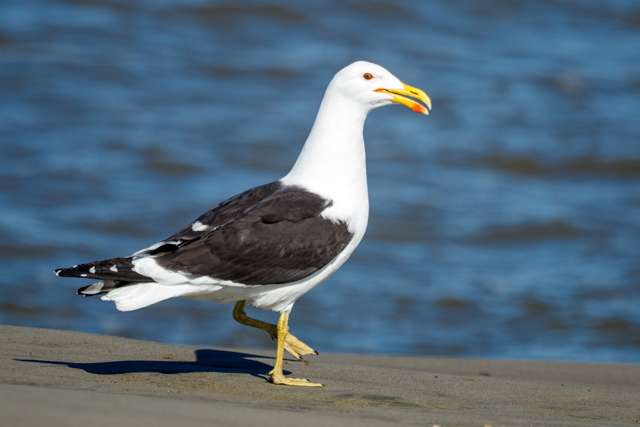
From a remote island to a Great Lakes industrial hub, the next rarity on our list presents a truly unique case study in avian vagrancy. A Kelp Gull, a species typically found in the Southern Hemisphere along the coasts of South America, Africa, Australia, and New Zealand, has not only established itself in Milwaukee, Wisconsin, but has also done the unthinkable: it has successfully bred with an American Herring Gull.
Kelp Gull
This groundbreaking event, first documented in mid-2025, has sent ripples of excitement and scientific curiosity through the birding world. The nest, located on a warehouse roof on Jones Island, has become a hotbed of activity for both birders and researchers. The successful pairing and the birth of a hybrid chick are an unprecedented development, raising questions about the adaptability of vagrant species and the potential for new avian lineages to emerge.
While the hybrid chick's long-term survival remains uncertain, the sheer fact of this interspecies union so far from the Kelp Gull's home range is a mind-bending biological event. It forces us to reconsider what we know about avian behavior and the barriers between species. The Milwaukee Kelp Gull is a living, breathing experiment, a testament to nature's capacity for unexpected connections.
A Tale of Two Coasts: The Continuing Tern and Grosbeak
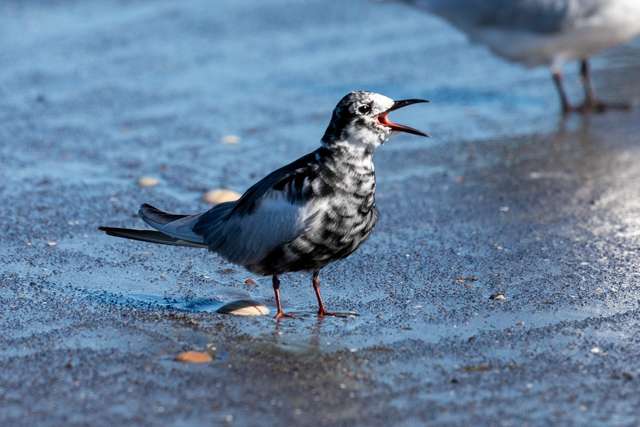
White-winged Tern
The story of continuing rarities is not confined to one or two species; it is a tapestry woven across the continent. On the West Coast, the continuing presence of a White-winged Tern in California has captivated coastal birders. This tern, native to Eurasia and Africa, is an extreme rarity in North America, and its extended stay has provided a rare opportunity for ornithologists and enthusiasts to study its behavior and plumage at length.
Sighted at various locations in San Diego, the bird has been a consistent presence, allowing observers to learn more about a species typically seen only in a blur as it passes by. Its presence is a reminder of the global nature of bird migration and the intricate dance of wind, current, and instinct that can bring a bird thousands of miles off course.
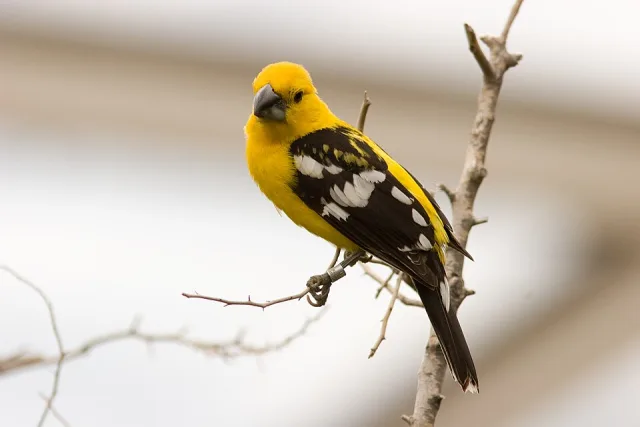
Meanwhile, in the Rocky Mountain state of Colorado, a Yellow Grosbeak has been a persistent presence, surprising birders who are more accustomed to seeing vagrants from the west or east. The Yellow Grosbeak, a resident of Mexico and Central America, is an uncommon visitor to the U.S. and its continued presence in Colorado has been a delightful puzzle.
Yellow Grosbeak
The bird, or possibly multiple individuals, has been sighted in several counties, from the front range to the more remote western parts of the state. Its striking yellow plumage and oversized bill make it a charismatic subject, and its presence far north of its typical range underscores the unpredictable nature of avian migration and the wayward paths birds can take, sometimes to the delight of a lucky few thousand.
The Southwestern Jewels: Arizona's Enduring Vagrants
Arizona has long been a haven for rare birds from Mexico and Central America, but the current year has been exceptional. Two species, the Flame-colored Tanager and the Berylline Hummingbird, have been reliable finds, becoming anchors for birding trips to the state's sky islands and canyons. The Flame-colored Tanager, a fiery-orange songbird that typically resides in the humid mountain forests of Mexico and Central America, has been a continuing fixture in Arizona. Its dazzling plumage makes it a high-priority target for visiting birders, and its consistent presence has allowed for a level of observation rarely afforded to a vagrant.
Flame-colored Tanager
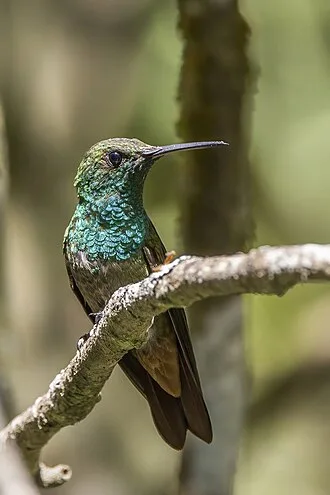
Adding to the state's allure is the Berylline Hummingbird, another rarity that has overstayed its welcome. This species, with its brilliant green head and coppery wings, is a rare visitor to the mountains of southeastern Arizona. While many vagrant hummingbirds are seen only for a day or two, this Berylline has been a steady and reliable presence. Hummingbird enthusiasts, with their specialized feeders and keen eyes, have flocked to the locations where it has been seen, marveling at its iridescent beauty and unique flight patterns. Together, the Flame-colored Tanager and the Berylline Hummingbird form a pair of jewel-like rarities that highlight Arizona's role as a gateway for Mexican avifauna into the United States.
Berylline Hummingbird
The Thrill of the Chase and the Science of the Stay
The stories of these continuing rarities are about more than just a list of sightings; they are about a community. The American Birding Association and local birding groups have been central to disseminating information, from the latest GPS coordinates to detailed plumage descriptions. The advent of eBird, the online platform for bird sightings, has been a game-changer, allowing for the real-time tracking of these magnificent birds and the rapid mobilization of birders.
But beyond the social and communal aspects, these continuing rarities offer an invaluable scientific window. They provide a unique opportunity to study the behavior, feeding habits, and even the breeding potential of species far outside their normal range. The Kelp Gull in Wisconsin, for example, is providing real-time data on interspecies hybridization. The Steller's Sea-Eagle in Newfoundland is a case study in extreme vagrancy and long-term survival in an alien environment.
The continuing rareties of 2025 are a reminder that the natural world is dynamic and full of surprises. They challenge our assumptions about migratory patterns and species distribution, proving that a single bird, on an improbable journey, can create a story that captivates a nation. For the thousands who have traveled, often great distances, to see these extraordinary birds, the experience is not just about checking a box on a list; it is about witnessing a moment of extraordinary beauty and wild freedom, a living testament to the enduring mystery of the avian world.
Read here about the best vagrants seen in 2025 so far.
About The Author
Palmer Howell
Palmer is a bird watcher and writer with 20 years experience of documenting the birds he has seen and the places he has visited. He has traveled all over the world to find the beauty of common birds and photograph rare and exotic species. Now he is sharing his knowledge about bird watching, bird species and all the gear needed to care and photograph our feathered friends.
Read more about Love The Birds on our About page.