
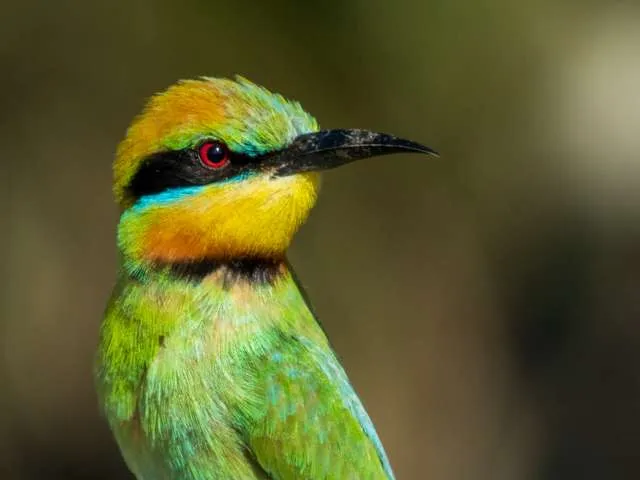
Across every continent and biome, from the densest rainforests to the most desolate Arctic tundra, nature has painted its canvas with creatures of breathtaking grace and spectacular color. Among all of the natural world’s wonders, birds hold a unique position as living masterpieces. The concept of the "most beautiful bird" is inherently subjective, yet certain species consistently appear on lists curated by ornithologists, travelers, and artists alike, captivating humanity with their dazzling plumage, elaborate adornments, and mesmerizing courtship rituals.
The Tropical Jewels: Color as Currency
The vast majority of the world's most visually striking birds hail from the tropical rainforests, where the intense competition for mates drives the evolution of ever more brilliant and intricate displays. Here, color is less about camouflage and more about a declaration of genetic fitness.
The Iridescent Icons
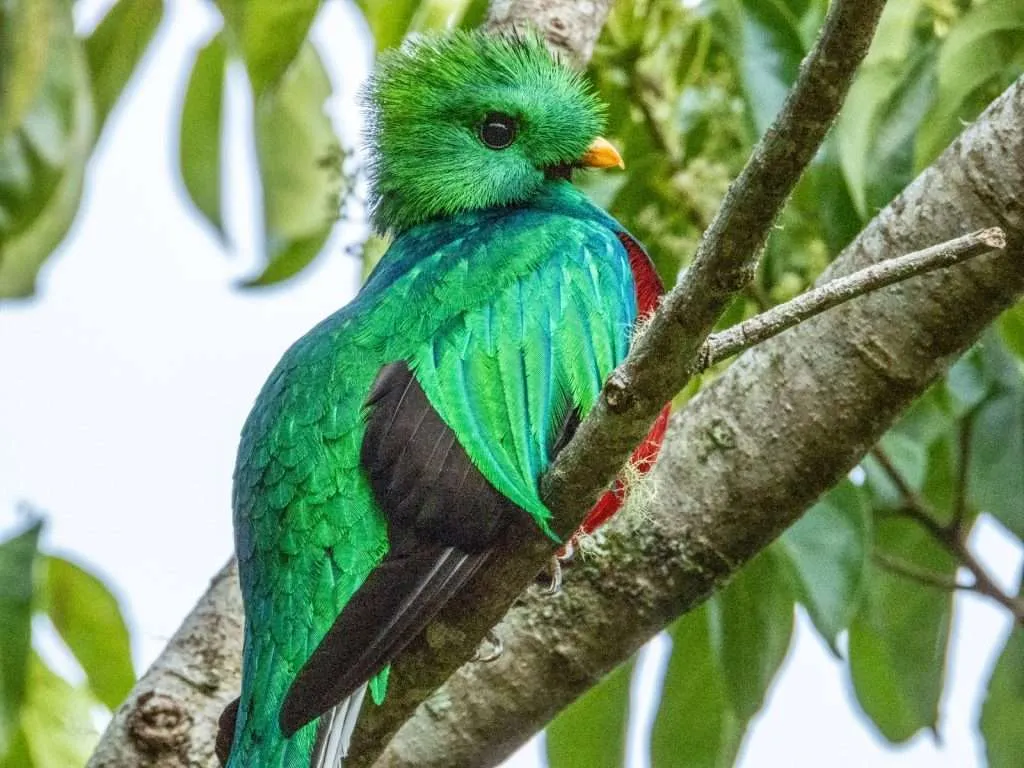
Foremost among the aesthetically sublime is the Resplendent Quetzal . Hailing from the cloud forests of Central America, this bird was revered by the ancient Maya and Aztecs, who considered it sacred and a symbol of the god Quetzalcoatl. The male's plumage is a shimmering tapestry of iridescent emerald green, set against a vibrant crimson red breast. Its most defining feature is the pair of elongated, streamer-like upper tail coverts that can grow up to three feet long, trailing behind it in flight like polished jade ribbons. The Quetzal’s beauty is a hallmark of its pristine, endangered habitat.
Equally dazzling in their use of structural color—feathers that refract light to create metallic, shimmering hues—are the Hummingbirds. Though tiny, species like the Crimson Topaz or the Rufous-tailed Hummingbird possess feathers that flash with jewel-like brilliance, changing from deep purple to fiery gold with every turn of the head.
The Color Palette
Other tropical residents use rich pigmentation to create a kaleidoscopic effect:
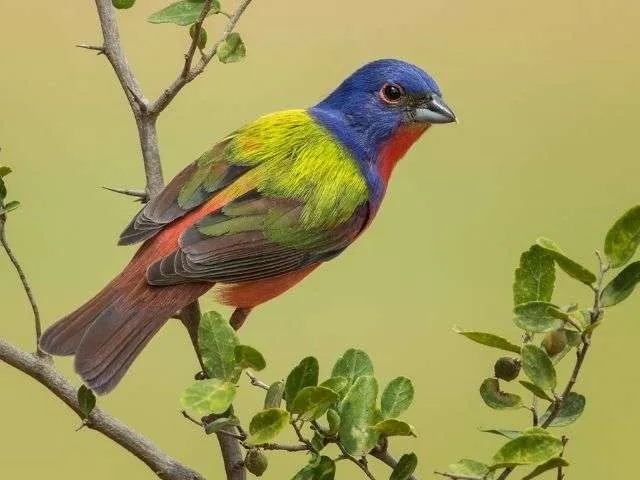
- The Painted Bunting: Often called the "nonpareil," or "without equal," this North American songbird is a riot of color, looking as if a child dipped it into a crayon box. The male features a blue head, green back, and a crimson-red belly, an improbable combination that makes it one of the most sought-after sights for birdwatchers in the Southeastern US.
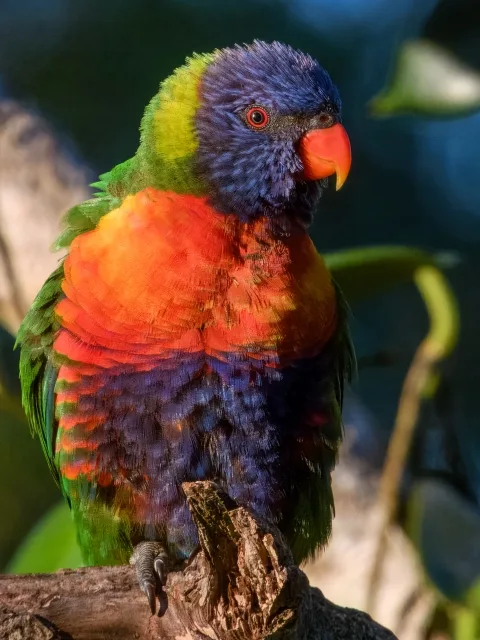
- The Rainbow Lorikeet: This Australian parrot lives up to its name, sporting a brilliant spectrum of blue head, green wings, a red-and-orange breast, and yellow markings. Found in noisy, playful flocks, their vivid coloring is a defining feature of the Australian canopy.
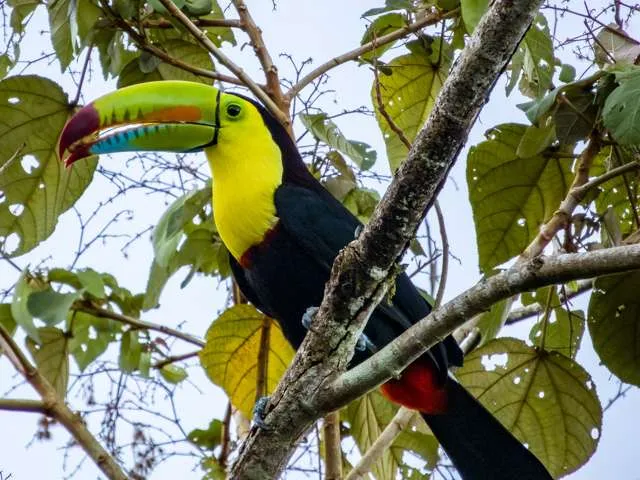
- The Keel-billed Toucan: This Central and South American bird's most striking feature is not its body, but its enormous, technicolor bill. A blend of green, blue, orange, and red, the bill is surprisingly lightweight and is used not just for feeding but also for courtship and display, earning it the nickname "rainbow-billed toucan."
Grandeur and Adornment: The Architects of Display
Beyond mere color, beauty in the avian world is also defined by form and performance. Some birds have evolved highly specialized features and behaviors designed to maximize visual impact during courtship.
The Showmen of the Forest
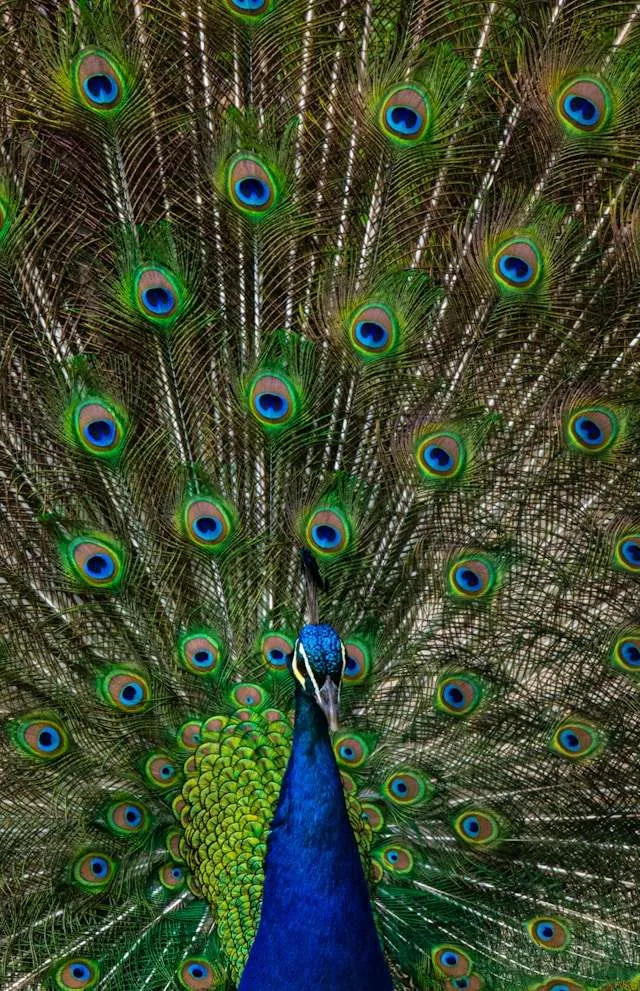
Perhaps the most famous example of extravagant display is the Indian Peafowl (commonly known as the Peacock). The male’s colossal train of feathers, an impossible burden for survival, is an aesthetic marvel. When fully fanned out during its mesmerizing courtship dance, the tail features hundreds of shimmering, iridescent blue and green "ocelli" (eyespots) that catch and reflect light, creating a spectacle of unmatched grandeur. This massive, non-utilitarian display is the ultimate advertisement of genetic quality to the female—a concept known as the Handicap Principle. The male is effectively signaling: I am so fit and healthy that I can survive even with this enormous, cumbersome, predator-attracting tail.
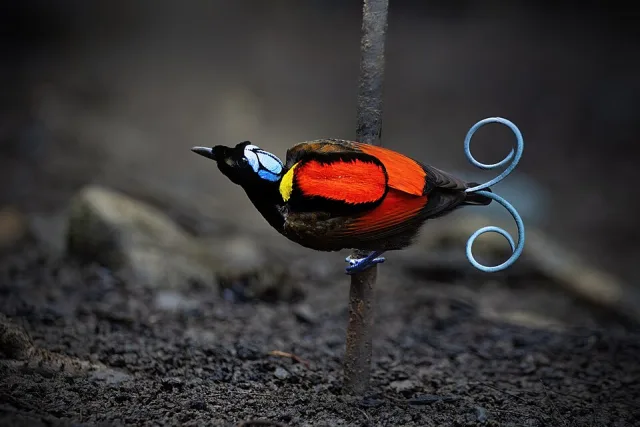
In New Guinea, the Birds-of-Paradise take the art of display to its extreme. Species like the Wilson's Bird-of-Paradise or the Greater Bird-of-Paradise possess highly modified, elaborate feathers—some like ribbons, wires, or shields—that they use in complex, choreographed dances to win the approval of the drabber, more selective females. Their evolutionary trajectory is a testament to the power of pure aesthetic choice in shaping life on Earth.
Symmetry and Elegance
Not all beautiful birds rely on blinding color or baroque adornment. Some captivate with understated elegance, symmetry, and perfection of pattern.
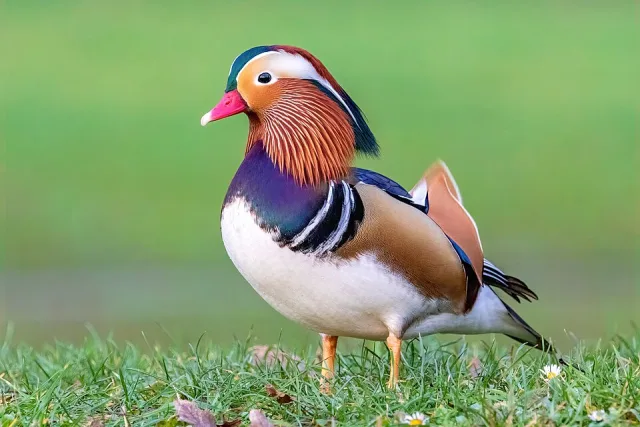
- The Mandarin Duck: Native to East Asia, the male Mandarin Duck looks like a carved wooden ornament. Its plumage is a masterpiece of geometric patterns and contrasting colors: a red bill, an orange-and-white face, a crested copper-colored sail on its back, and a sleek purple chest. They are often considered a symbol of love and fidelity in their native regions due to their tendency to mate for life.
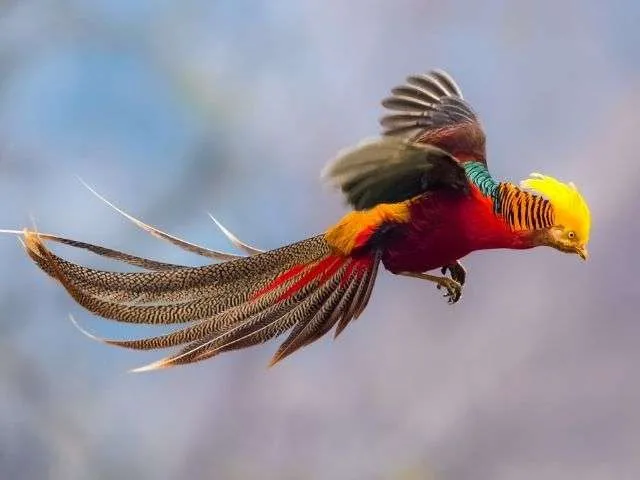
- The Golden Pheasant: Hailing from China, the male Golden Pheasant is a living flame. It features a stunning golden crest, a scarlet and chestnut body, and an elaborate, orange-and-black cape that it can flare out like a medieval ruff. This ground-dwelling bird uses its fiery hues in spectacular ground displays.
The Science of Splendor: Why Birds are Beautiful
The human appreciation of avian beauty is not accidental; it is a direct consequence of the evolutionary forces driving mate selection in birds. The aesthetic choices made by female birds over millennia—favoring the brightest colors, the longest plumes, the most complex dances—have resulted in the dazzling creatures we see today.
The brilliant colors are achieved through two primary methods:
- Pigmentary Color: Produced by pigments like melanins (for blacks, browns) and carotenoids (for reds, yellows, oranges) ingested through the diet. A brightly colored bird is a healthy bird, as it has been highly successful at foraging for the necessary nutrients.
- Structural Color: Created by the microscopic structure of the feathers, which reflects specific wavelengths of light. This is what creates the dazzling, metallic iridescence seen in peacocks, hummingbirds, and quetzals, and it is responsible for the intense blues and greens often found in the most beautiful species.
From the peacock’s vanity to the quetzal’s shimmer, every splash of color and exaggerated plume is a genetically coded signal, an artistic expression of survival and vitality.
The world’s most beautiful birds, whether through vivid pigment or shimmering structure, are not just a delight to the eye. They are living, flying testament to the power of sexual selection, a process where beauty itself becomes the engine of evolution, pushing life toward ever-greater extremes of splendor and complexity. To observe them is to witness the zenith of natural artistry.
