

At first glance, penguins seem to defy the very definition of a bird. They don't fly, they can't perch on a branch, and they spend a significant portion of their lives underwater. With their upright waddle, sleek, torpedo-shaped bodies, and flipper-like wings, they often look more like marine mammals than members of the avian family.
This has led to a common and understandable question:
Are penguins really birds?
The answer is an unequivocal yes.
Despite their unique and highly specialized adaptations, penguins possess all the fundamental anatomical and physiological traits that define a bird. The key to understanding this lies in looking past the surface and examining the unique evolutionary path that turned a flying bird into an ocean-going diver.
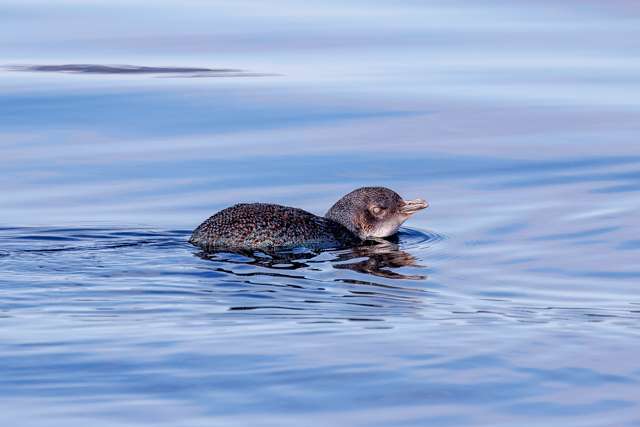
The Defining Characteristics of a Bird
To prove that penguins are birds, we first have to establish what makes a bird a bird. Ornithologists have a clear set of criteria that all members of the class Aves must meet. These characteristics are the result of millions of years of evolution from their dinosaur ancestors and are what distinguish them from all other living creatures.
- Feathers: This is the most visible and defining characteristic of a bird. Every single bird species on Earth has feathers, which are complex keratinous structures that serve multiple purposes, including insulation, waterproofing, and display.
- Beak/Bill: Birds have no teeth. Instead, they have a keratinous beak or bill that they use for feeding, preening, and defense.
- Hard-shelled Eggs: Birds reproduce by laying hard-shelled eggs, a process known as oviparity. These eggs are incubated externally until they hatch.
- Hollow Bones: Many birds have lightweight, hollow bones that are filled with air sacs. This adaptation is crucial for flight, as it significantly reduces their body weight.
- Four-chambered Heart: All birds have a four-chambered heart, which is highly efficient at pumping oxygenated blood throughout the body. This is necessary to support their high metabolism.
- Warm-blooded (Endothermic): Birds are warm-blooded, meaning they can regulate their own body temperature internally, which allows them to survive in a wide range of climates.
When we apply these criteria to penguins, they meet every single one. Penguins have feathers, albeit highly modified ones. They have beaks. They lay hard-shelled eggs. They have hollow bones (though some species have denser bones to aid in diving). They are warm-blooded and have a four-chambered heart. The fact that they share these core traits with an eagle, a sparrow, or an ostrich is proof that they are, indeed, birds.
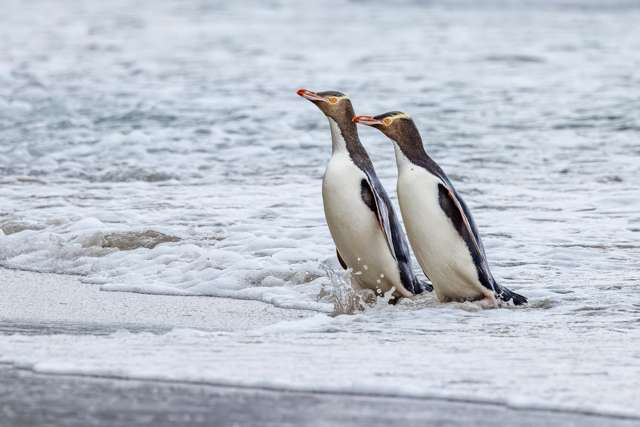
The Penguin's Unique Evolution: Form Follows Function
The reason penguins look so different from flying birds is because their bodies are a testament to convergent evolution. This is the process where unrelated species evolve similar traits while adapting to similar environments. In this case, penguins, which evolved from flying ancestors, developed a body plan remarkably similar to seals, whales, and other marine animals. Their environment—the frigid, watery world of the Southern Hemisphere—demanded a body built for swimming and diving, not flying.
The most dramatic evidence of this adaptation is in their wings. The penguin's wings are not useless stubs; they are highly specialized, powerful flippers that act as hydrofoils. The skeletal structure of the wing is still avian, but the bones are flattened, shortened, and fused at the elbow and wrist. This makes the wing rigid and allows the penguin to use it like a propeller, generating thrust with every stroke. The strong muscles that power these wings are so powerful that they make up a significant portion of the penguin's body weight, much like the chest muscles of a flying bird. This is a perfect example of a pre-existing avian structure being repurposed for a new and entirely different function.
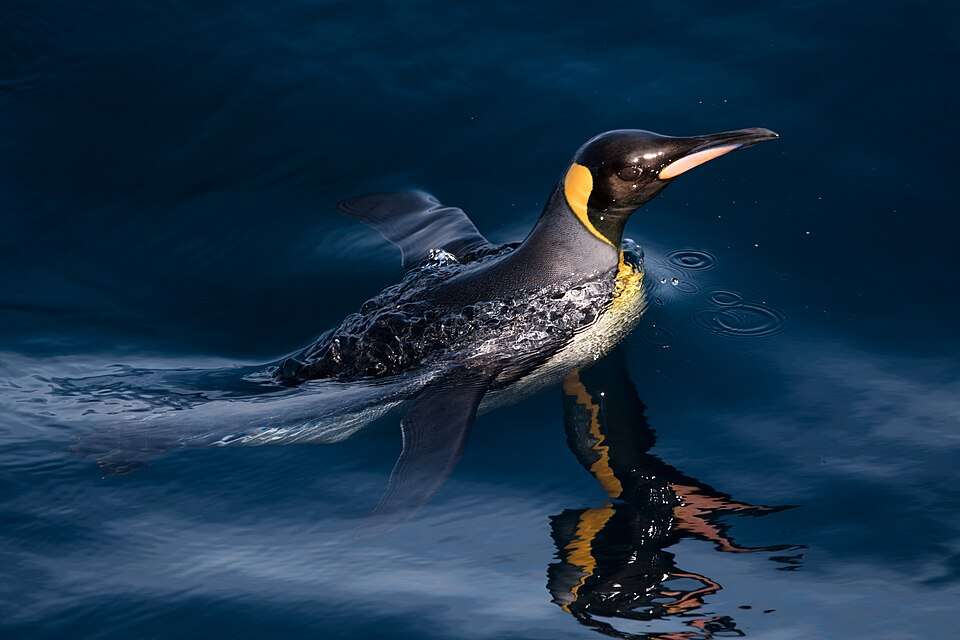
Penguins also possess a unique feather structure. While they still have feathers, they are not the broad, flat feathers of a flying bird. Instead, they have a dense, overlapping layer of short, stiff feathers that are waterproof and provide exceptional insulation. This feather coat is a crucial adaptation that keeps them warm in icy waters, trapping a layer of air against their skin. The feathers are so effective at waterproofing that they force air out in a stream of bubbles as the penguin dives, a phenomenon that has been shown to increase their underwater speed.
The Penguin's Life Cycle: Bird-like from Start to Finish
The life cycle of a penguin also reinforces its identity as a bird. Like all birds, penguins lay hard-shelled eggs. They incubate these eggs and raise their chicks in colonies, a social behavior common among many bird species, such as seabirds and gulls. The incubation behavior of the male Emperor Penguin, which holds an egg on his feet for months in the brutal Antarctic winter, is a remarkable example of parental care, a trait found throughout the avian family.
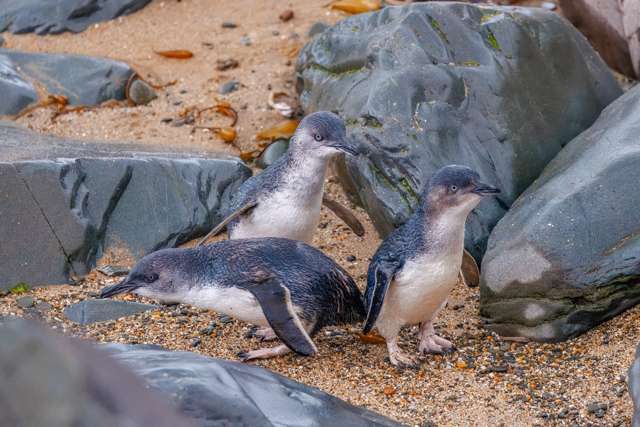
Once the chicks hatch, they are fed and protected by their parents, growing rapidly before they are ready to fledge. The process of molting, where penguins shed their old feathers and grow new ones, is also a classic avian behavior. During this period, which can take several weeks, the penguins are unable to go to sea to hunt and must rely on their fat reserves. This demonstrates their dependence on the very structures that define them as birds.
Wrapping Up
Penguins are unequivocally birds.
They have all the defining characteristics of the class Aves, from their feathers and beaks to their warm-blooded metabolism and four-chambered hearts. Their inability to fly is not a sign that they are not birds, but rather a remarkable story of evolutionary adaptation. The penguin's body is a masterfully engineered machine built for the marine environment. Their wings, while incapable of soaring through the air, are powerful flippers that allow them to "fly" through the water with unmatched grace and speed. Their feathers, while not meant for aerial flight, provide the insulation necessary to survive in the planet's coldest regions.
The unique and beloved penguin challenges our preconceived notions of what a bird is. By forcing us to look beyond the ability to fly, it highlights the incredible diversity and adaptability of the avian world. The penguin is not an anomaly; it is a stunning example of how birds, a group of animals that first conquered the skies, can also conquer the seas and thrive.
For another interesting read, check out our color review of birds.
The Avian Color Divide: Why UK Birds are Duller Than Their Tropical Cousins
