
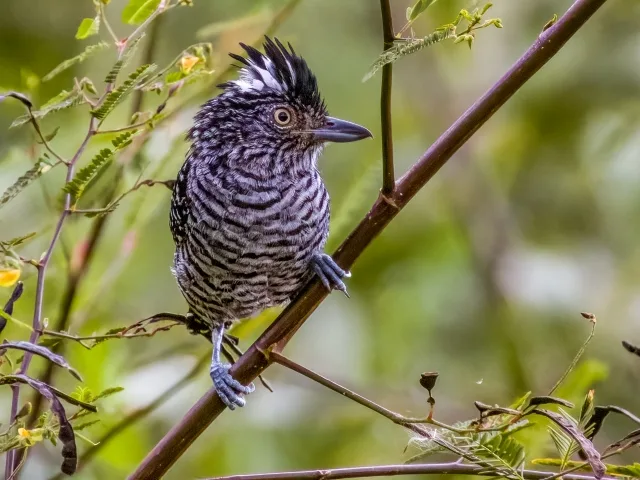
The name antbird conjures images of tiny creatures swarming over insect trails, and while this avian family does have a profound relationship with ants, the reality of these Neotropical residents is far more complex and fascinating. Antbirds—a diverse group encompassing the family Thamnophilidae—are central to the ecology of Central and South American rainforests. They represent one of the largest families of birds in the New World tropics, boasting over 230 species, each uniquely adapted to the dim, tangled world of the forest understory.
We explore what antbirds are, where they live, their specialized diets, and the captivating behaviors that make them a subject of intense interest for ornithologists and birdwatchers alike.
What Are Antbirds? The Family Thamnophilidae
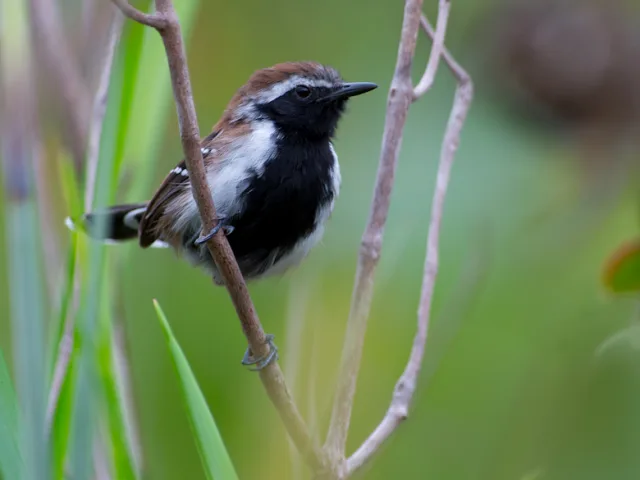
Antbirds belong to the order Passeriformes (perching birds) and the suboscine group, meaning their songs are innate rather than learned, unlike true songbirds. The family Thamnophilidae is highly heterogeneous, covering a vast spectrum of shapes, sizes, and colors.
Taxonomy and Diversity
The family includes:
- Antshrikes: Robust birds with large, hooked bills, often sexually dimorphic (males and females look distinctly different).
- Antwrens: Small, warbler-like species that glean insects from foliage.
- Antvireos: Small to medium-sized birds that forage with a vireo-like, deliberate movement.
- True Antbirds: Medium-sized species that are the primary followers of army ants.
Despite their diversity, they share several physical characteristics adapted for life in dense vegetation: strong legs for hopping, generally drab (brown, gray, black, and white) plumage for camouflage in the shadows, and a rather distinctive, slightly hooked bill.
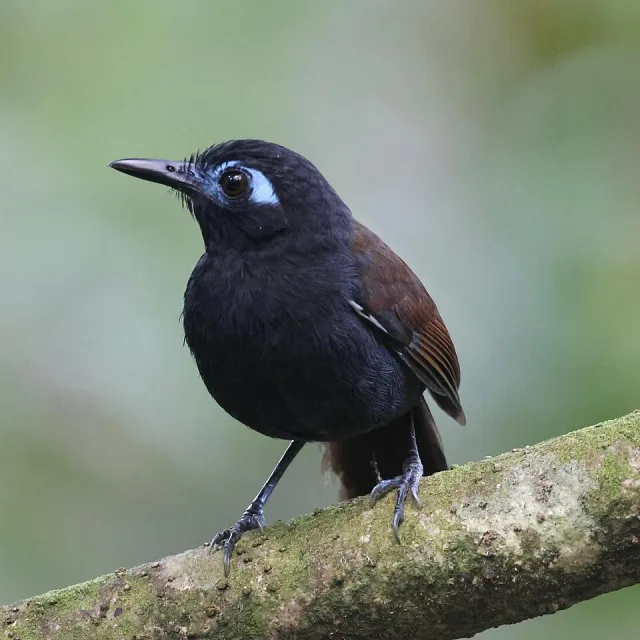
Distinguishing Antbirds from Other Birds
The term "antbird" can be confusing, as it describes a behavioral tendency—following ants—rather than a strict evolutionary group. However, antbirds (Thamnophilidae) are distinct from other ant-following birds, such as antpittas and antthrushes, which belong to different families but share the same niche. True antbirds are defined by their unique genetic markers and anatomical features, particularly the structure of their sternum and syrinx (voice box).
Geographical Range and Habitat: The Neotropical Understory
Antbirds are endemic to the Neotropical realm, meaning they are found exclusively in the tropical and subtropical regions of the Americas. Their distribution spans from southern Mexico through Central America and across most of South America down to northern Argentina.
The Realm of the Understory
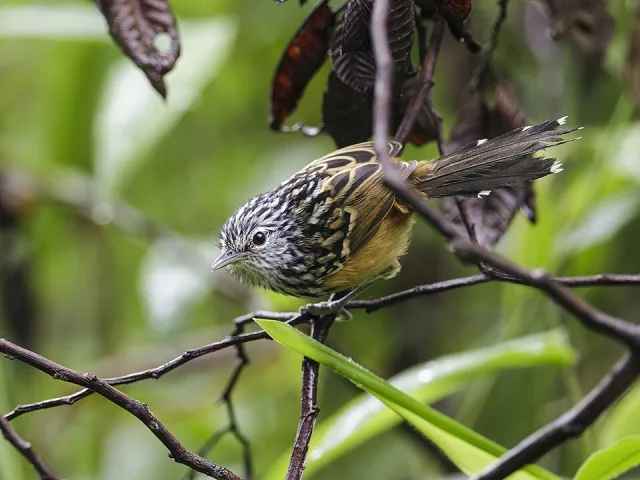
Antbirds are classic inhabitants of the forest understory—the layer of vegetation beneath the main canopy but above the forest floor. They thrive in environments characterized by:
- Low Light: They are highly adapted to the dim, filtered light that penetrates the dense canopy, which explains their reliance on sound over sight for communication and foraging.
- Dense Thickets: They prefer the dense thickets, tangles, and vine-laden areas of primary and secondary rainforest, where their hopping and short-flight style of movement is most effective.
- Altitudinal Range: While some species are restricted to lowland rainforests (like the Amazon Basin), others, such as several species of Antwrens, are found in the misty, high-altitude cloud forests of the Andes.
The Habitat Niche: Different antbird species partition the forest vertically. An Antshrike might forage in the mid-story shrubs, an Antwren in the upper canopy foliage, and a true Antbird (like the Bicolored Antbird ) primarily on the forest floor, demonstrating precise ecological separation.
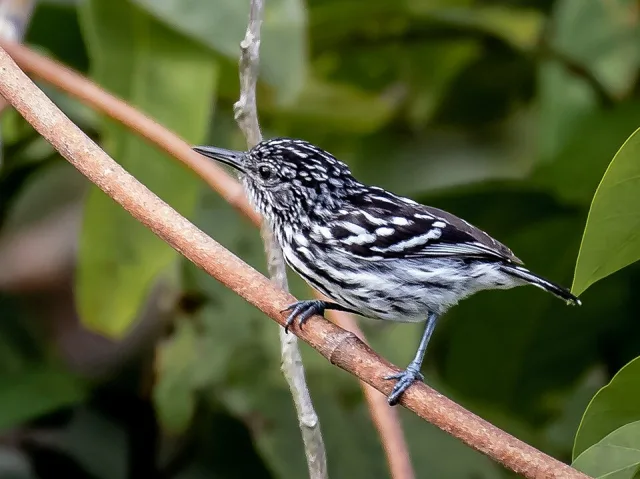
The Heart of the Matter: What Antbirds Eat
The diet of antbirds is almost entirely composed of arthropods—insects and spiders. They are essential insectivores that play a critical role in controlling insect populations within the rainforest ecosystem. Their foraging strategies, however, are what make them truly compelling.
Foraging Strategies
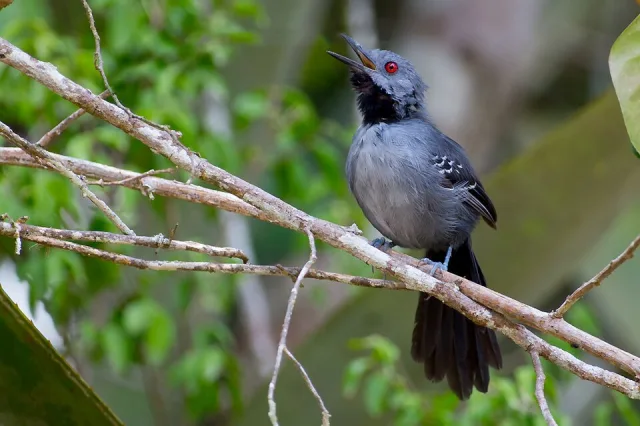
Antbirds employ three main feeding methods, often switching between them depending on the species and the environment:
- Gleaning: The most common method, used by Antwrens and Antvireos, involves moving slowly through vegetation, meticulously inspecting leaves and branches, and picking (gleaning) insects and spiders from the surface.
- Sallies and Hops: Antshrikes and larger Antbirds use short, powerful bursts of flight or hops to snatch prey from the air or from the underside of leaves.
- Ant-Following (The Obligate Niche): This is the most famous and specialized feeding strategy, performed by the obligate ant-followers—about 50 species in the family.
The Ant-Following Specialization
Obligate ant-followers have evolved a co-dependent relationship with species of army ants, particularly those in the genus Eciton (like the Eciton burchellii). This relationship is purely commensal: the antbirds benefit, but the ants receive no known benefit, nor do they lose their numbers to the birds.
How it Works:
- The Raid: Army ant colonies, which can number in the hundreds of thousands, periodically conduct massive, synchronized foraging raids across the forest floor. These raids act like a natural vacuum cleaner, flushing out countless invertebrates—spiders, roaches, crickets, scorpions, and other insects—from the leaf litter and low vegetation.
- The Catch: The antbirds station themselves near the edges of the swarm, specifically near the front line of the raiding ants. They do not eat the ants themselves (which are often chemically defended or too aggressive); instead, they catch the terrified insects and other arthropods fleeing the advancing ant army.
- The Pecking Order: This ecological niche creates a highly specialized and aggressive feeding hierarchy at the ant swarm, often referred to as an "ant following mixed-species flock." Dominant species, such as the Ocellated Antbird and Spotted Antbird, take the best foraging positions directly above the densest swarm, while smaller, subordinate species are relegated to the periphery. This constant competition requires specialized territoriality and communication.
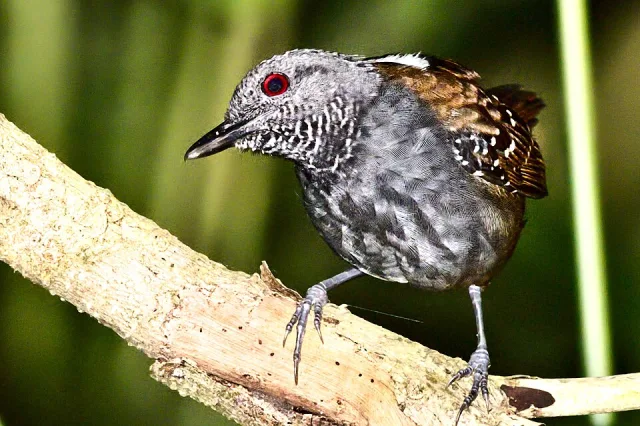
This adaptation allows antbirds to access prey that is normally impossible for them to find or flush out on their own, making the army ant swarm an essential, moving restaurant for many of the forest’s avian predators.
Fascinating Antbird Behaviors
Beyond their striking co-dependence on army ants, antbirds exhibit a range of unique social, vocal, and reproductive behaviors.
Duets and Vocal Communication
Antbirds are highly vocal, often relying on their calls and songs to communicate in the dense, dark understory where visual cues are limited.
- The Duet: Many antbird species are famous for their coordinated duets. Mated pairs perform complex, often synchronized songs where the male and female take turns singing specific notes and phrases. This is not simply a charming song; it is a critical behavior used to maintain pair bonds, announce territorial boundaries, and confirm the location of their partner in the dense vegetation. The precision and complexity of these duets vary widely, often correlating with the habitat density—denser habitats require more frequent and elaborate duets.

Cherrie's Antwren
Social Behavior and Flocking
While individual antbirds are often seen foraging alone or in their monogamous pairs, they are key participants in one of the rainforest's most dynamic social phenomena: the mixed-species foraging flock.
- Mixed-Species Flocks: Antbirds often serve as the core species in these flocks, which can include dozens of individuals from various families (like tanagers, woodcreepers, and flycatchers). Antbirds are often the ones who keep the flock moving and vocalizing, essentially setting the pace and direction for the group. They benefit from this arrangement through increased safety, as more eyes are watching for predators, and by flushing out insects for the other members.
Nesting and Reproduction
Antbirds are monogamous and typically build open, pouch-like or deep cup nests in low shrubs, vines, or saplings, often within a few feet of the ground. This low nesting height makes them particularly vulnerable to ground predators, such as snakes and mammals.
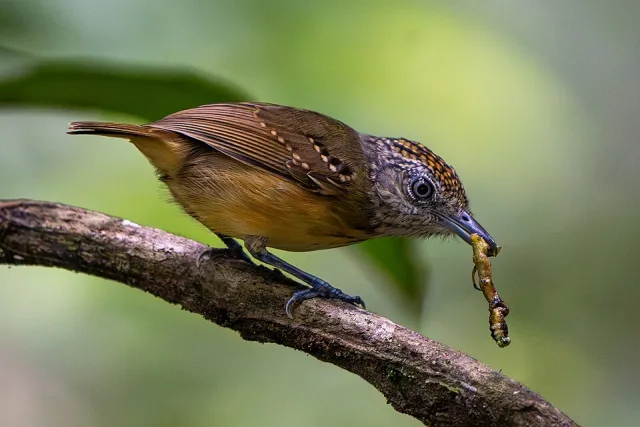
- Parental Care: Both parents share the duties of incubation and feeding the young. Most species lay a small clutch, usually only two eggs, which are often white or cream-colored with bold, dark speckles—a camouflage pattern that helps conceal them from predators. The nestling period is short, a necessity due to the high risk of predation at ground level.
The Ecological and Scientific Significance
The Thamnophilidae family is a cornerstone of Neotropical biodiversity and a vital indicator of forest health.
- Indicator Species: Because antbirds, particularly the obligate ant-followers, are highly dependent on large tracts of intact, undisturbed rainforest to support the army ant colonies, they are often used as indicator species. Their presence or absence is a powerful sign of the overall health and size of a forest patch. Fragmented forests cannot sustain the massive foraging range required by army ants, leading to the local extinction of obligate ant-followers.
- Evolutionary Studies: The sheer diversity within Thamnophilidae, coupled with its distinct evolutionary lineage, makes it a prime focus for studying speciation (the formation of new species) in the tropics. The family’s genetic and morphological radiation provides a crucial window into how environmental and geographical barriers have shaped one of the planet's most species-rich regions.
Wrapping Up
In summary, the Antbird family is an avian marvel defined by a complex ecological strategy that revolves around the smallest creature in the forest: the army ant. From the cooperative complexity of their duets to the tense hierarchy at an ant-swarm, antbirds are a shining example of the intricate, interdependent relationships that define the stunning biodiversity of the American rainforest. They remain a constant challenge and reward for those who venture into the shadows of the understory, always singing their unique song amidst the chaos of the jungle floor.
