

In the vibrant gardens, eucalyptus groves, and coastal chaparral of the U.S. West Coast, one bird stands out not just for its speed and tiny stature, but for its sheer resilience and dazzling, iridescent display: the Anna's Hummingbird (Calypte anna). Named for Anna de Belle Masséna, the Duchess of Rivoli, this medium-sized hummingbird has become a fixture from Baja California north to British Columbia, representing one of North America’s great avian success stories. Unlike most of its brethren who undertake lengthy migrations, the Anna’s Hummingbird is one of only three hummingbird species that are permanent residents of the United States and Canada, boasting the northernmost year-round range of any North American hummer.
Appearance and Unique Iridescence

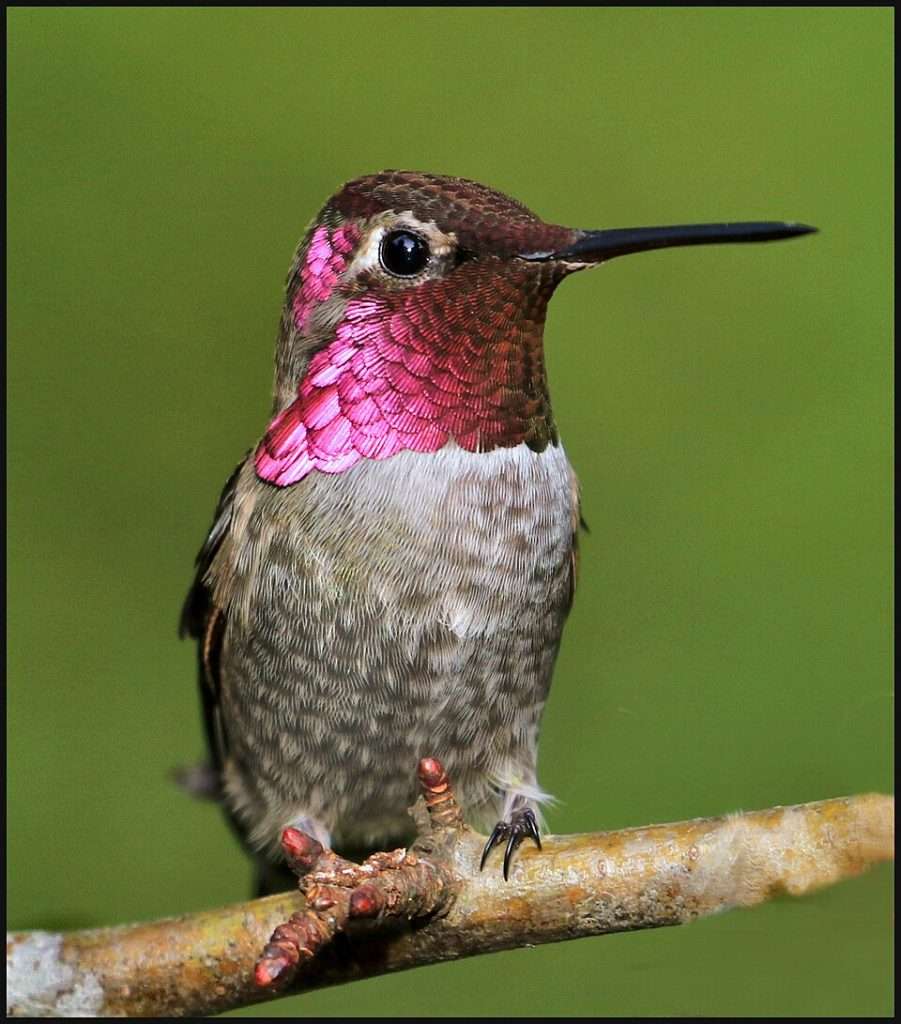
The Anna's Hummingbird is slightly stocky for a hummingbird, measuring about 4 inches long and weighing only about four to six grams—roughly the weight of a nickel. Its body is primarily metallic green and bronze above, with a paler gray chest and belly.
The Male’s Dazzling Crown and Gorget
The male is instantly recognizable by his spectacular iridescent rose-pink feathers covering his entire head and throat. This shimmering patch, known as the gorget, extends over the crown, making it look more like a shimmering helmet than just a throat patch. This color is not due to pigment but to the refraction of light by the feather structure, meaning the color will dramatically shift or even appear dull brown or black depending on the angle of light. Males strategically orient their dives and perches to flash this brilliance at competitors and prospective mates.
The Female and Her Subtle Beauty
The female lacks the male's vibrant crown, but is also a metallic green above with a grayish underside. Unusually among female hummingbirds, she often has a small amount of reddish-pink spotting or streaks on her throat, though it is far less extensive than the male's full gorget.
Range Expansion and Year-Round Residence
Historically, the Anna's Hummingbird’s range was confined to southern California and northern Baja California. However, beginning in the 1960s, the species began a dramatic range expansion northward and eastward.
This unprecedented ability to overwinter in relatively cold climates, such as the Pacific Northwest, is a key characteristic of the Anna’s Hummingbird. The expansion is directly linked to human activity and changes in the environment:
- Urbanization and Gardens: The widespread planting of exotic, winter-blooming flowers—such as Eucalyptus and various garden ornamentals—created a year-round nectar supply where none existed before.
- Hummingbird Feeders: The prevalence of backyard hummingbird feeders provides a reliable, high-sugar energy source that helps the birds survive cold nights.
- Dietary Adaptations: Critically, the Anna's Hummingbird consumes more insects and spiders than any other North American hummingbird. This protein-rich diet is essential for sustaining their high metabolism, especially during colder periods when nectar sources may be scarce.
Today, the Anna's Hummingbird is a permanent resident along most of the U.S. West Coast, from Southern California into Washington and extending into parts of Arizona and even western Texas. While some individuals engage in altitudinal migration (moving to lower elevations in winter and higher in summer), the species as a whole remains resident in the U.S., making it a year-round sight for birdwatchers.

Diet and the Ultimate Protein Source
To fuel their astonishing metabolic rate—with a heart rate that can reach over 1,000 beats per minute—hummingbirds must consume an enormous amount of food daily. The Anna's Hummingbird's diet is a balanced mix of sugar and protein:
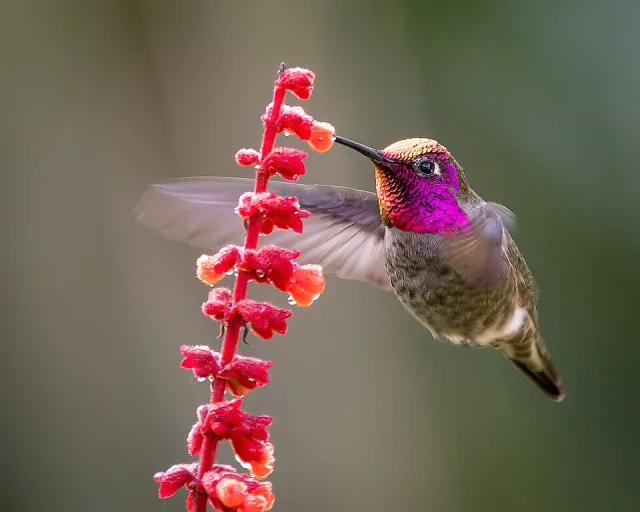
- Nectar: The primary source of energy. They feed from a variety of flowering plants, both native (like currants, gooseberries, and manzanita) and introduced. They use their long, extendable, straw-like tongues to lap up nectar up to 13 times per second while hovering.
- Insects and Spiders: The essential source of protein, especially crucial for nesting females and developing chicks. They are adept at hawking (catching flying insects in mid-air), gleaning small prey from leaves and crevices, or even snatching insects caught in spiderwebs. A nesting female can capture hundreds, if not thousands, of tiny insects per day.
- Tree Sap: In colder periods or when flowers are scarce, Anna's Hummingbirds will opportunistically drink sap leaking from holes made by sapsucker woodpeckers.
Breeding and Courtship Acrobatics

The Anna's Hummingbird is notable for its exceptionally early breeding season, which can begin as early as mid-December in its southern range, often continuing through May. This early start may be an adaptation to exploit winter-blooming flowers and avoid competition with migratory hummers arriving in late spring.
The Male’s Spectacular Dive Display
Male Anna’s Hummingbirds do not form pair bonds with females; their only role is to mate. The male performs a dramatic and noisy courtship display to impress a female:
- He ascends high into the air, sometimes as high as 130 feet (40 meters).
- He then plummets downward in a steep, J-shaped dive, reaching speeds of over 50 miles per hour.
- As he rapidly pulls up at the bottom of the dive, he angles his tail feathers to produce a unique, explosive "pop" or "bark" sound created by the air whipping through the feathers. This sound, which lasts only a fraction of a second, is often the first indication of a courtship display.
Nesting and Parental Care
After mating, the female assumes all nesting and parental duties alone. She meticulously constructs a tiny, deep cup-shaped nest, typically on a horizontal branch of a tree or shrub between 6 and 20 feet off the ground. She weaves the nest from plant down, small feathers, and cottony materials, binding it all together using spider silk and camouflaging the exterior with lichen, moss, or bark chips to make it nearly invisible.
She lays two tiny, white, pea-sized eggs, which she incubates for about two weeks. The young hatch blind and helpless, and the mother feeds them a slurry of nectar and digested insects. They fledge in about three weeks, after which the mother continues to feed them for a few more days until they are fully independent.
The Anna's Hummingbird remains a symbol of the wild spirit and adaptability of U.S. birdlife, a vibrant, resilient creature whose presence adds sparkle and sound to the western landscape year-round.
You can listen to the unique sounds and learn more about the courtship display of this amazing bird by watching Anna's Hummingbird Fun FACTS and SOUNDS.

