
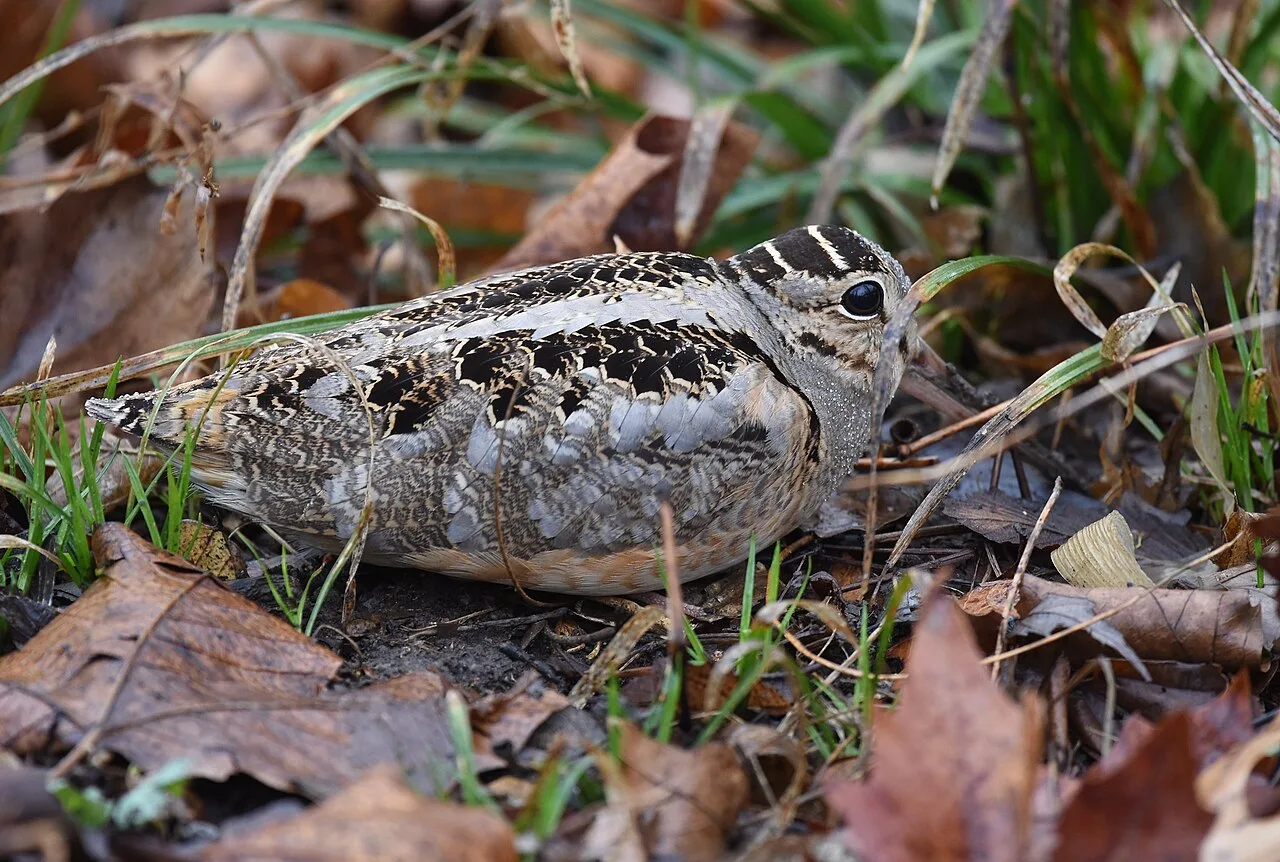
In the early spring of 2026, the internet found a new and unlikely superstar. It wasn't a sleek bird of prey or a colorful tropical parrot, but a plump, long-billed, camouflage-clad shorebird known as the American Woodcock (Scolopax minor). While birders have long cherished this eccentric species, a viral video captured in New York City’s Bryant Park propelled the Woodcock into the mainstream, turning a routine migratory stopover into a full-blown cultural phenomenon.
Often referred to by whimsical folk names like the "Timberdoodle," the "Bogsucker," or the "Labrador Twister," the American Woodcock is now arguably the most famous bird in America. But behind the "dancing" videos set to disco beats lies a fascinating biological story of a bird that seems designed by a committee of surrealist artists.
The "Bryant Park Shuffle": Decoding the Dance

The viral sensation began when a Woodcock was filmed in the heart of Midtown Manhattan, performing a rhythmic, back-and-forth bobbing motion while walking across the mulch. The bird’s steady head and oscillating body looked so much like a deliberate dance that it sparked thousands of memes and a surge in the "Birdwatching for Mental Health" movement.
But why do they do it? While it looks like a "funk," the behavior—commonly called bobbing or rocking—is a highly specialized survival tactic. Scientists have two primary theories:
The "Worm Grunting" Theory: By stepping heavily and rocking its body, the Woodcock may create vibrations in the soil that mimic the sound of rain or the movement of moles. This prompts earthworms—which make up 80% of the bird's diet—to move, making them easier to detect with the Woodcock's sensitive bill tip.
Visual Scanning: Some researchers believe the movement helps the bird eliminate "visual noise" from the wind-blown leaves and grass, allowing it to better distinguish between stationery objects and potential predators.
Regardless of the "why," the result is a hypnotic strut that has made the American Woodcock the "hottest bird in NYC" this year.
Built for the Shadows: A Masterpiece of Oddity
The American Woodcock is technically a shorebird, but it has abandoned the beach for the forest floor. Evolution has rewired this bird to survive in the damp thickets and young forests of the Eastern U.S. in ways that are truly bizarre:
360-Degree Vision: Its eyes are set so far back and high on its head that it can see behind itself and directly above while its bill is buried in the mud. Its brain is actually positioned upside-down to accommodate this eye placement.
The "Prehensile" Bill: The tip of its long bill is flexible. It can open just the very end of its beak while it is deep underground to "grab" an earthworm like a pair of tweezers.
Perfect Camouflage: Its plumage is a masterpiece of dead-leaf mimicry. A Woodcock sitting on the forest floor is virtually invisible until it moves—or "dances."
The Sky Dance: The Real Show Begins at Dusk

While the "Bryant Park Shuffle" went viral on social media, the bird’s most spectacular performance happens at twilight. Naturalist Aldo Leopold famously dubbed this the "Sky Dance."
In the early spring, males move to open "singing grounds" (forest edges or meadows). The ritual begins with a nasal, buzzy call known as a "peent." Then, the bird launches into the air.
The Wing Twitter: As he spirals upward to heights of 300 feet, the air rushing through his three outer primary feathers creates a high-pitched, musical whistling or "twittering."
The Descent: At the apex of his flight, he zigzags back down to earth like a falling leaf, emitting a series of liquid chirps. He lands almost exactly where he started and begins "peenting" again, hoping to impress a female watching from the shadows.
Conservation: Protecting the Dancer
Despite their current fame, American Woodcocks are a species of concern. Their populations have been declining by about 1% per year for several decades. The primary threat is the loss of "young forest" habitat. As forests in the Northeast and Midwest mature or are cleared for development, the thick, brushy areas Woodcocks need for nesting are disappearing.
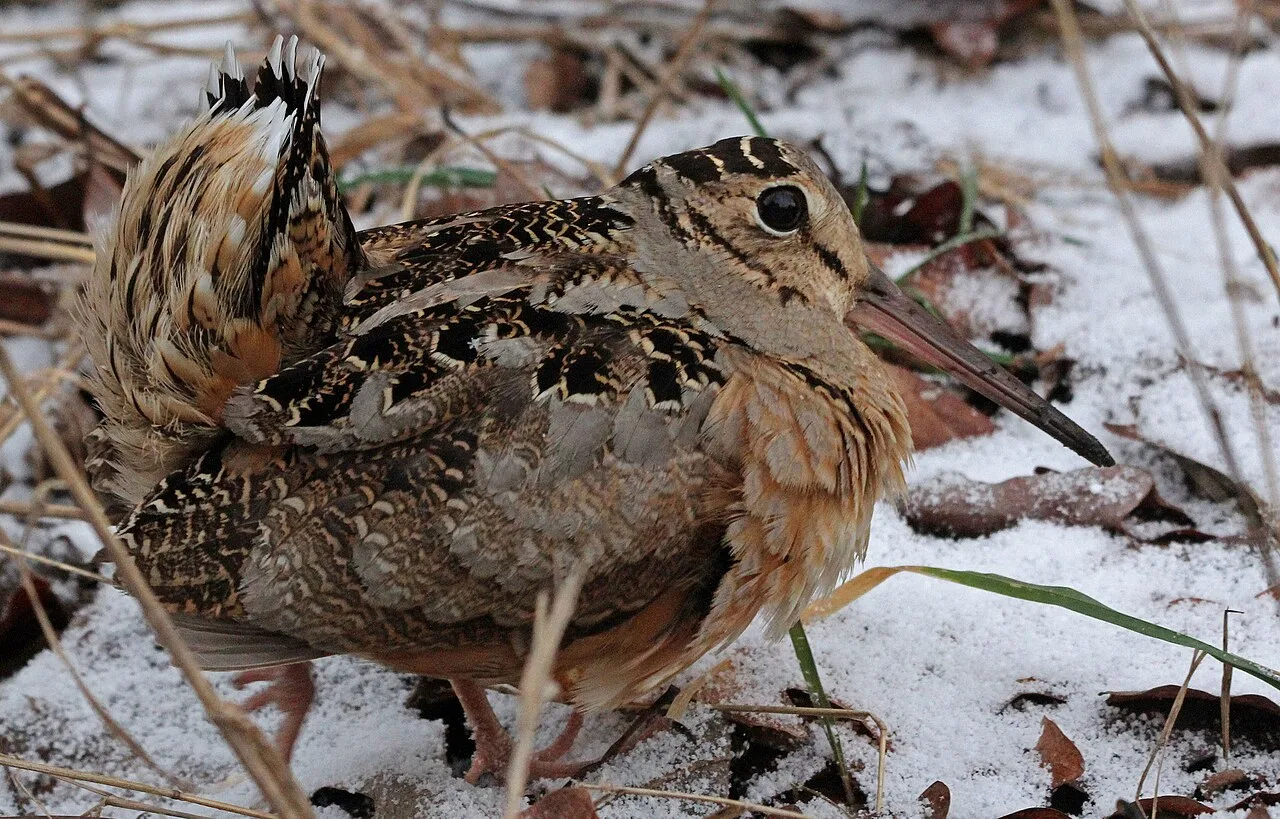
Furthermore, because they are nocturnal migrants that fly at low altitudes, they are particularly vulnerable to window collisions—which is likely how the viral Woodcocks ended up in the concrete jungle of Manhattan.
How to See One (Without the Crowds)
You don't have to go to Bryant Park to find a Woodcock. Right now, in mid-April, they are moving through the Hudson Valley, Connecticut, and the Great Lakes.
Where: Find a damp field edge or a shrubby meadow at dusk.
When: Arrive 30 minutes after sunset.
The Signal: Listen for the "peent." Once you hear it, stay still and wait for the twittering of the wings as the bird takes flight.
The American Woodcock reminds us that nature doesn't have to be majestic to be magnificent. It can be weird, wobbly, and slightly ridiculous. As we celebrate the "dancing bird of 2026," we are reminded of the joy that comes from simply paying attention to the strange, wonderful neighbors who share our world—even the ones who look like a "periscope stuck in a potato."
