
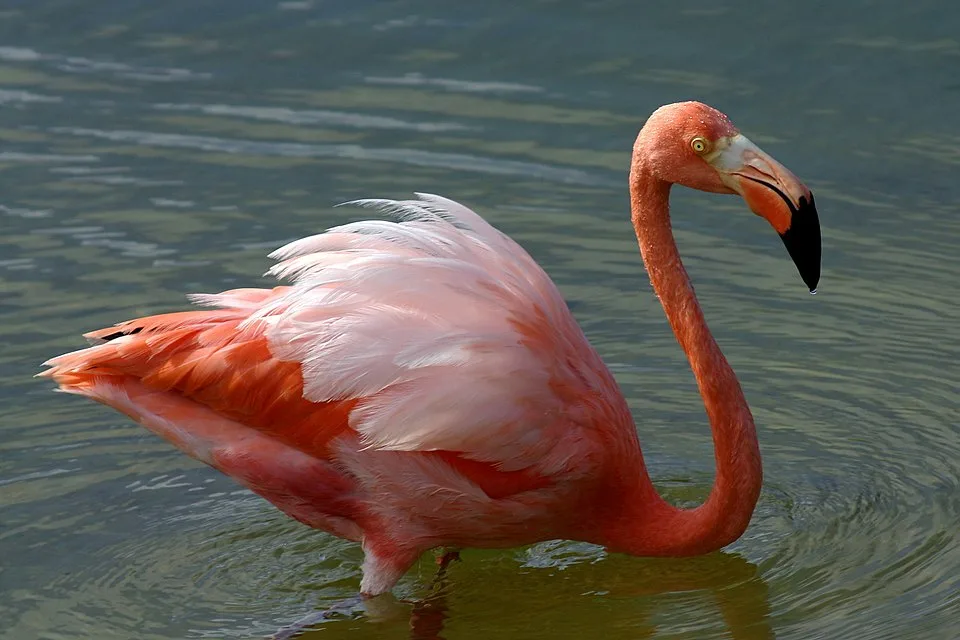
The American Flamingo (Phoenicopterus ruber), a bird synonymous with tropical glamour and vibrant color, is one of the most distinctive and easily recognizable avian species in the world. With its towering stature, graceful S-shaped neck, and plumage ranging from pale pink to deep scarlet, this bird commands attention whether wading in vast, shimmering lagoons or flying in long, elegant lines across a blue sky. While its global distribution is centered in the Caribbean and Central and South America, the American Flamingo is an essential, though often sporadic, part of the American avifauna, occasionally gracing the shallow waters of Florida and the Gulf Coast.
A creature of extremes, the flamingo thrives in environments that are too harsh for most other animals—hypersaline lakes, alkaline flats, and vast coastal mudflats. Its unique biology, from its filter-feeding mechanism to its synchronized breeding rituals, makes it a fascinating subject of study and a critical indicator of wetland health.
Anatomy of an Icon: Structure and Color
The American Flamingo is the largest of the six flamingo species globally, often reaching heights of four to five feet and possessing a wingspan that can exceed five feet. Its striking appearance is the result of highly specialized biological adaptations.
The Signature Bill
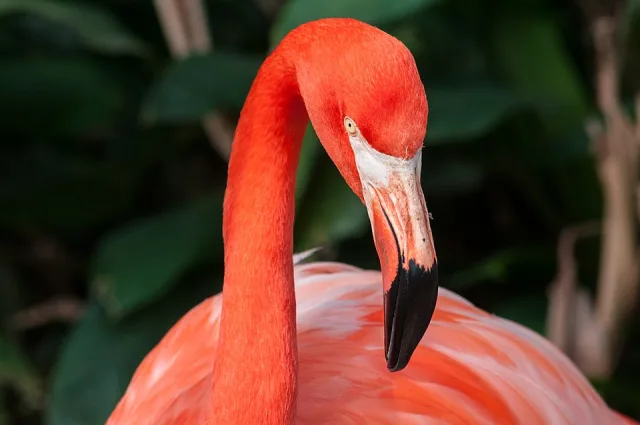
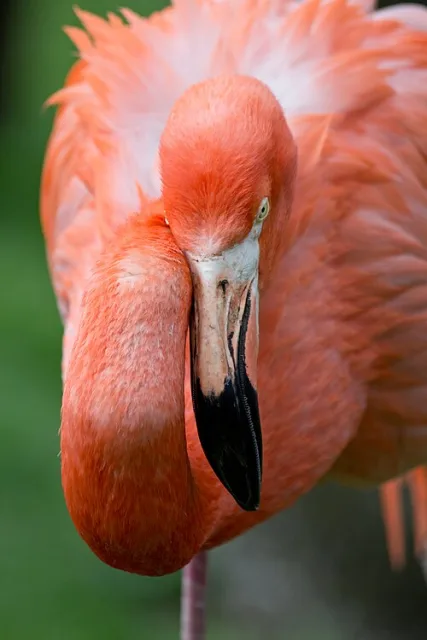
The most critical and unusual feature of the flamingo is its massive, downward-curved bill. This specialized structure is the engine of its filter-feeding lifestyle.
Structure: The lower mandible is deep and scoop-like, while the upper mandible is smaller and fits over the lower one like a lid. The bill’s interior is lined with fine, hair-like structures called lamellae (similar to baleen in whales) and fleshy, rough papillae on the tongue.

American Flamingo Feeding: The flamingo feeds by holding its head upside down in the water, sometimes resting its upper bill flat on the muddy bottom. It then uses its large, piston-like tongue to pump water rapidly (up to five times a second) through the lamellae, effectively filtering out minute algae, diatoms, and small invertebrates.
The Pink Pigment
The flamingo’s famous pink or reddish hue is not genetic but entirely dietary. The color comes from carotenoid pigments found in the algae, brine shrimp (Artemia), and crustaceans the bird consumes.
Color Intensity: The deeper the saturation of carotenoids in the diet, the more vibrant the flamingo’s color. The American Flamingo is generally the most brightly colored of the world’s flamingo species, often displaying fiery red-pink plumage.
Breeding Display: The color is vital for signaling health and fitness; during the breeding season, flamingos become even more intensely colored, a visual cue crucial for attracting mates.
The Leg and Knee Myth
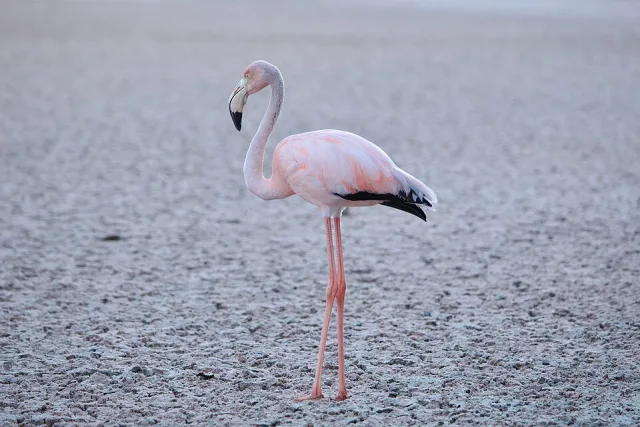
Flamingos are known for standing on one leg, a behavior thought to conserve body heat or reduce muscular effort. Their long, slender legs are often misunderstood: what appears to be a reverse-bending knee is actually the ankle joint (the tarsus), with the true knee being hidden close to the body.
Range and Status in the United States
The American Flamingo is not a widespread resident in the continental U.S., but its historical and sporadic presence, particularly in South Florida, has long cemented its status in the region.
Historical Presence and Extirpation
Historically, large populations of American Flamingos were resident in South Florida, especially the Everglades and the Florida Keys. However, intensive plume hunting in the late 19th and early 20th centuries for the millinery trade nearly extirpated the species from the state.

Modern Sightings and Reappearance
Today, nearly all sightings of the American Flamingo in the U.S. are considered vagrants or post-breeding dispersals from large, established colonies in the Bahamas, Cuba, and Mexico's Yucatán Peninsula.
Florida: Sightings are most reliable in South Florida, particularly the Everglades, the Florida Keys, and occasionally Tampa Bay. They appear most frequently following severe weather events or during fall migration.
The Gulf Coast: They are also occasionally reported along the Gulf coasts of Texas and Louisiana, where they utilize similar hypersaline mudflats.
Intriguing recent research, including the sighting of a flamingo banded in Yucatán, suggests that a slow, natural re-colonization of Florida may be occurring. This is supported by the species’ recent successful breeding establishment in other parts of the Caribbean, indicating a hopeful trend toward reclaiming historical range.
Social Life and Breeding Rituals
The social structure and breeding habits of the American Flamingo are among the most elaborate and complex in the avian world.
Life in the Colony
Flamingos are intensely gregarious, living in huge colonies that can number in the tens of thousands. This communal living is a defense mechanism against predators, as thousands of eyes are better than two. It also facilitates their highly synchronized breeding process.
Synchronization: The entire colony must be stimulated simultaneously to begin breeding. This is achieved through spectacular, coordinated mass displays that include head-flagging (rapid side-to-side head movements), wing salutes, and marching in tight formations. These group dances trigger the release of reproductive hormones.
Nesting and Parenting
Flamingos typically breed on vast, remote salt flats or mud banks that offer protection from ground predators.
The Nest: The nest is a single, tall, conical mound of mud, stones, and debris, built high enough to protect the single egg from rising water or ground heat.
The Chick: Both parents share incubation duties and care for the chick. The chick is born with straight legs and a straight bill, which does not develop the characteristic curve until it is several weeks old.
Crop Milk: Both male and female flamingos produce crop milk—a fatty, protein-rich secretion similar to pigeon milk—which is regurgitated to feed the chick. This specialized milk is also tinged red with carotenoids, meaning the parents literally "feed" their color to their offspring, causing their own color to fade temporarily during the early rearing stage.
Conservation and Ecological Role

The American Flamingo plays a crucial role as a primary consumer in its specialized wetlands. By filtering microscopic algae and invertebrates, they help keep the ecosystem's nutrient levels in balance.
While the species has recovered substantially from the hunting era, it faces modern challenges:
Habitat Destruction: Its reliance on remote, undisturbed hypersaline wetlands makes it extremely vulnerable to coastal development, industrial runoff, and changes in water flow.
Climate Change: Changes in rainfall and sea level can drastically alter the water depth and salinity of their shallow feeding and nesting grounds, directly impacting the availability of brine shrimp and flies.
Disturbance: Because they nest in massive, synchronized colonies, any human intrusion or predator disturbance can cause mass flight and nest abandonment, leading to high rates of reproductive failure.
The American Flamingo remains a powerful symbol of the wild, untamed beauty of the tropics. Its vibrant presence in the Southern U.S. is a celebrated reminder of ecological connectivity, a spectacular pink sentinel urging us to protect the health of the unique, harsh wetlands it calls home.
