
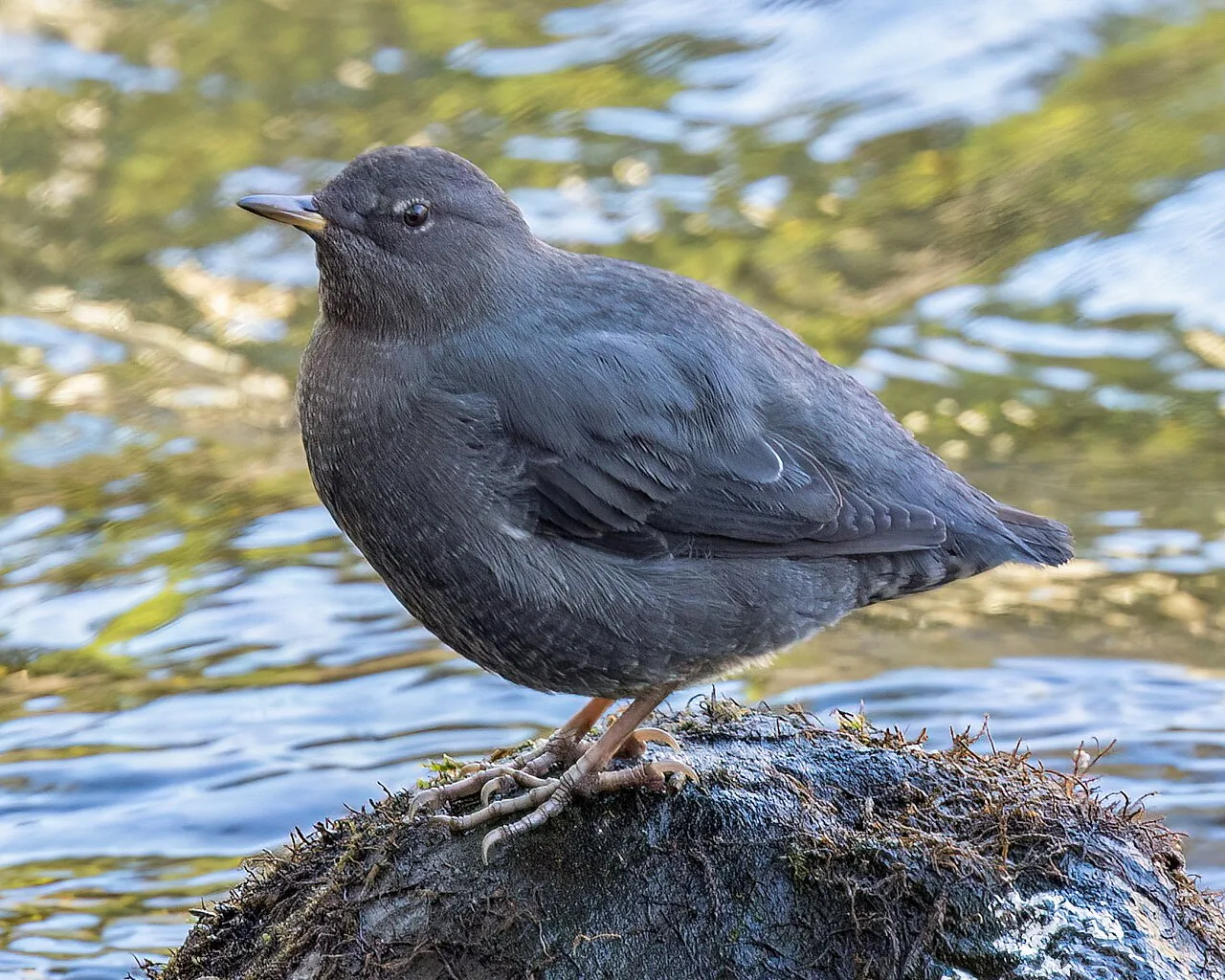
In the cold, churning mountain streams of the American West, there lives a bird that defies every expectation of what a songbird should be. It doesn’t flit through the canopy or forage in the meadow. Instead, it dives headfirst into freezing, glacial meltwater, walking along the rocky bottom against the current in search of a meal. This is the American Dipper (Cinclus mexicanus), a creature so unique that it occupies a category all its own as the continent’s only truly aquatic songbird.
For those who frequent the high-altitude waterways of the Rockies, the Cascades, or the Sierra Nevada, the Dipper is a symbol of resilience. Often called the "Water Ouzel" by early naturalists like John Muir, this unassuming gray bird is a master of an extreme environment that would be lethal to almost any other songbird.
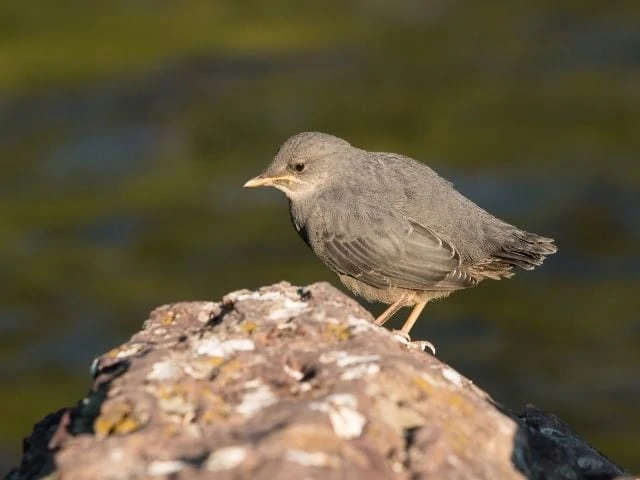
1. Built for the Cold: Evolutionary Marvels
To survive in mountain streams that often hover just above freezing, the American Dipper has developed a suite of physiological adaptations that are more reminiscent of a penguin than a sparrow.
Waterproof Armor: The Dipper possesses an oversized uropygial gland (preen gland) that is ten times larger than that of most other songbirds. They use this to coat their feathers in a thick, water-repellent oil. Their plumage is so dense that even after several minutes underwater, their skin remains perfectly dry.
The "Third Eyelid": While diving, the Dipper uses a nictitating membrane—a translucent extra eyelid—to protect its eyes from the rush of the water while still maintaining visibility.
Blood Chemistry: Their blood has a high concentration of hemoglobin, allowing them to store more oxygen and dive for longer periods in cold water where oxygen demand is high.
Nasal Flaps: When they submerge, special scales or flaps close over their nostrils to prevent water from entering their respiratory system.
2. The Signature Move: Why They "Dip"
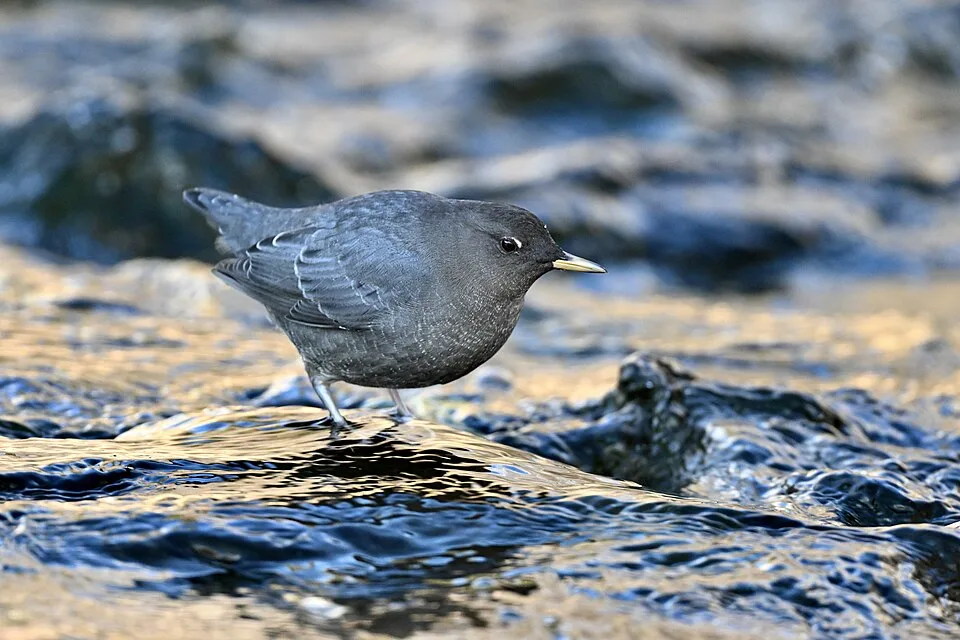
If you spot an American Dipper perched on a mid-stream boulder, you will notice its most famous trait immediately: it bobbles. The bird rhythmically squats up and down, sometimes as often as 60 times per minute. While scientists are still debating the exact reason for this behavior, the leading theories include:
Visual Communication: In the roar of a cascading waterfall or a rushing stream, sound is often drowned out. The dipping motion may serve as a visual signal to other dippers.
Depth Perception: The movement might help the bird eliminate the glare or refraction of the water’s surface, allowing it to better spot prey beneath the ripples.
3. Hunting in the Torrent
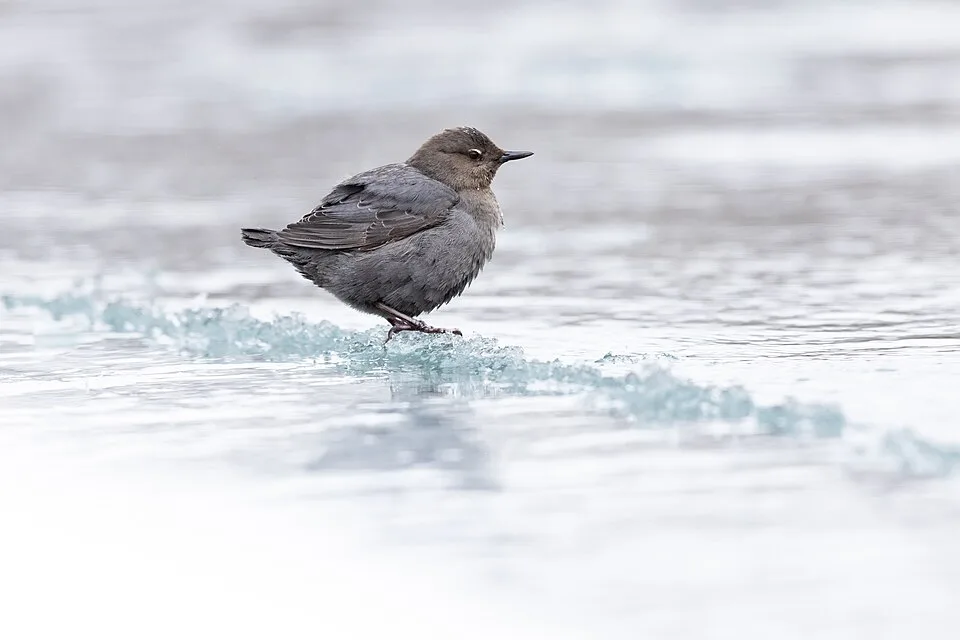
The foraging behavior of the American Dipper is a sight to behold. They are generalist predators of aquatic life, primarily targeting the larvae of caddisflies, mayflies, and stoneflies. They will also occasionally snatch small fish or fish eggs.
Unlike a duck that floats, a Dipper often walks. It plunges into the water and uses its powerful wings to "fly" through the current, effectively pinning itself to the stream bed. Once on the bottom, it uses its beak to flip over stones and gravel to find hidden larvae. They are capable of diving to depths of 20 feet and can remain submerged for up to 30 seconds.
4. Nesting Behind the Falls
The nesting habits of the American Dipper are as adventurous as their hunting. They prefer to build their nests in places that are inaccessible to land-based predators. This often means a rock ledge directly overhanging a deep pool or, most famously, a crevice directly behind a waterfall.
The Architecture: The nest is a large, globe-shaped structure with a side entrance. It is built in two layers: an outer shell of living moss that stays green and moist from the spray of the water, and an inner lining of dry grass and leaves to keep the eggs warm and cushioned.
The "Mist" Protection: By nesting behind or near falling water, the birds ensure that the humidity remains high, which prevents the eggs from drying out, while the physical barrier of the water keeps snakes and jays at bay.
5. Conservation and Habitat: The Indicator Species
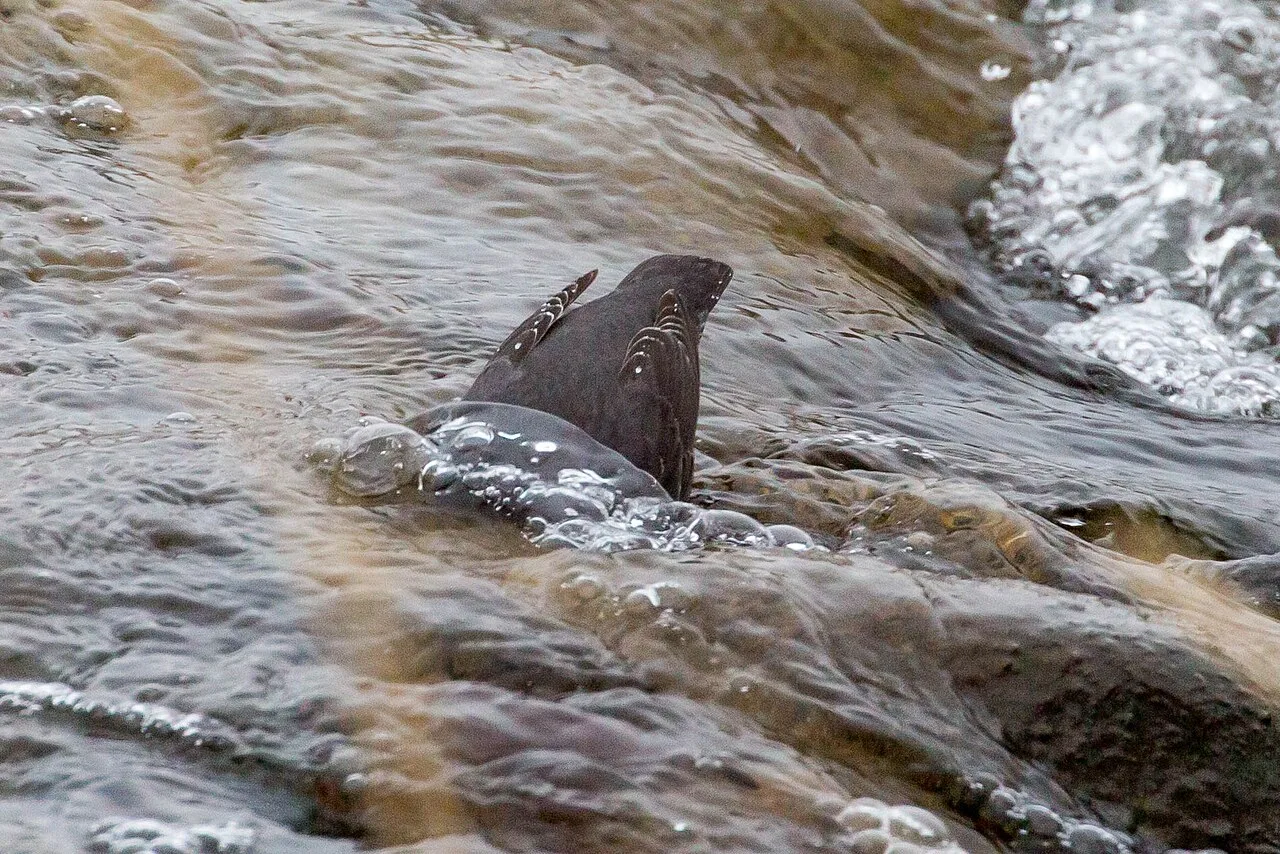
Because the American Dipper relies entirely on clean, well-oxygenated, and unpolluted water, they are considered a primary indicator species. Their presence is a "green light" for the health of a watershed.
The Threat of Siltation: Logging, mining, and road construction can lead to excess silt in mountain streams. This silt smothers the aquatic insect larvae the Dippers eat and makes it impossible for them to see their prey.
Climate Change: As mountain snowpacks shrink and spring runoff happens earlier and more violently, the timing of the Dipper’s nesting can be thrown out of sync. Furthermore, warming water temperatures can reduce the dissolved oxygen levels, killing off the cold-water insects they depend on.
Chemical Pollution: Like many aquatic birds, Dippers are vulnerable to the bioaccumulation of heavy metals like mercury and lead, which can wash down from abandoned mine sites in the West.
6. Where to See the American Dipper
If you are looking to add the American Dipper to your life list, you’ll need to head West. They are found from the mountains of Alaska down through the Canadian Rockies and into the Western United States, reaching as far south as Central America.
Top Spots for Sightings:
Yellowstone National Park: Check the rocky edges of the Gardner River or the Lamar River.
Olympic National Park: Look along the Sol Duc or Elwha Rivers.
The Sierra Nevada: They are common along almost any fast-moving creek above 4,000 feet.
Rocky Mountain National Park: Scan the boulders of the Big Thompson River.
The Spirit of the Stream
John Muir once described the Dipper as a "singularly joyous and lovable little fellow," noting that no matter how dark or cold the winter day, the Dipper would still be found singing its bubbly, flute-like song.
The American Dipper reminds us that the most rugged environments on Earth are not "barren"—they are simply specialized. This bird has found a way to turn a freezing, violent torrent into a home. The next time you find yourself standing by a mountain stream, take a moment to look at the rocks in the middle of the current. You might just see a little gray bird bobbing away, ready to take a leap into the deep.
