

The cuckoo—a name synonymous worldwide with the ultimate avian deception: brood parasitism. This strategy, where a bird lays its eggs in another species' nest to outsource all parental duties, is one of nature’s most fascinating and brutal evolutionary arms races. However, in the United States, the breeding habits of the two native cuckoo species—the Yellow-billed Cuckoo (Coccyzus americanus) and the Black-billed Cuckoo (Coccyzus erythropthalmus)—offer a surprising deviation from the infamy of their European and Asian relatives.
While global cuckoo species, particularly the Common Cuckoo of the Old World, are notorious obligate brood parasites (meaning they only reproduce this way), the North American species are largely non-parasitic, generally building their own flimsy stick nests and raising their own young. Yet, the parasitic instinct is not entirely absent; rather, it manifests as an occasional, opportunistic behavior that provides a unique window into the evolutionary pressures that drive this practice.

Brood Parasitism: A Rare North American Strategy
Unlike the obligate parasitic cowbirds, which are the main perpetrators of this behavior in North America, the Yellow-billed and Black-billed Cuckoos typically perform all parental duties, including building their nest, incubating eggs, and feeding their young. However, under certain environmental conditions—most notably when there is an abundance of food, such as an outbreak of their favored prey, caterpillars—the female cuckoo can lay eggs faster than she can successfully raise them.
This leads to a form of opportunistic or facultative brood parasitism. Instead of investing more time and energy in her own nest, she may "dump" a few extra eggs. Critically, this behavior is often intraspecific, meaning they may parasitize the nest of another cuckoo, sometimes even of their own species. This suggests that the ancient cuckoo instinct to spread risk and reduce parental investment remains, even if it is not their default survival strategy.
Sneaking the Egg: The Cuckoo’s Methods
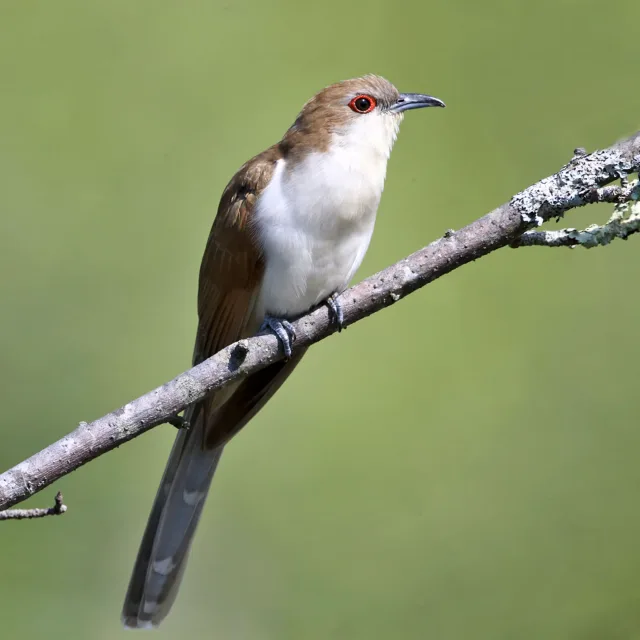
When a U.S. cuckoo does choose to parasitize another nest, the act is typically one of stealth and speed, much like their Old World relatives. Brood parasites rely on a few key adaptations to successfully infiltrate a host nest:
Speedy Laying: The entire process of laying the egg must be incredibly fast to avoid detection by the host parents, who are often fiercely protective of their nest.
Egg Mimicry (Less Common in U.S. Cuckoos): While European cuckoos have evolved remarkable eggs that closely resemble those of their specific host species, the North American cuckoos, because they are not obligate parasites, exhibit less-developed egg mimicry. Their pale bluish-green eggs may or may not blend in well with the host’s clutch.
Egg Removal: Sometimes, the female cuckoo will remove or destroy one of the host's eggs before laying her own. This keeps the total number of eggs in the nest consistent, reducing the chance that the host will notice the intrusion.
Shorter Incubation Time: A parasitic egg often has a shorter incubation period than the host’s eggs. This ensures the parasitic chick hatches first, giving it a critical head-start in growth and demanding the parents’ full attention.
For the American cuckoo, the parasitism is less about a long-evolved, host-specific trickery and more about capitalizing on a moment of opportunity.
Do Host Birds Know the Danger?
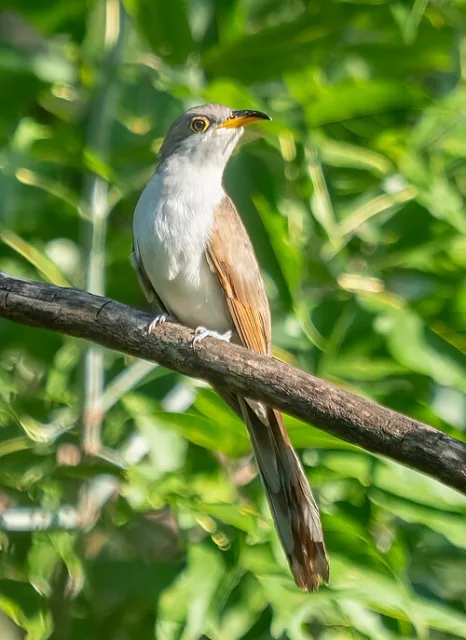
The question of whether host birds "know" the danger is part of an ongoing evolutionary arms race. In North America, the native birds are primarily adapted to defend against the Brown-headed Cowbird, the continent's most widespread obligate brood parasite. Their defensive strategies against cuckoos are, therefore, less honed.
The Acceptance and Rejection Dichotomy
Host species are generally categorized as "acceptors" or "rejectors" of foreign eggs:
Rejectors are species that have evolved strong defenses. They can recognize a foreign egg, often by its color or size difference from their own clutch, and will physically eject it or abandon the nest entirely to start a new one. American Robins are a classic example of rejectors of cowbird eggs, though their response to the less-frequent cuckoo egg is less documented.
Acceptors either fail to recognize the intruder or calculate that the risk of accidentally rejecting one of their own eggs, or facing retaliation from the parasite, is too high. In cases where the egg resembles their own, as is common with European cuckoo eggs, hosts are easily fooled.
For the occasional parasitism by a Yellow-billed or Black-billed Cuckoo, the lack of intense, long-term co-evolution means many potential hosts have not developed a specific rejection defense. Furthermore, because American cuckoos do not exhibit the same brutal post-hatching behavior (like the Common Cuckoo chick’s instinct to shove all other eggs and chicks out of the nest), a cuckoo chick may sometimes be raised alongside the host’s own young, though this still severely reduces the survival chances of the legitimate chicks due to the cuckoo’s aggressive begging and growth.
Which U.S. Birds Do Cuckoos Target?
Since the Yellow-billed and Black-billed Cuckoos only rarely engage in interspecific brood parasitism, the list of their victims is not as extensive or specialized as the Cowbird's (which targets over 200 species). However, records show that they occasionally lay eggs in the nests of:
American Robin: A common songbird whose nest is easily accessible.
Gray Catbird: A mid-sized songbird often found in dense thickets and shrubbery.
Wood Thrush: A forest-dwelling songbird.
Black-billed Cuckoo: The Yellow-billed Cuckoo has been known to parasitize the nest of its close relative, the Black-billed Cuckoo, and vice versa.
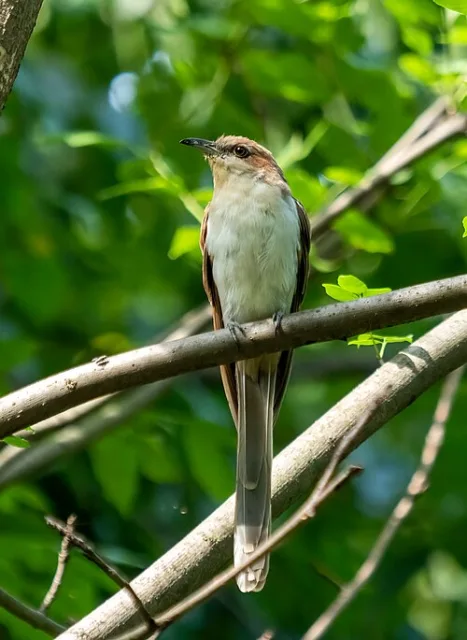
In these rare cases, the cuckoo egg is most likely to be accepted by the host because the host parents may be less vigilant or have not had the chance to evolve the specialized egg-rejection behavior seen in species that are heavily parasitized by obligate parasites like cowbirds.
Ultimately, the American cuckoo stands as a subtle anomaly in the cuckoo family—a bird that retains the genetic blueprint for a parasitic lifestyle but, for reasons likely tied to local ecological pressures and the demands of its own specialized diet, has chosen a mostly honest, if still somewhat fragile, path to parenthood. Their sporadic parasitic behavior serves as a reminder that the line between parent and parasite is a thin and shifting one in the endless, dramatic theater of evolution.
