
West Virginia's Allegheny Highlands form the rugged backbone of the Appalachian Mountains in the state's eastern panhandle. This region is a place of exceptional beauty and environmental significance, hosting a unique blend of northern flora and fauna that is remarkably different from the surrounding oak-hickory forests of the mid-Atlantic. Birding here is an immersive experience in high-elevation ecosystems, offering access to sought-after breeding species that require the cool, moist conditions provided by spruce-fir forests, sphagnum bogs, and red spruce savannas. This area acts as a vital, southern extension of Canadian Boreal habitats, creating an isolated ecological island for specialized avian residents.
The Allegheny Ecological Island
The highest peaks of the West Virginia Alleghenies, such as those found around Spruce Knob, Cheat Mountain, and the Dolly Sods Wilderness, rise above the typical deciduous forests to altitudes where the climate is much cooler and wetter. Historically, these areas were covered in vast stands of Red Spruce (Picea rubens) and Fraser Fir (Abies fraseri). Though much of the original timber was logged in the late 19th and early 20th centuries, significant recovery efforts have regenerated vital tracts of this unique ecosystem.
These regenerated forests and scattered patches of old growth create a habitat known as the "Allegheny Island" or "Boreal Island." This environment is characterized by:
Cool Summers: The high elevation keeps temperatures consistently low, mimicking the climate of New England or Eastern Canada.
Persistent Moisture: Fog, rain, and cloud cover are frequent, supporting lush mosses, ferns, and deep layers of acidic soil.
Conifer Dominance: The prevalence of spruce, fir, and eastern hemlock provides the structural complexity and foraging resources essential for Boreal-associated birds.
For birders, this means traveling a short distance up a mountain can be like traveling hundreds of miles north, offering species rarely found at lower elevations in the mid-Atlantic.

Boreal Specialties: The Prize Birds
The primary draw for birders in the Allegheny Highlands are the Boreal-associated breeding species, many of which are near the southern limit of their range here. The dense conifer canopy and specialized understory are crucial for their nesting and foraging success.
Blackburnian Warbler (Setophaga fusca): Perhaps the most dazzling of the high-elevation warblers, the male is unmistakable with its fiery orange throat and black-striped sides. They are often found foraging high in the spruce canopy.
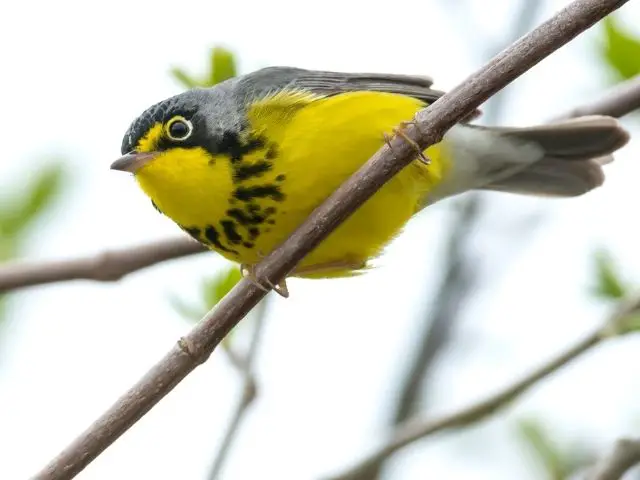
Canada Warbler (Cardellina canadensis): A distinctive bird with a blue-gray back and a bold "necklace" of black streaks across a bright yellow throat and chest. They prefer the dense, shrubby understory and rhododendron thickets of moist slopes.
Red-breasted Nuthatch (Sitta canadensis): Unlike its lower-elevation cousin, the White-breasted Nuthatch, this bird is tied to the conifer forests, feeding on seeds and insects found within spruce cones and needles.
Purple Finch (Haemorhous purpureus): Described as a "sparrow dipped in raspberry wine," the male Purple Finch is often found in spruce-fir woods and mixed forests, singing a rich, bubbly song.

Wetlands and Open Glades
The presence of vast, peaty wetlands and bogs, such as those found in the Dolly Sods area, adds another layer of diversity. These open, acidic environments support different bird communities.
Nashville Warbler (Leiothlypis ruficapilla): Found in the shrubby edges and openings created by the wetlands and reverting clearcuts.
Alder Flycatcher (Empidonax alnorum): This Empidonax species is associated with the dense, low thickets of alder and willow that border the bogs and marshy areas, identified by its distinct, often heard call of "fee-bee-o."
Key Birding Hotspots
Accessing these high-elevation species requires visiting specific protected areas where the spruce-fir habitat is most intact:
Dolly Sods Wilderness Area: Famous for its tundra-like open glades, stunted Red Spruce, and sphagnum bogs. The high winds and exposed nature make it ideal for raptor spotting and nesting warblers in the scrub.
Spruce Knob-Seneca Rocks National Recreation Area: The highest point in West Virginia (Spruce Knob, at 4,863 feet), offers excellent access to the core Red Spruce forest and its associated Boreal bird species, including the Golden-crowned Kinglet and Brown Creeper.
Cranberry Glades Botanical Area: A unique area featuring an expansive boreal bog (or fen) with plants more typical of Canada, attracting specialized wetland-edge birds.

Conservation and Threats
The high-elevation ecosystems of the Alleghenies are extremely fragile. They face significant threats, primarily from climate change and acid deposition (acid rain). Because the spruce-fir habitat exists only on these cold mountain tops, a sustained increase in temperature pushes the ecological zone higher up the slope. Since the mountains have finite height, there is nowhere for the habitat to retreat, making these birds highly vulnerable to warming trends.
Furthermore, these isolated populations often lack the genetic diversity and resilience of their northern counterparts. Organizations like the Monongahela National Forest and local conservation groups are actively involved in Red Spruce restoration efforts, aiming to reconnect fragmented habitats and ensure the long-term survival of the Boreal avian community.
For any birder in the mid-Atlantic, West Virginia's Allegheny Highlands are a mandatory destination—a unique landscape where the Canadian North can be experienced just a few hours' drive from the South, providing a crucial refuge for some of the continent's most beautiful and specialized breeding birds.
Birds of West Virginia: The Common, Migratory, and Rare Species
