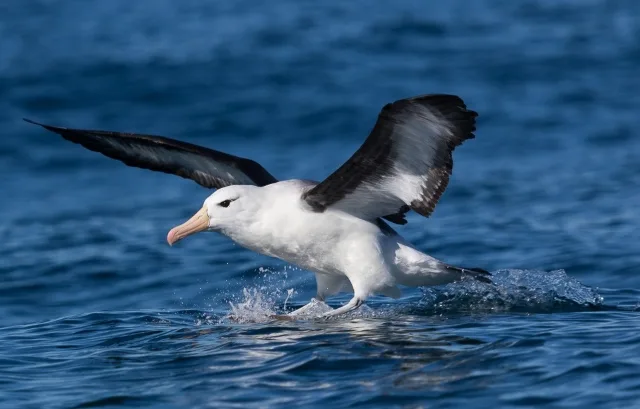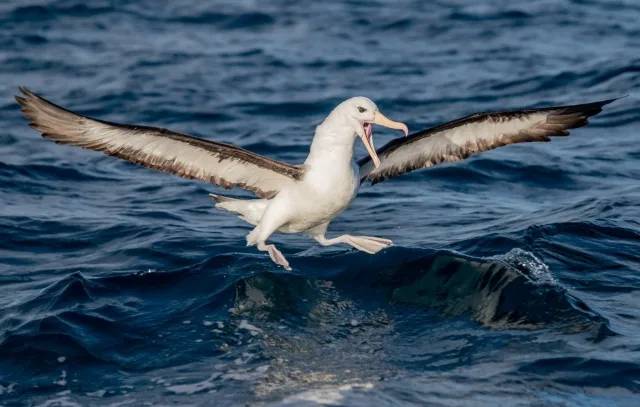
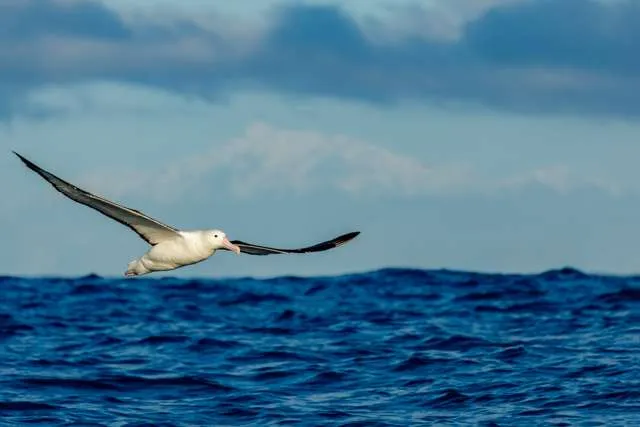
The albatross, a bird synonymous with the endless sea, is perhaps the greatest glider on Earth. These pelagic wanderers spend up to 90% of their lives aloft, navigating thousands of miles across the trackless ocean. They achieve this incredible feat not through constant, energy-sapping flapping, but through a suite of specialized techniques—chief among them, dynamic soaring and slope soaring—that allow them to harness the wind's energy and achieve a state of near-perpetual, effortless flight.
Dynamic Soaring: The Energy Engine
The single most important foraging and transit technique for the albatross is dynamic soaring. This process allows the bird to extract energy directly from the wind shear—the gradient of wind speed that exists just above the ocean surface.
The Four Steps of the Cycle
Dynamic soaring is a repeating cycle of turns, dives, and climbs, enabling continuous forward movement without wingbeats:
The Climb (Upwind): The albatross starts near the surface and turns into the wind, climbing steeply. As it rises, it enters higher air layers where the wind speed is significantly faster. This gain in altitude comes at the cost of airspeed.
The Turn and Gain: At the peak of its climb (often 30–50 feet high), the bird executes a tight turn downwind.
The Descent (Downwind): It then descends rapidly, turning downwind. As the bird drops toward the sea, it uses gravity to convert its potential energy (height) into kinetic energy (speed). Because it is flying downwind, this descent rapidly builds up tremendous ground speed.
The Bottom Turn: Just before hitting the water, it turns sharply into the wind again. This turn converts the high kinetic energy back into altitude and begins the cycle anew.
The Result: By repeating this figure-eight pattern, the albatross maintains high speeds while exploiting the difference in wind velocity between the slow surface air and the faster air higher up. This reduces the need for flapping to less than 1% of its flight time.
Slope Soaring: Riding the Waves
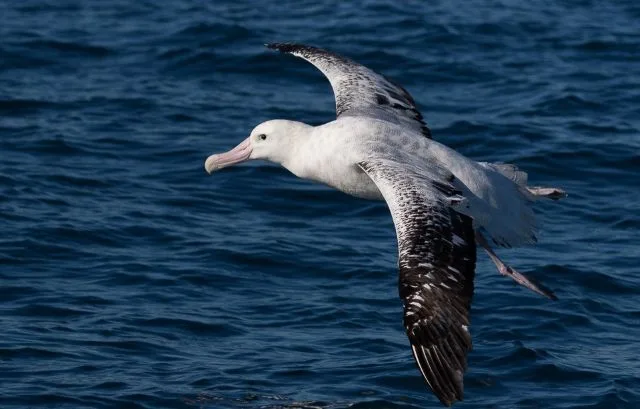
When the ocean is rough, albatrosses utilize a related technique called slope soaring. This involves exploiting the updrafts created when wind hits the leading edge of a large wave and is deflected upward.
By positioning themselves right in front of the wave, they ride this rising air column like a sailplane, gaining lift and altitude before gliding out over the trough and catching the next wave’s updraft.
This method is particularly useful when wind conditions are not ideal for the classic dynamic soaring cycle, or when they are actively searching for food in choppy seas.
Foraging Range and Diet
These energy-efficient flight methods enable albatrosses to undertake truly epic foraging trips.
Incredible Journeys
A breeding albatross feeding a chick may travel thousands of miles on a single foraging trip. Researchers tracking the North Pacific species have recorded individuals routinely traveling over 10,000 miles (16,000 km) in less than two months. The low energetic cost of flight is what makes this scale of travel possible.
The Diet
Albatrosses are surface feeders or shallow-plunge divers. They generally avoid deep diving and instead rely on finding food close to the surface. Their diet consists primarily of:
Cephalopods (Squid): This is the main component of their diet. Many squid species only rise to the surface at night, suggesting albatrosses may feed extensively during the dark hours.
Fish and Fish Eggs: Particularly small, oily fish.
Crustaceans: Including krill and other small invertebrates.
Scavenging: They are also opportunistic scavengers, historically following whaling ships and now often attracted to fishing boats where they feed on offal (discarded parts) or bait.
The foraging strategy involves continuous flight at high speeds until an anomaly (a fish scent, a floating object, or a congregation of other seabirds) is detected. They then circle down to the surface, land briefly, and feed, before taking off again with a few heavy flaps and resuming their wind-powered journey.
The Price of Efficiency: Take-Off
While the albatross is unmatched in the air, its sheer size and long, stiff wings make it somewhat clumsy on land and water.
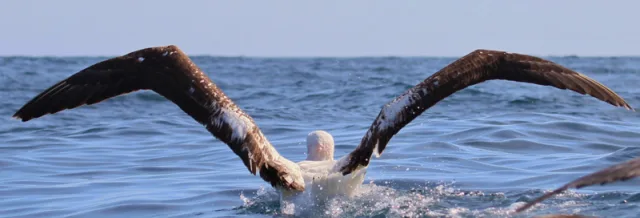
To launch, especially from a flat, calm surface, the bird requires a runway—a clear path into the wind to gain enough lift.
They must flap heavily and run across the water or ground until they reach sufficient speed to become airborne.
This vulnerability makes them extremely selective about where they land, preferring to land only when necessary (to feed or rest) and in areas where a quick escape is possible. This is why they spend so little time near the coast outside of their breeding colonies.
The dynamic interplay between wind and wing allows the albatross to transform the open ocean into its effortless highway, embodying the perfect harmony between form and environment.