

Alabama, the "Heart of Dixie," often surprises visitors with the sheer diversity and quality of its birdwatching opportunities. Lying at a crucial ecological crossroads, the state encompasses everything from the Gulf Coast's vital barrier islands to the vast inland river systems and forested Appalachian foothills, offering a magnificent staging ground for a wide array of avian life. The result is a spectacular year-round showcase of resident species and a key stopover for thousands of migratory birds navigating the continent.

This article will take you on a journey through two of Alabama's most important birding havens, showcasing the state's geographical contrast. We'll explore the northern wetlands of Swan Creek National Wildlife Area (NWA), a critical site for wintering waterfowl and fall shorebirds on the Tennessee River, and then head south to the Gulf Coast's Bon Secour National Wildlife Refuge (NWR), a sanctuary essential for neotropical songbirds during their strenuous coastal migrations. Together, these sites prove that Alabama is a must-visit destination for any serious birder seeking both quantity and rarity in their sightings.
Wheeler National Wildlife Refuge
Wheeler National Wildlife Refuge (NWR), located near Decatur in northern Alabama, is a vital 35,000-acre refuge that stretches for 20 miles along both sides of the Tennessee River. Established in 1938, it holds the distinction of being the first NWR to be overlain on a multi-purpose reservoir, the Wheeler Reservoir, created by the Tennessee Valley Authority (TVA).
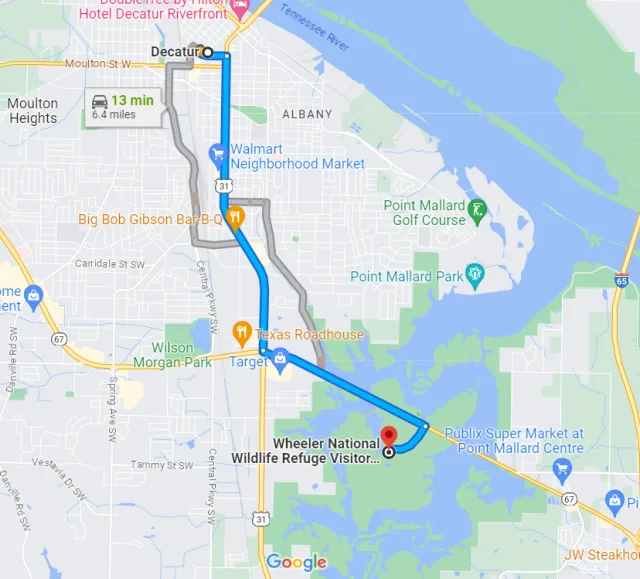
The refuge's geography is defined by this human-made water feature, creating a rich tapestry of habitats including open water, shallow-water embayments, agricultural fields managed for wildlife food, bottomland hardwood forests, and upland pine/hardwood thickets. This diversity—a mix of land, forest, and over 16,000 acres of water—makes it an indispensable resource for migrating and wintering birds along the path just east of the Mississippi Flyway.
The primary attraction for birders at Wheeler NWR is its spectacular winter concentration of waterfowl and cranes. The refuge consistently hosts Alabama's largest wintering duck population, with thousands of birds, particularly Mallards and Canada Geese, feeding in the managed impoundments. However, the true spectacle is the presence of Greater Sandhill Cranes, with thousands of individuals utilizing the refuge's fields and wetlands.

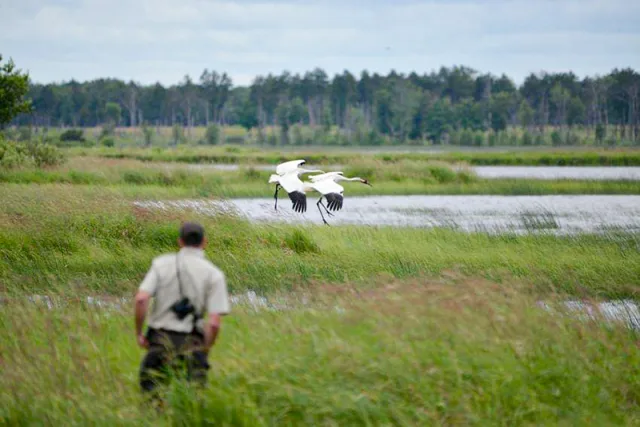
Crucially, Wheeler NWR is a regular wintering site for the federally endangered Whooping Crane, with a small number of these magnificent birds often visible from the two-story, accessible Wildlife Observation Building near the Visitor Center. Beyond the winter flock, the refuge offers excellent year-round birding, with its forests providing habitat for Bald Eagles, Osprey, and numerous species of woodland songbirds during the spring and fall migrations.

Target Birds
Common Nighthawk
Solitary Sandpiper
Little Blue Heron
Barred Owl
Red-breasted Nuthatch
Blue-winged Warbler
Golden-crowned Kinglet
The U.S. Fish and Wildlife Service has up to date information about the area, refuge and facilities.
Eufaula National Wildlife Refuge
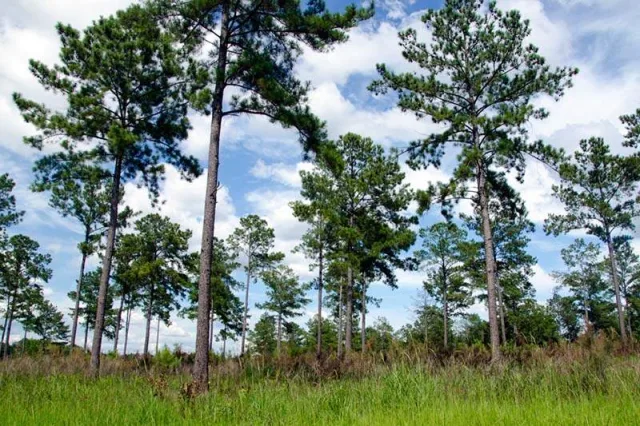
Eufaula National Wildlife Refuge is a vast, 11,184-acre protected area uniquely situated on both the Alabama and Georgia banks of the Chattahoochee River in the southeastern corner of Alabama. The refuge's defining geographical feature is the Walter F. George Reservoir, or Lake Eufaula, which was created by a U.S. Army Corps of Engineers lock and dam.
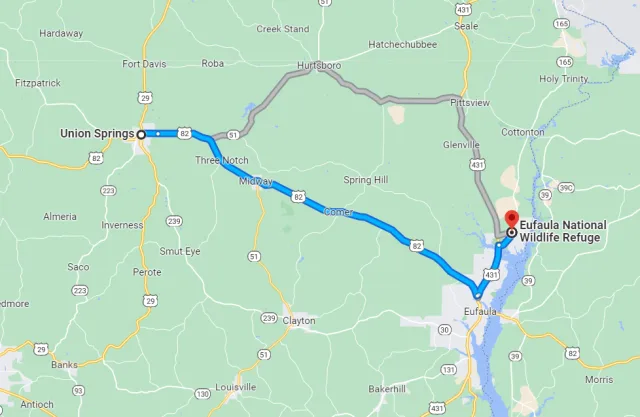
This means the landscape is dominated by over 4,000 acres of open water and nearly 3,000 acres of diverse wetlands, including managed impoundments and marshes. This aquatic setting is intermixed with valuable upland habitats like pinelands, hardwood forests, grasslands, and croplands, creating a rich ecological mosaic. This diversity of habitats, particularly its position at the intersection of the Mississippi and Atlantic Flyways, makes it an exceptionally important stopover point for migratory birds traveling across the continent.
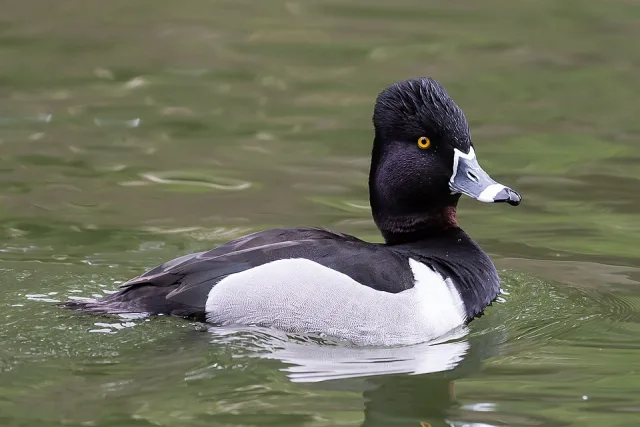
The diverse habitats at Eufaula National Wildlife Refuge provide spectacular birdwatching opportunities, particularly for waterfowl and wading birds. The refuge was established primarily to provide essential wintering habitat for ducks and geese, and visitors in the colder months can expect to see thousands of various species, including Ring-necked Ducks, Gadwall, and Green-winged Teal, often viewed from the accessible Wildlife Drive and observation towers.
Year-round, the extensive marshes and lake edges support large colonies of wading birds like Great Blue Herons, Great Egrets, and the occasional summering Wood Stork. Furthermore, the uplands and woodlands attract numerous neotropical migrants, providing excellent viewing of species like Orchard Orioles and various warblers during the spring and fall migration, as well as resident raptors such as the increasingly common Bald Eagle.
Target Birds
Northern Bobwhite
Blue Grosbeak
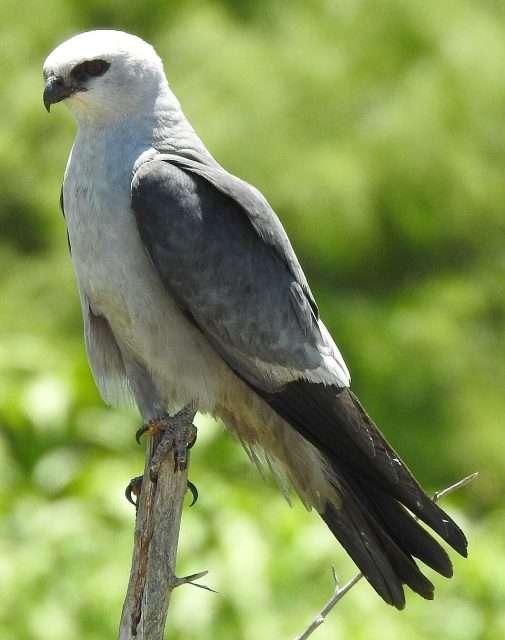
Mississippi Kite
Rose-breasted Grosbeak
Louisiana Waterthrush
Kentucky and Prothonotary Warbler
The USFWS has latest news affecting the area.
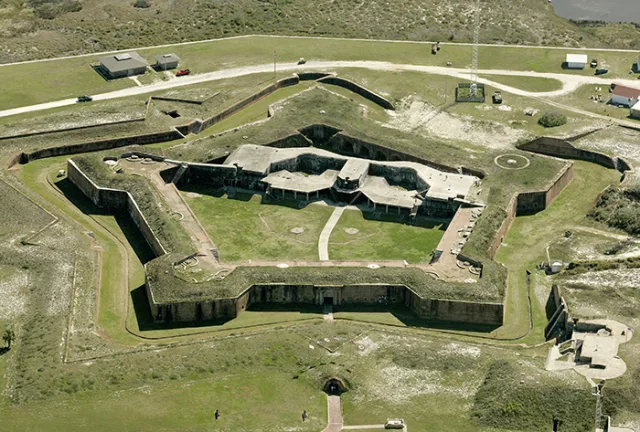
Fort Morgan
Fort Morgan is a historic masonry fort situated at the very tip of Mobile Point, a long, narrow peninsula at the entrance to Mobile Bay on the Alabama Gulf Coast. This unique geographical location is its primary attraction for birders. The point of land juts out into the Gulf of Mexico, with the bay to the north and the open Gulf to the south.
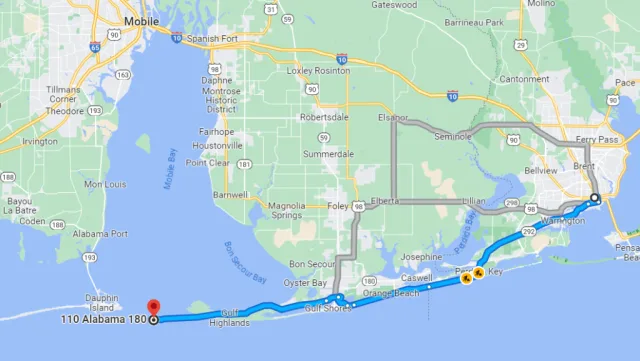
The peninsula itself is a dynamic mix of habitats, including coastal dunes, scrub thickets, small maritime forests, and tidal marsh areas, all centered around the historical fort structure and surrounding open fields. This terminal position on the coast makes it one of the most vital migratory bottlenecks in the entire Southeast, and the fort's old military grounds offer sheltered woody patches for tired birds.
As a prominent feature on the Alabama Coastal Birding Trail, Fort Morgan is a legendary "migrant trap." The site is internationally recognized for the spectacular avian phenomenon known as a "fallout." During spring migration (typically March-May), if a cold front or severe storm system interrupts neotropical migrants as they cross the Gulf of Mexico, the birds will land en masse at the first patch of wooded cover they encounter, which is often the habitat surrounding the fort.
Birders can witness an explosion of color, with dozens of species of warblers, vireos, tanagers, and thrushes resting and feeding in the trees. In the fall, the area is just as important for viewing westward-moving raptors and returning songbirds. Year-round opportunities include sighting various gulls, terns, and shorebirds along the coastline and waterbirds over the bay, making Fort Morgan a consistently rewarding and sometimes explosively exciting birding destination.
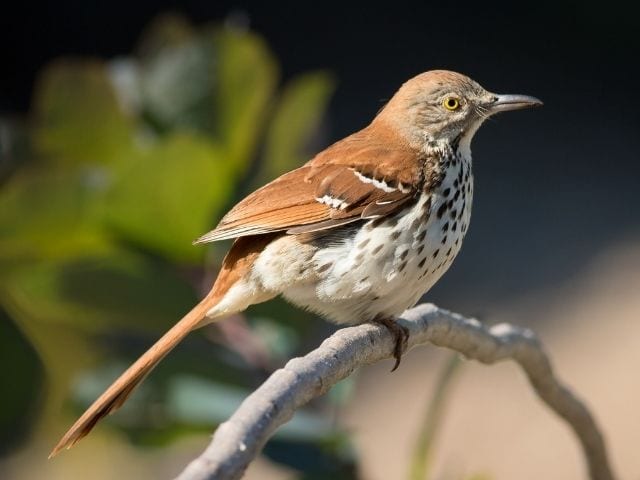
Target Birds
Sandwich Tern
Chuck-will's-widow
Magnificent Frigatebird
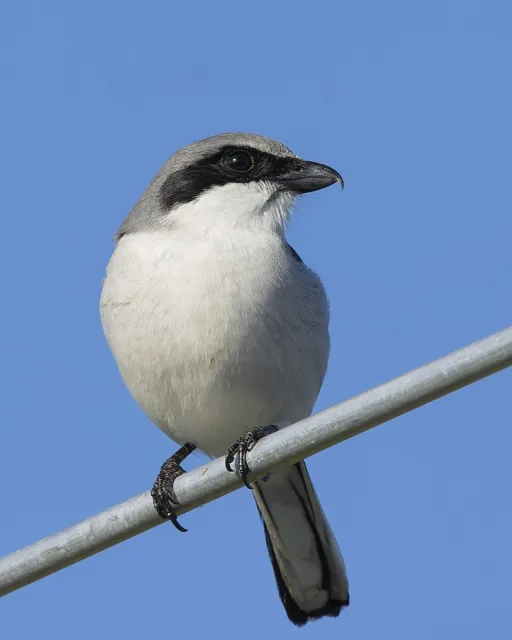
Loggerhead Shrike
Brown Thrasher
Gull-billed Tern
Alabama Birding Trails has lots of information about local hotspots and what might be present.
Dauphin Island Audubon Sanctuary
The Dauphin Island Audubon Sanctuary, located on the eastern tip of Dauphin Island, is a globally renowned site situated at the mouth of Mobile Bay on Alabama's Gulf Coast. This 164-acre protected area is geographically crucial, representing the first significant piece of sheltered, forested land—known as a "maritime forest"—that many migratory birds encounter after their grueling 600-mile flight across the Gulf of Mexico from the Yucatan Peninsula.
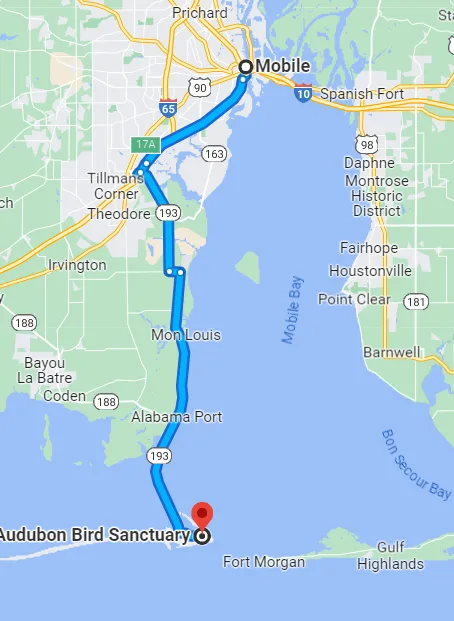
The sanctuary's geography is a dynamic mix of habitats, including rolling dunes, a freshwater Gaillard Lake, a vital Tupelo gum swamp with boardwalks, and dense pockets of live oak and pine woodlands, all bordering the Gulf beach. This varied, sheltered environment provides the essential food and cover that exhausted trans-Gulf migrants desperately need.
The birdwatching opportunities at the Dauphin Island Audubon Sanctuary are spectacular, especially during the spring migration from late March through May. It is internationally famous for the phenomenon known as a "fallout," where adverse weather conditions—like strong north winds or rain—force massive numbers of neotropical migrants to land immediately upon reaching the coast. During a fallout, every tree and shrub in the sanctuary can be temporarily filled with hundreds of birds, including dozens of species of warblers, vireos, thrushes, and tanagers.
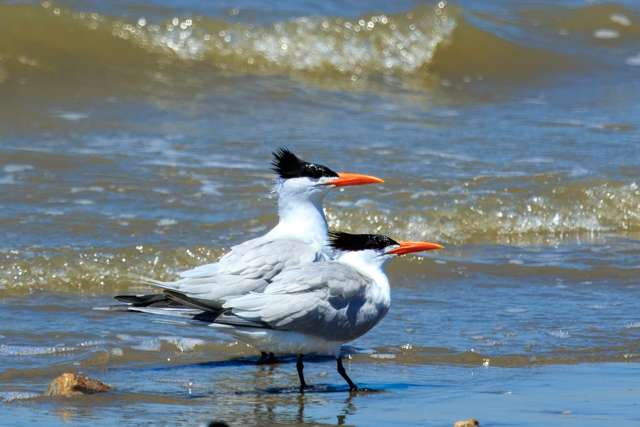
Even without a fallout, the island is consistently productive, yielding sightings of over 420 bird species—nearly 95% of Alabama's total documented species. The extensive trail system, featuring accessible boardwalks and viewing platforms over the swamp and lake, also allows for excellent year-round viewing of wading birds like egrets and herons, along with resident raptors and wintering shorebirds.

Target Birds
Least and Royal Tern
Swainson's Thrush
Clapper Rail
Magnolia Warbler
Inca Dove
Great Horned Owl
Scarlet Tanager
Dauphin Island has a website with more details about the sanctuary with other information about the island and its amenities.
Bayfront Park
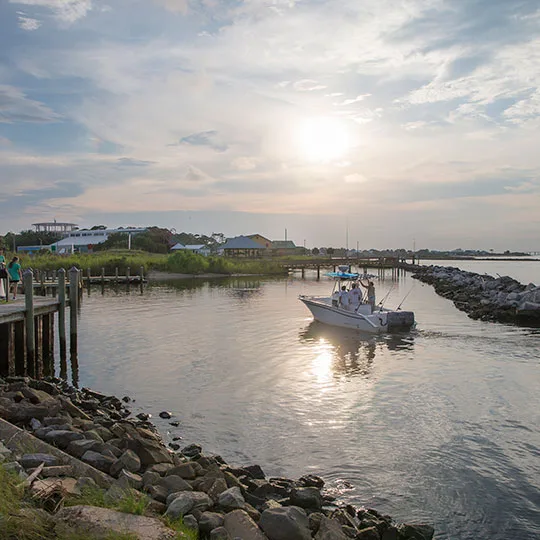
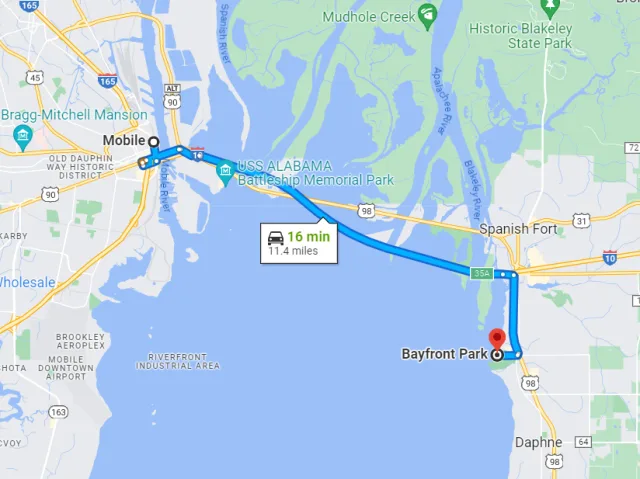
Bayfront Park is a coastal gem nestled in the Alabama Port community of south Mobile County, strategically positioned on the shores of Mobile Bay, just north of the Dauphin Island Bridge. This approximately 20-acre park boasts a diverse geography crucial for bird life, featuring a beautiful sandy pocket beach—the largest on Mobile Bay—that transitions into valuable estuarine marine wetlands.
The park has undergone significant renovation to enhance its public amenities, but its natural value is preserved through wetland nature habitats and a renovated boardwalk and nature trail. Its location allows for observation of both coastal and inland species, as it provides shelter and freshwater sources amidst the dense pines and reeds, offering a crucial ecological link where the terrestrial environment meets the vast tidal waters of the bay.
As Site #46 on the Alabama Coastal Birding Trail, Bayfront Park offers a high concentration of year-round and migratory birdwatching opportunities. The shoreline and pilings are excellent places to spot coastal birds such as Brown Pelicans soaring overhead, along with various Gulls, Terns, and Double-crested Cormorants roosting.
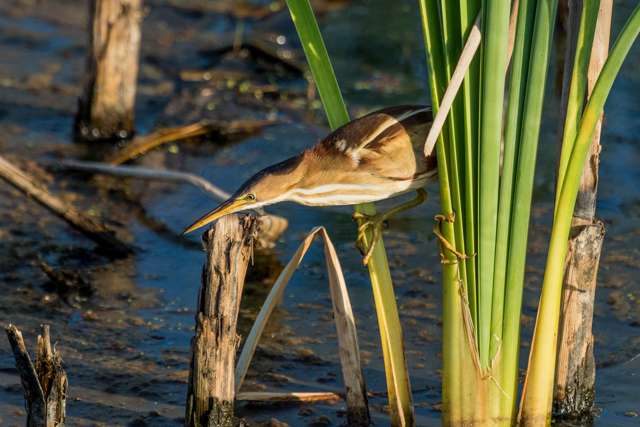
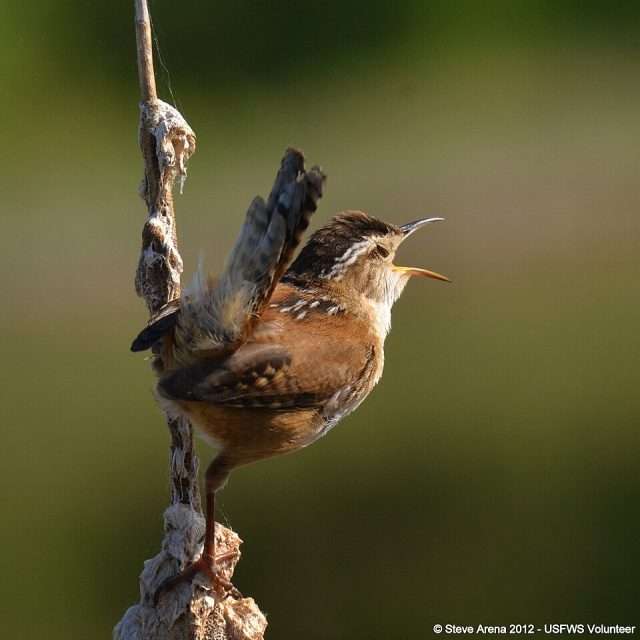
By walking the boardwalk out to the inland marsh, birders can specifically target secretive species like the Clapper Rail, Least Bittern, and, during fall and winter, the elusive Virginia Rail and Sora. The wooded and reedy areas also attract common passerines like Marsh Wren, Common Yellowthroat, and Red-winged Blackbirds. Its position near the Gulf's entry point also makes it a good location for watching migrating ships and the accompanying seabirds, ensuring that every visit provides a rewarding and diverse birding experience.
Target Birds
White-eyed, Red-eyed and Yellow-throated Vireo
Semipalmated and Spotted Sandpiper
Brown Pelican
Osprey
Summer Tanager
Broad-winged Hawk
Gray-cheeked Thrush
Alabama Audubon has links to the Alabama Birding Trails as well as conservation information.
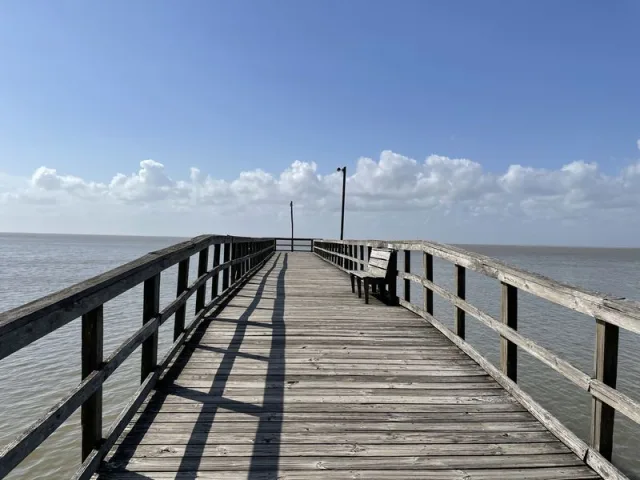
Swan Creek WMA
Swan Creek Wildlife Management Area (WMA), an 8,870-acre preserve, is a prominent feature of the North Alabama birding scene. It is located in Limestone County along the northern banks of the Tennessee River, near the city of Decatur, and is part of the extensive Tennessee Valley Authority (TVA) reservoir system. The WMA's geography is defined by the backwaters of the Tennessee River, creating a rich mosaic of wetlands, riparian (riverbank) environments, and interspersed upland woods.
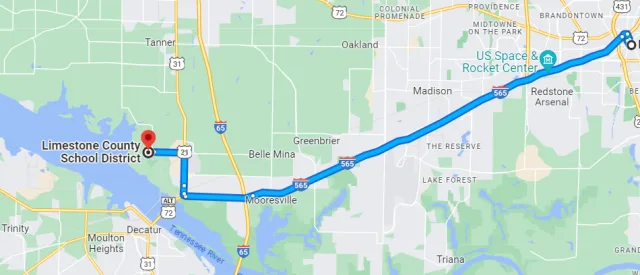
A significant feature is the Swan Creek Dewatering Unit, a controlled-water area crucial for managing habitat. This location, with its mix of flooded timber, mudflats (especially at low water), and managed fields, provides an essential wintering and stopover location for migratory birds traveling the Mississippi Flyway.
The primary birdwatching draw at Swan Creek WMA is its spectacular display of waterfowl and wading birds, especially during the cooler months. Birders can anticipate seeing thousands of ducks, including Wood Ducks, Ring-necked Ducks, and Northern Shovelers, along with Canada Geese and occasionally rarer visitors like Tundra Swans. The area's extensive wetlands are also prime foraging grounds for Great Blue Herons and Great Egrets.

During migration, particularly when water levels are lowered in the dewatering unit, exposed mudflats attract a wide variety of shorebirds—such as Yellowlegs, Sandpipers, and sometimes unusual species like American Avocets. Beyond the wetlands, the surrounding woodlands and fields offer sightings of resident and migratory songbirds, making Swan Creek a dynamic and highly productive birding destination year-round.
Target Birds
Least and Pectoral Sandpiper
Greater Yellowlegs
Philadelphia Vireo
Prairie and Palm Warbler
Yellow-crowned Night Heron
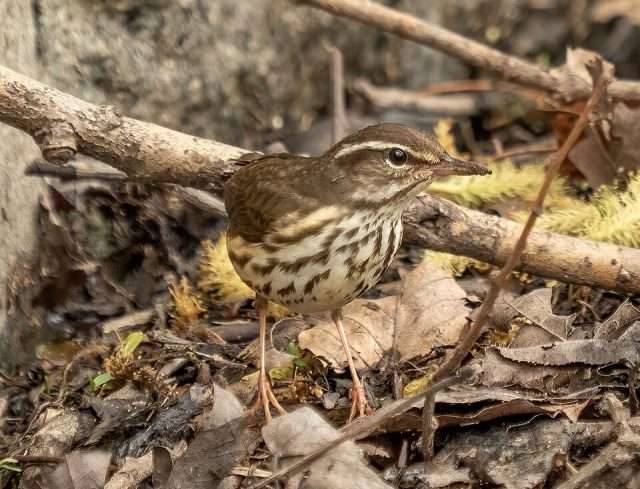
Louisiana Waterthrush
The Alabama Birding Trails has access information and facilities details.
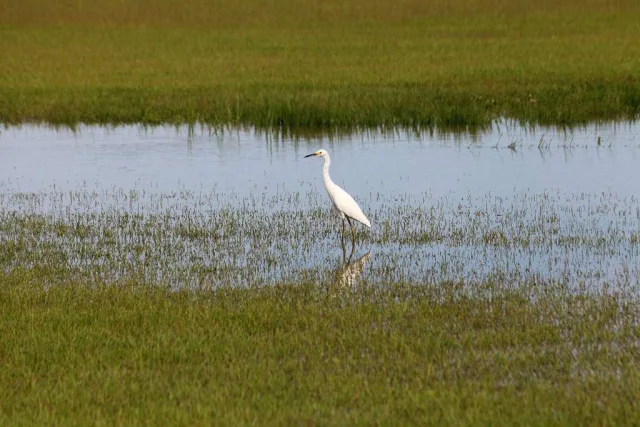
Blakeley Island
Blakeley Island is a prominent landmass located within the city limits of Mobile, Alabama, on the northwestern coast of Mobile Bay. While the southern end of the island is heavily industrialized, its geographic significance for birding lies in its role as a key component of the Mobile-Tensaw River Delta system.
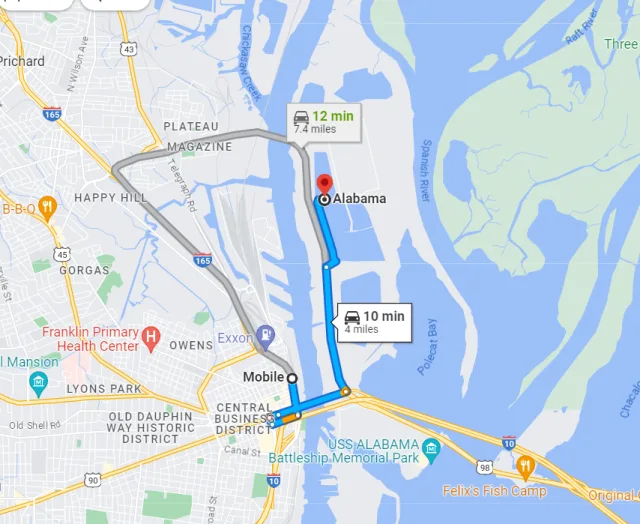
The island is bordered by the Mobile River to the west and the Spanish River to the east and north, making it an interface between the fresh waters of the delta and the brackish waters of the bay. Specifically, birding focuses on a network of man-made features known as the "Mud Lakes" or disposal areas, which are diked, shallow ponds used by the Alabama State Port Authority. These features, though industrial in origin, create a unique and vital habitat that acts as a magnet for certain bird groups within the coastal region.
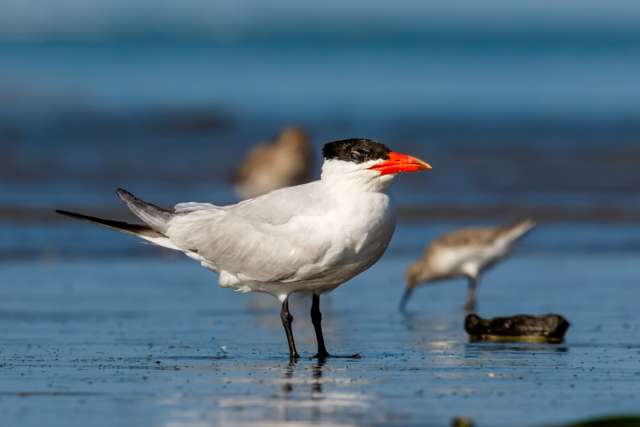
The opportunities for birdwatching at the Mud Lakes on Blakeley Island are highly acclaimed among Alabama birders, especially during migration and winter. The fluctuating water levels and exposed mudflats of the disposal ponds replicate ideal conditions for shorebirds and waterfowl. Birders frequently spot species like Black-bellied Whistling-Ducks, Northern Shovelers, and various gulls and terns.
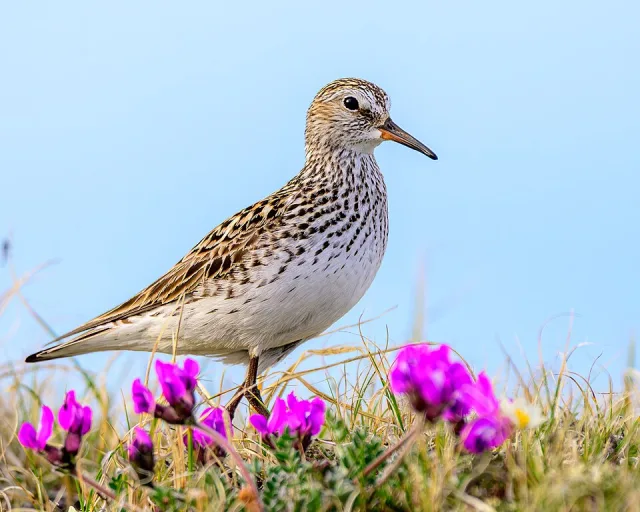
During the spring migration, the site is known as one of the best places in South Alabama to find rarer shorebirds such as the White-rumped Sandpiper and Baird's Sandpiper. Access to the area is strictly regulated and requires an annual permit from the Alabama State Port Authority, emphasizing its importance as a specialized habitat that offers dedicated birders unique and reliable sightings of avian life concentrated in this specific deltaic environment.
Target Birds
Blue-winged Teal
Least and White-rumped Sandpiper
American Avocet
Gull-billed, Caspian and Royal Tern
Cedar Waxwing
Tricolored Heron
Northern Bobwhite
The Alabama Ornithological Society gives advice on the sanctuary and how to obtain a permit to visit, which are an essential requirement for visitation.
Bon Secour NWR
Bon Secour National Wildlife Refuge, whose name fittingly means "safe harbor" in French, is located along the Gulf Coast of Alabama on the Fort Morgan Peninsula, just west of Gulf Shores. Established in 1980, the refuge comprises over 7,000 acres across five units, protecting one of the state's last remaining stretches of undisturbed coastal barrier habitat.

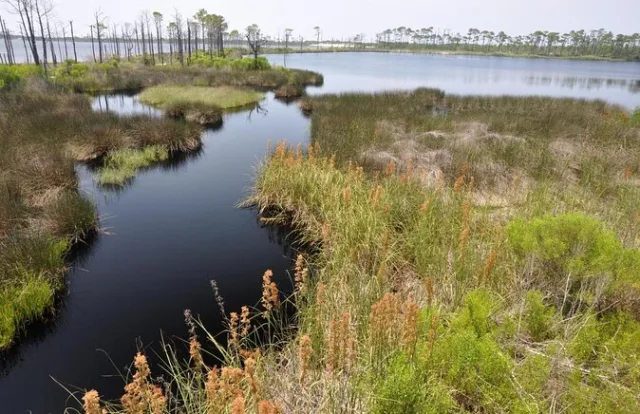
The geography here is a complex, fragile mix of ecosystems vital for wildlife: shifting Gulf beaches and dynamic sand dunes transition inland to low-lying freshwater and saltwater marshes, scrub forests, and mature maritime forests of live oaks and pines. This juxtaposition of habitats, from the open Gulf shore to the sheltered waters of Little Lagoon and Gator Lake, creates a highly productive environment essential for coastal flora and fauna.
The diverse geography of Bon Secour NWR makes it an unparalleled destination for birdwatching, particularly during the spring and fall migration periods. The refuge serves as a critical first stopover for exhausted neotropical songbirds—like warblers, vireos, and tanagers—that have just completed a strenuous flight across the Gulf of Mexico.

Birders can walk the refuge's trails, such as the Pine Beach and Jeff Friend Trails, to observe these vibrant migrants resting and feeding in the maritime forest canopy. Additionally, the beaches and mudflats offer excellent viewing for coastal species, including the federally threatened Piping Plover in winter, various gulls and terns, and nesting shorebirds. In total, over 370 bird species have been documented at Bon Secour, making it a cornerstone of Alabama's birding trail.

Target Birds
Black-bellied Whistling Duck
Loggerhead Shrike
Brown Pelican
Eastern Screech-Owl
Pine Warbler
Belted Kingfisher
The USFWS has comprehensive details about visiting the area, starting with the Visitor Center.
Lake Guntersville State Park
Lake Guntersville State Park is a premier recreational and ecological area situated on the eastern shore of Guntersville Lake in northeastern Alabama's Marshall County. The park covers nearly 6,000 acres, occupying a peninsula and the wooded slopes of Taylor Mountain, which rises dramatically above the water.
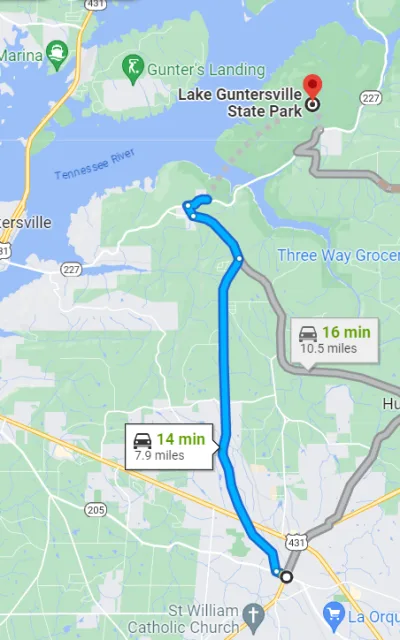
This geography provides stunning views and a mix of terrestrial habitats—primarily pine and hardwood forests—that surround the vast aquatic environment of Guntersville Lake. This immense, 69,000-acre reservoir is an impoundment of the Tennessee River, creating a vast body of open water, protected coves, and shoreline that serves as a critical habitat on the continent's interior flyway.
The combination of deep water, shoreline, and diverse forest makes Lake Guntersville State Park one of North Alabama's best birding destinations, particularly during the colder months. It is most famous for its annual Eagle Awareness Weekends (January/February), as the lake area hosts a significant wintering population of Bald Eagles who are attracted to the unfrozen waters and abundant fish supply.

Birders can also spot large rafts of wintering waterfowl, including various diving ducks (like Red-breasted Mergansers and Lesser Scaup), loons (Common and occasionally Pacific), and grebes (Horned and Red-necked). Within the park's 36 miles of hiking trails, birders can look for resident and migratory songbirds, woodpeckers, and raptors throughout the year. The open water and wooded slopes ensure excellent viewing opportunities for both aquatic and woodland species.

Target Birds
Acadian Flycatcher
Summer Tanager
Indigo Bunting
Black Vulture
Broad-winged Hawk
- Ovenbird
The Alabama State Parks website has a list of trails for all the State Parks in the state. The Lake Guntersville page has opening hours and links to other facilities and opportunities.

Wrapping Up
Alabama offers birders a diverse and rewarding experience across its distinct geographical regions. In the northern part of the state, the expansive aquatic environment of Lake Guntersville State Park is famous for its wintering population of majestic Bald Eagles, while the wetlands of Swan Creek National Wildlife Area provide crucial habitat for migratory waterfowl along the Tennessee River. Further south, the Gulf Coast is anchored by Bon Secour National Wildlife Refuge, a vital sanctuary for neotropical songbirds making their arduous journeys across the Gulf of Mexico, ensuring that both inland and coastal birding opportunities abound.
America’s Aerial Aces: A Look at the Falcons of the United States
