
To the casual observer, the idea of ranking the “most common” birds in North America might seem simple—surely it’s the ones we see every day, like the American Crow or the Blue Jay. Yet, the official ranking, derived from sophisticated data models like those maintained by Partners in Flight (PIF), reveals a fascinating truth: the birds with the largest total populations are often the ones that are small, cryptic, or inhabit vast, remote areas, allowing their numbers to swell into the hundreds of millions, unseen by most people.1
These population estimates—a critical tool for conservationists—shift our focus from the backyard feeder to the continent's colossal ecological systems. By looking at total breeding adults across the U.S. and Canada, the following list of the top 50 most abundant species redefines what it truly means for a bird to be "common."
The Abundance Hierarchy: Ranks 1–10 (The Titans of the Avian World)
The birds at the top of this list are the ecological heavyweights, dominating the continental avian biomass. Their success is generally attributed to their adaptability (habitat generalists) and their wide-ranging presence across diverse ecosystems.
| Rank | Bird Species | Estimated Population (Millions) | Key Habitat/Notes |
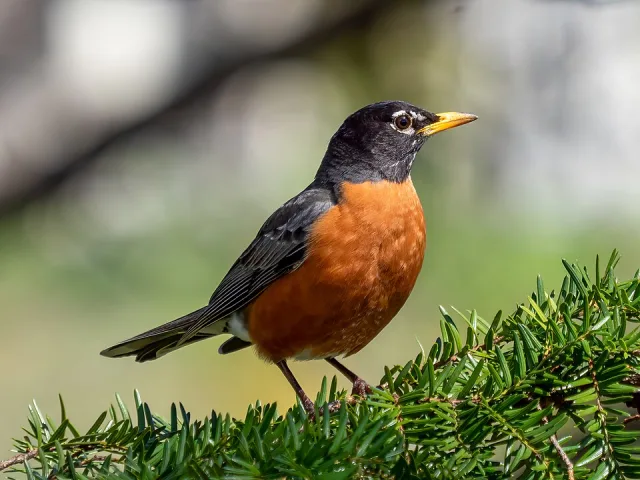
| 1 | American Robin (Turdus migratorius) | ~370 | Ubiquitous across nearly all habitats, a successful urban and suburban resident. |
| 2 | Mourning Dove (Zenaida macroura) | ~350 | Highly adaptable species, found from deserts to urban parks. |
| 3 | Blue-gray Gnatcatcher (Polioptila caerulea) | ~230 | Small, active canopy bird; often overlooked, proving that size does not limit numbers. |
| 4 | Dark-eyed Junco (Junco hyemalis) | ~220 | Highly variable species with many distinct regional forms; a widespread winter visitor to most of the U.S. |
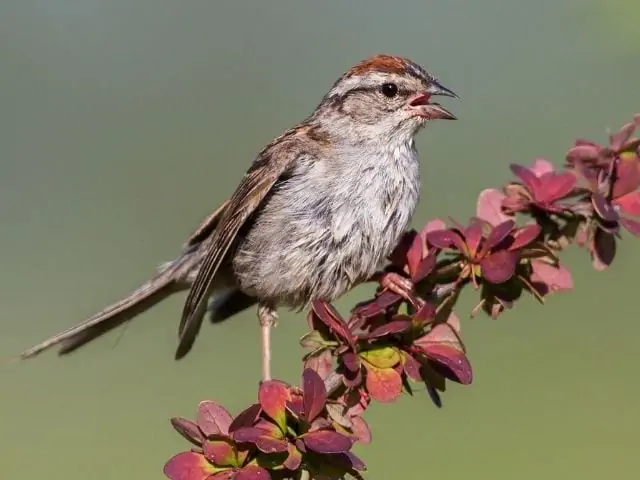
| 5 | Chipping Sparrow (Spizella passerina) | ~210 | Common, non-descript backyard sparrow of lawns and open woods across most of the U.S. |
| 6 | Red-winged Blackbird (Agelaius phoeniceus) | ~190 | Famous for massive roosts; dominates marshland habitats across the continent. |
| 7 | European Starling (Introduced) (Sturnus vulgaris) | ~170 | Highly successful invasive species; dominates urban and agricultural areas. |
| 8 | Red-eyed Vireo (Vireo olivaceus) | ~150 | Cryptic, forest-dwelling songbird; rarely seen clearly but constantly heard singing in eastern forests. |
| 9 | House Sparrow (Introduced) (Passer domesticus) | ~140 | Another invasive species highly tied to human structures in towns and cities. |
| 10 | Brown-headed Cowbird (Molothrus ater) | ~130 | A successful brood parasite found across most of North America's open landscapes. |
Ranks 11–25 (The Canopy and Grassland Specialists)
This section is dominated by widespread sparrows, warblers, and other generalists that blanket the forests and grasslands of the continent.
| Rank | Bird Species | Estimated Population (Millions) | Rank | Bird Species | Estimated Population (Millions) |
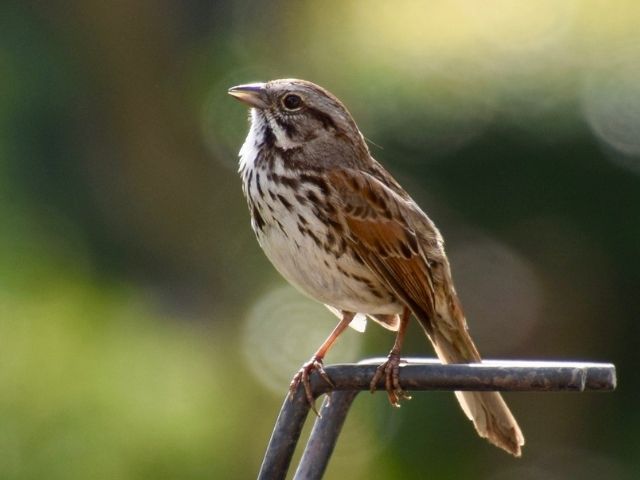
| 11 | Song Sparrow (Melospiza melodia) | ~130 | 19 | Horned Lark (Eremophila alpestris) | ~71 |
| 12 | Savannah Sparrow (Passerculus sandwichensis) | ~120 | 20 | Black-capped Chickadee (Poecile atricapillus) | ~70 |
| 13 | Common Yellowthroat (Geothlypis trichas) | ~110 | 21 | Eastern Meadowlark (Sturnella magna) | ~69 |
| 14 | Northern Cardinal (Cardinalis cardinalis) | ~110 | 22 | Canada Warbler (Cardellina canadensis) | ~68 |
| 15 | Yellow-rumped Warbler (Setophaga coronata) | ~100 | 23 | Common Grackle (Quiscalus quiscula) | ~67 |
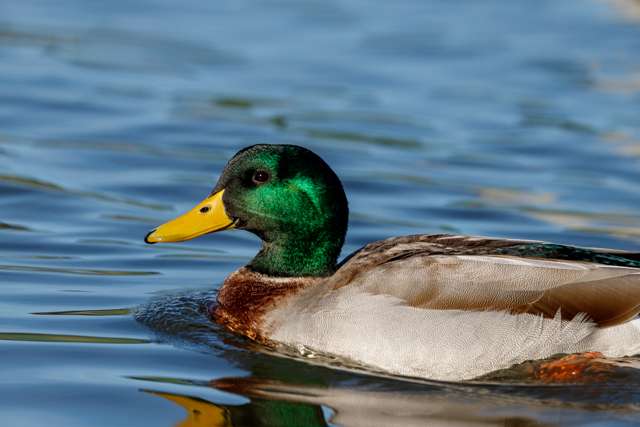
| 16 | Indigo Bunting (Passerina cyanea) | ~98 | 24 | Mallard (Anas platyrhynchos) | ~65 |
| 17 | Tree Swallow (Tachycineta bicolor) | ~85 | 25 | Golden-crowned Kinglet (Regulus satrapa) | ~64 |
| 18 | Hermit Thrush (Catharus guttatus) | ~78 |
Ranks 26–50 (The Diverse Mid-Tier)
This large group includes many familiar backyard birds, smaller woodpeckers, and successful raptors, demonstrating their widespread success even if their absolute numbers are lower than the massive populations of warblers and sparrows.
| Rank | Bird Species | Estimated Population (Millions) | Rank | Bird Species | Estimated Population (Millions) |
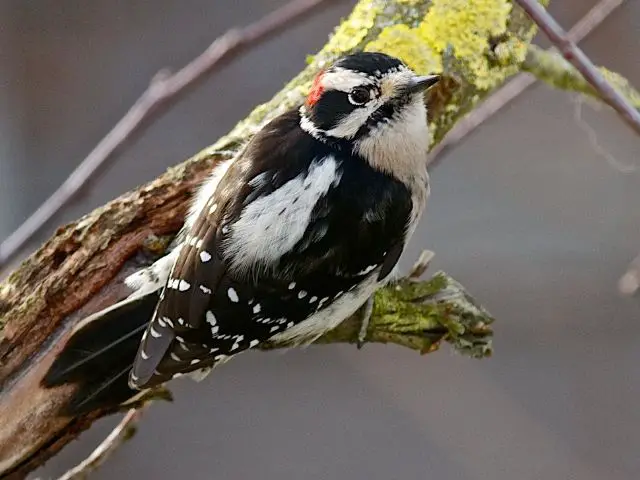
| 26 | Downy Woodpecker (Dryobates pubescens) | ~60 | 39 | American Crow (Corvus brachyrhynchos) | ~45 |
| 27 | House Wren (Troglodytes aedon) | ~59 | 40 | Northern Flicker (Colaptes auratus) | ~44 |
| 28 | Yellow Warbler (Setophaga petechia) | ~58 | 41 | Red-bellied Woodpecker (Melanerpes carolinus) | ~43 |
| 29 | Ruby-crowned Kinglet (Regulus calendula) | ~56 | 42 | White-throated Sparrow (Zonotrichia albicollis) | ~42 |
| 30 | American Goldfinch (Spinus tristis) | ~55 | 43 | Killdeer (Charadrius vociferus) | ~41 |
| 31 | House Finch (Haemorhous mexicanus) | ~54 | 44 | Northern Mockingbird (Mimus polyglottos) | ~41 |
| 32 | Common Raven (Corvus corax) | ~52 | 45 | Eastern Phoebe (Sayornis phoebe) | ~40 |
| 33 | Cedar Waxwing (Bombycilla cedrorum) | ~50 | 46 | Ring-billed Gull (Larus delawarensis) | ~39 |
| 34 | White-breasted Nuthatch (Sitta carolinensis) | ~49 | 47 | Western Meadowlark (Sturnella neglecta) | ~38 |
| 35 | Common Nighthawk (Chordeiles minor) | ~48 | 48 | Gray Catbird (Dumetella carolinensis) | ~38 |
| 36 | Carolina Wren (Thryothorus ludovicianus) | ~47 | 49 | Bewick's Wren (Thryomanes bewickii) | ~37 |
| 37 | Great Blue Heron (Ardea herodias) | ~46 | 50 | Tufted Titmouse (Baeolophus bicolor) | ~36 |
| 38 | Black-throated Green Warbler (Setophaga virens) | ~46 |
(Note: Population figures are approximate averages based on the PIF 2019-2020 estimates for the U.S. and Canada and are subject to scientific revision.)
The Conspicuous Absentees: Why Some Seemingly Common Birds Miss the Cut
The real lesson of this list lies not just in who is on it, but who is missing. Many of North America’s most visible and beloved birds fail to break into the top 50 in terms of total population, demonstrating a fundamental disconnect between human perception and ecological reality.

1. The Conspicuous but Lower-Numbered: Blue Jay and American Crow
The most notable omission is the Blue Jay (Cyanocitta cristata). The Blue Jay has an estimated population closer to 17–20 million birds, placing it just outside the top 50. The reason it feels ubiquitous is its conspicuousness. Blue Jays are:
- Loud and Aggressive: Their harsh, repetitive calls and large size ensure they are noticed in urban and suburban parks.
- Bold Feeder Visitors: They frequently dominate bird feeders, making them a very visible presence in human-modified landscapes.
- Geographically Limited: They are largely restricted to the eastern half of North America, whereas birds like the American Robin span the entire continent, allowing for much larger overall numbers.
Similarly, the American Crow (Corvus brachyrhynchos), while present on the list at Rank 39 (approx. 45 million), has a population surprisingly smaller than many obscure sparrows. Like the Blue Jay, the Crow's social behavior, black color, large size, and loud cawing make them impossible to ignore, leading humans to overestimate their continental numbers relative to silent, high-canopy warblers.
2. The Localized Successes
Many highly successful regional birds simply lack the continental range required to accumulate a top-50 population:
- California Quail or Gambel’s Quail: While dominant in their specific regions of the West, their range is too small.
- Rock Pigeon (Columba livia): This non-native species (sometimes called Rock Dove) is intensely urban and common but has a lower overall population estimate (around 16 million) than the highly successful native Mourning Dove.

3. Raptors and Waterbirds
Most birds of prey, like the Red-tailed Hawk (estimated around 3-4 million), are absent. As apex predators, they naturally exist at much lower densities than their prey, reflecting the structure of the food web where it takes millions of small birds to support one raptor. Likewise, waterfowl, while locally abundant in managed refuges, generally have lower total populations than landbirds (the Mallard at Rank 24 is the exception).
Wrapping Up
In conclusion, the list of North America’s 50 most abundant birds is a profound lesson in perspective. It challenges us to look beyond the easily observed stars of the bird feeder and to recognize the true population powerhouses: the tireless, widespread, and often small species that silently dominate the continent's forests, fields, and wetlands. These population figures are not just numbers; they are a vital measure of continental health, reminding us that conservation efforts must equally focus on protecting the habitats of the many millions of inconspicuous birds that form the foundation of our ecosystem
