

For many birders, the moment they see their first Wood-Warbler (Parulidae) is a turning point. These tiny, jewel-toned insectivores—often no bigger than a golf ball—travel thousands of miles from their tropical wintering grounds to grace North American woodlands. Spring migration is the time for peak viewing, when males in full breeding plumage stop to refuel, transforming ordinary parks and forests into fleeting galleries of avian art.
The challenge of "warbler neck" (the strain of looking straight up into the canopy) is a badge of honor, and the reward is the sight of birds so exquisitely colored they seem painted by nature itself. While dozens of species transit the U.S. every spring, five specific warblers stand out. Seeing these five is often cited as the moment a casual birdwatcher becomes a lifelong birder, capable of deciphering the faintest chip call and the subtlest plumage difference.
Here are five Wood-Warblers that offer a truly transformative birding experience, and your best bets for seeing them next spring. Start planning your next birding trip!
1. The Prothonotary Warbler (Protonotaria citrea)
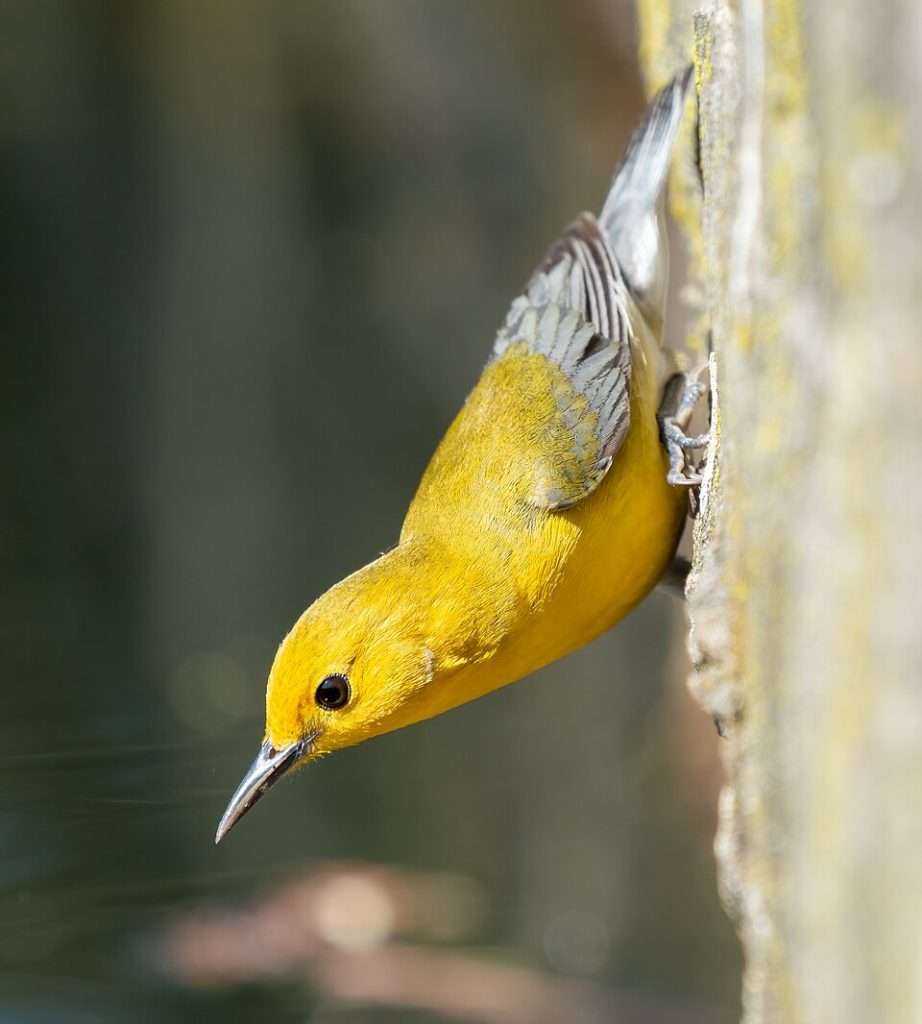
The Prothonotary Warbler is a small, heavy-billed gem whose sheer brilliance is unmatched among its family. It’s an immersion into pure color.
Why It's Life-Changing
The male is an intense, all-over, luminous golden-yellow on the head and chest, contrasting sharply with its gray-blue wings and tail. It's often nicknamed the "golden swamp warbler." When the sun hits this bird in a dark cypress swamp, the effect is electrifying. It is one of the few warblers that nests exclusively in tree cavities, often using holes excavated by nuthatches or woodpeckers over water.
Where to See It Next Spring
Look for the Prothonotary in lowland, flooded forests and wooded swamps—the wetter, the better. They tend to stick lower to the water, making them easier to spot than canopy warblers.
- Best Region: The Mississippi River Delta and the Coastal Plain from Louisiana to North Carolina.
- Target Spot (US-South): Congaree National Park, South Carolina, or the cypress swamps along the Atchafalaya Basin, Louisiana. Arrive in late April through early May when they are establishing territories. Listen for their loud, ringing “zweet zweet zweet” song.
2. The Cerulean Warbler (Setophaga cerulea)
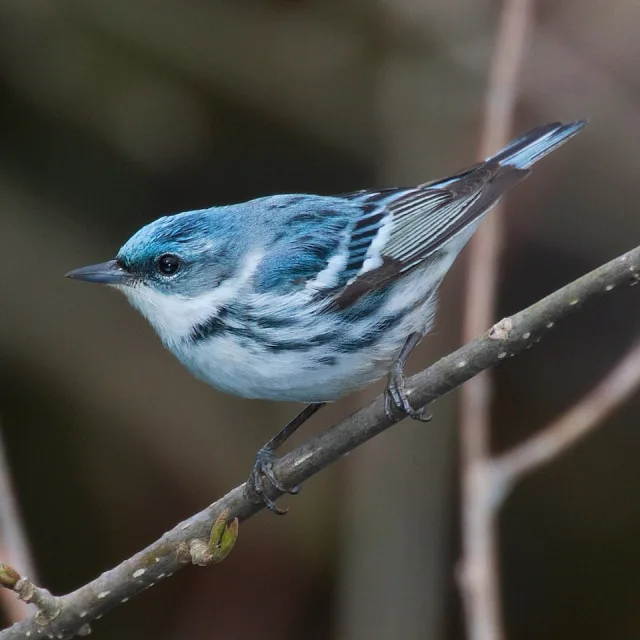
The Cerulean Warbler is the quintessential canopy king and one of North America’s most endangered warblers.
Why It's Life-Changing
The male is a stunning streak of pale, sky-blue across the back, with a necklace of black streaking on a white chest and two distinct white wing bars. Finding a Cerulean involves a genuine challenge because it spends virtually its entire life in the uppermost canopy of tall, mature, deciduous forests. They forage higher than almost any other warbler, making them difficult to spot and even harder to photograph. Its presence indicates a healthy, undisturbed mature forest ecosystem.
Where to See It Next Spring
Due to significant habitat loss, this bird is not widespread. You must seek out large blocks of mature, unfragmented deciduous forest.
- Best Region: The Appalachian Mountains and the Ohio River Valley.
- Target Spot (US-East/Midwest): Point Pelee National Park, Ontario (just across the border, a must-visit migration hot spot), or the Smoky Mountains National Park in the high-elevation deciduous forests of Tennessee and North Carolina. Look in late April and early May. Listen for its buzzing, ascending song that speeds up at the end: “zray, zray, zray, zreeeee.”
3. The Blackburnian Warbler (Setophaga fusca)
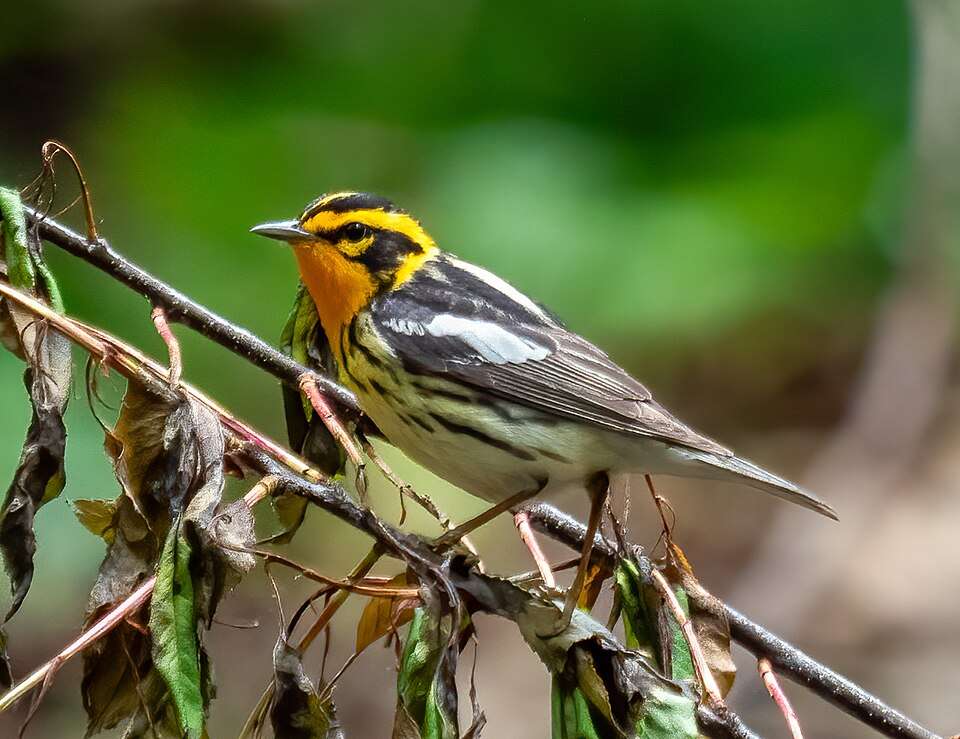
The Blackburnian Warbler male in breeding plumage is pure fire—an unmistakable burst of molten color.
Why It's Life-Changing
The male's face and throat are a shocking, blazing orange—the color of a setting sun—set off by black striping on the head and a large white wing patch. It is arguably the most boldly colored warbler in the East. Like the Cerulean, it is a high-canopy specialist, usually preferring spruce and hemlock during the breeding season. Seeing a Blackburnian is a triumph because you must find this small, brilliantly colored bird silhouetted high against the bright sky, a task that demands persistence and the right light.
Where to See It Next Spring
During migration, Blackburnians use all types of forest, but they are most common along major migratory flyways.
- Best Region: Any wooded area along the Atlantic Flyway or the Mississippi Flyway.
- Target Spot (Mid-Atlantic/Northeast): Central Park, New York City, or Cape May, New Jersey. Central Park’s "warbler wave" in mid-May is famous; the migrant birds land exhausted, making them easier to spot at lower levels before they head north. Listen for its thin, high-pitched, insect-like song that ends with a rising “zee-zee-zee-zoo-zee.”
4. The Golden-winged Warbler (Vermivora chrysoptera)
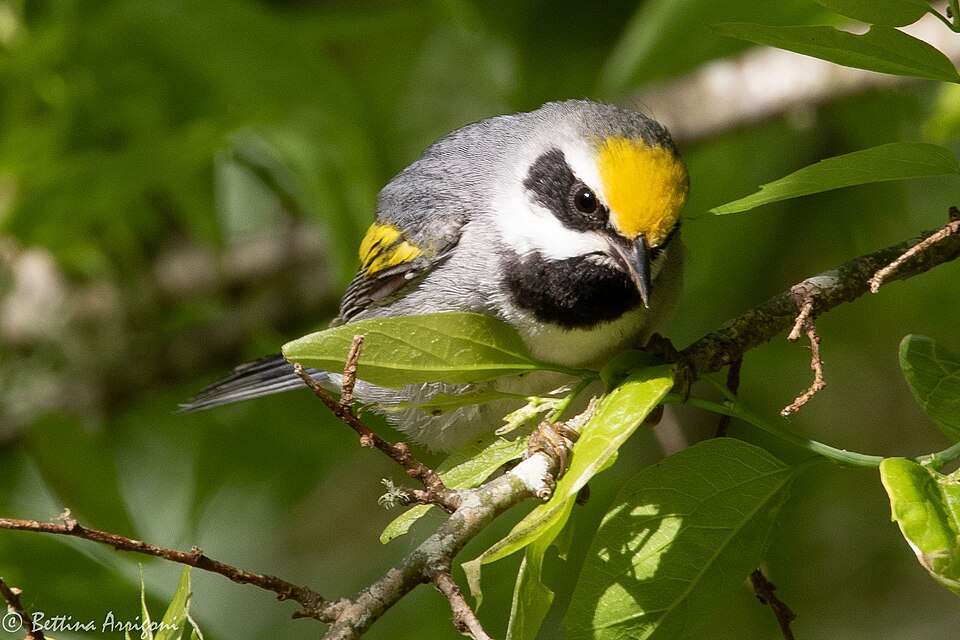
The Golden-winged Warbler is a shy, elegant warbler of great conservation concern. Its sighting is often tempered with the bittersweet knowledge of its decline.
Why It's Life-Changing
The male is a striking study in muted colors and sharp lines: a silvery-gray back, a bright golden-yellow patch on the wing, and a clean white belly. The head features a brilliant black throat and a thick black mask that frames a stark white cheek patch. This warbler is facing a rapid population collapse due to habitat loss and, notably, hybridization with the closely related Blue-winged Warbler. Finding one is special because it means locating one of the last remaining pure specimens.
Where to See It Next Spring
Look in shrubby, successional habitats, power line cuts, or disturbed woodlands, often with low, brushy growth—their preferred nesting grounds.
- Best Region: The Great Lakes states and the Appalachian Plateau (where they breed).
- Target Spot (US-Midwest): Crane Creek/Magee Marsh Wildlife Area, Ohio (known globally for its "Warbler Boardwalk"). The narrow strip of trees along Lake Erie concentrates migrants perfectly in early to mid-May. Listen for their lazy, lisping song: “beee-buzz-buzz-buzz.”
5. The Painted Redstart (Myioborus pictus)
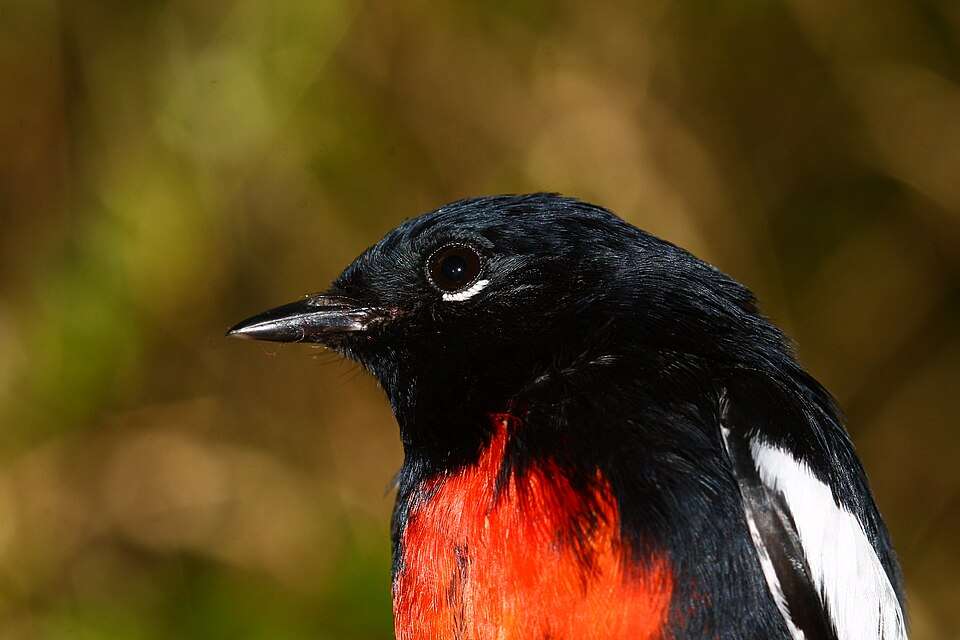
Though technically not in the Setophaga genus, the Painted Redstart is a stunning warbler from the Southwest that represents a major shift in North American birding.
Why It's Life-Changing
Most Eastern warblers are yellow, green, and blue. The Painted Redstart explodes that expectation with a bold color palette: a shiny black body punctuated by a deep crimson-red belly, large white wing patches, and white outer tail feathers that flash brilliantly in flight. Unlike its Northern cousins, it is a lowland and mid-story forager that often chases insects with its tail fanned open—a behavior that’s dramatic and unique to its genus. This bird represents the diversity of the Mexican Avifauna spilling into the U.S. borderlands.
Where to See It Next Spring
This warbler is a resident of the mountainous borderlands and is one of the few warblers you can reliably find on its breeding territory in the U.S. in spring.
- Best Region: Sky Islands of the Southeast Arizona mountains.
- Target Spot (US-Southwest): Madera Canyon or Ramsey Canyon, Arizona. Arrive in April or early May. Walk the canyon trails and look for its constant, dramatic displays, often closer to the ground than any Eastern warbler. Its high-pitched, sibilant song is a key to locating it among the oaks and sycamores.
The Final Takeaway: More Than Just a List
Chasing these five species elevates your skills. You learn to discern size, judge light, and recognize subtle chip calls. You travel to America's most beautiful and important ecological hotspots, and you gain an appreciation for the conservation needs of highly specialized migrants. Seeing one of these warblers for the first time is more than just a notch on a list; it is a moment of pure, intense connection with the breathtaking beauty of the wild, migratory world.
The Phoenix of the Pines: The Enduring Saga of the Kirtland's Warbler
