

2025 has proven to be an extraordinary year for birdwatchers across North America, as an unusual influx of vagrant species has graced the continent's diverse landscapes. From the sun-drenched coasts of California to the windswept plains of South Dakota and the bustling urban centers of the East, rare birds from distant lands have made unexpected appearances, sending ripples of excitement through the ornithological community. These surprise visitors, far removed from their typical breeding and wintering grounds, offer invaluable insights into avian migration patterns, climate change impacts, and the sheer unpredictability of the natural world. This article delves into some of the most captivating vagrant sightings of 2025, exploring the stories behind these remarkable avian adventures and their significance for North American birding.
The Allure of the Accidental Tourist: Why Vagrants Matter
Vagrant birds, often referred to as "accidentals," are individuals that stray significantly outside their normal geographic range. Their appearance in unexpected locations can be attributed to a variety of factors, including navigational errors, severe weather systems that blow them off course, or even a phenomenon known as "reverse migration," where birds migrate in the opposite direction of their usual route.
For birdwatchers, the sighting of a vagrant is akin to finding a hidden treasure – a rare and often once-in-a-lifetime opportunity to observe a species that would otherwise require extensive travel to another continent. These sightings are not just about the thrill of the chase; they contribute vital data to our understanding of bird distribution, population dynamics, and the broader ecological forces at play. Each record, meticulously documented and verified, adds another piece to the complex puzzle of avian life on Earth.
East Coast European Envoys: Spotted Redshank and Little Stint
The eastern seaboard of North America often serves as a magnet for European vagrants, and 2025 has been no exception. One of the most talked-about sightings was that of a Spotted Redshank in Cambridge, Ontario. This elegant Eurasian sandpiper, with its distinctive long legs and fine bill, is a relatively common breeder across northern Europe and Asia, wintering in warmer climes further south. Its appearance in Ontario marked a momentous occasion, representing fewer than 10 records for the province and the first in over two decades. Birders flocked to the site, eager to catch a glimpse of this rarity, highlighting the dedication and passion that defines the birding community. The journey of this individual across the Atlantic remains a mystery, perhaps a testament to a strong westerly gale or an adventurous spirit that led it far astray.

Further south, in the urban sprawl of Philadelphia, Pennsylvania, another European shorebird caused a stir. A Little Stint made history by establishing a First State Record at the iconic Heinz National Wildlife Refuge. This diminutive wader, a common breeder in the Arctic tundras of Eurasia, typically winters in Africa and southern Asia. Its presence in Pennsylvania was a significant event, offering a rare opportunity for East Coast birders to observe a species more commonly associated with the mudflats of Europe. The refuge, a crucial stopover for migratory birds, proved to be an unexpected haven for this tiny traveler, underscoring the importance of protected wetlands in supporting both resident and vagrant avian populations.

Southern Surprises: Cattle Tyrant and Crested Caracara

The southern states, with their warmer climates and diverse habitats, are often prime locations for vagrants from Central and South America. Galveston, Texas, a hotbed for migratory activity, delivered a major surprise with the second North American record of a Cattle Tyrant. This bold, mostly terrestrial flycatcher is a common resident of open grasslands and agricultural areas throughout South America. Its appearance in Texas sent shockwaves through the birding world, as it represented only the second time this species had ever been confirmed in North America. Such a rare occurrence sparks intense speculation about the individual's journey – did it hitch a ride on a ship, or was it a truly epic overland flight? Regardless, its presence underscores the dynamic nature of avian dispersal and the potential for new species to expand their ranges.
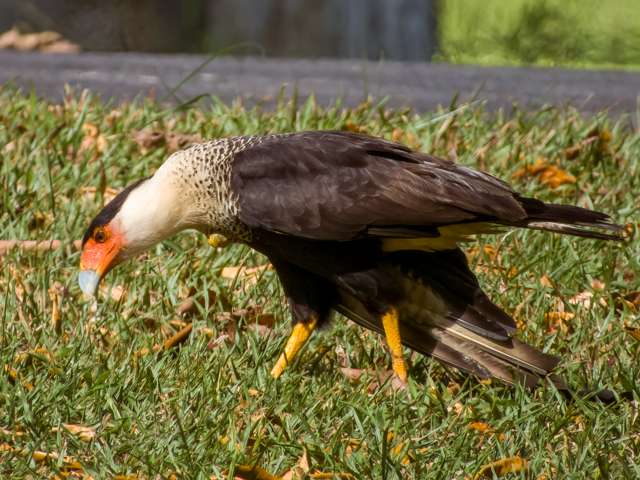
Moving north into the heartland, Edmunds County, South Dakota, became the unlikely stage for a sighting of a Crested Caracara. While not as rare as some other vagrants on this list, the Crested Caracara's presence in South Dakota is still a significant deviation from its typical range, which primarily encompasses the southern United States, Mexico, and Central and South America. These striking raptors, with their distinctive black crests, white necks, and bright red faces, are often seen scavenging or hunting in open country. Their appearance further north suggests a potential expansion of their range, possibly influenced by changing climate patterns or increased food availability. Each new northern record contributes to a growing understanding of this adaptable species' movements.
Pacific Pathways: Red-necked Stint and Blue-footed Booby

The vastness of the Pacific Ocean provides both a barrier and a pathway for a unique set of vagrant species, particularly those associated with seabirds and shorebirds from Asia. The remote Kure Atoll in the Northwest Hawaiian Islands played host to a Red-necked Stint, another Eurasian wader that frequently wanders. This sighting, one of about a dozen previous records for the atoll, highlights the crucial role these isolated islands play as stopover points for trans-Pacific migrants. The ability of these small birds to navigate thousands of miles of open ocean is a testament to their incredible migratory instincts and endurance.
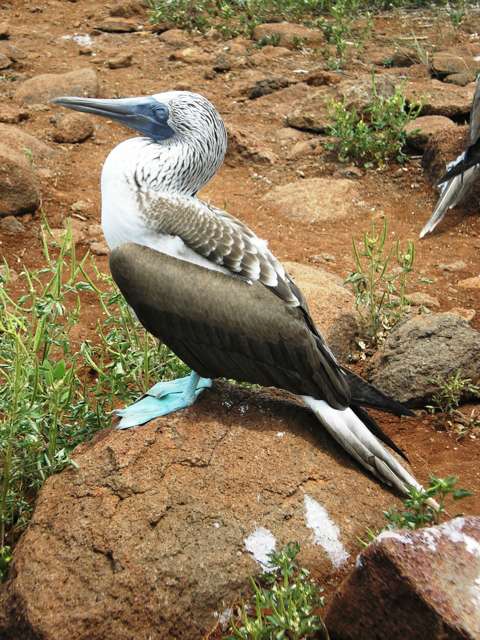
Closer to the mainland, lucky pelagic birders near Santa Barbara Island, California, were treated to the sight of a Blue-footed Booby. While famously known from the Galápagos Islands, this charismatic seabird does have a small breeding population in the Gulf of California. However, its appearance off the coast of Southern California is still considered a notable event, often associated with warm water currents that bring these tropical visitors further north. The sighting of a Blue-footed Booby adds a splash of vibrant color and tropical flair to the temperate waters of California, reminding us of the interconnectedness of ocean ecosystems.
Continuing Rarities: A Year-Long Spectacle
Beyond the sudden appearances of new vagrants, 2025 has also been marked by the continued presence of several highly anticipated rarities first sighted in late 2024 or earlier this year. These "continuing rarities" have provided extended opportunities for birders to observe species that are truly exceptional in North America.

The majestic Steller's Sea-Eagle, a behemoth of the avian world, has continued its captivating residency in Newfoundland. This magnificent raptor, native to the remote coasts of northeastern Asia, first made headlines with its unprecedented appearance in Alaska, then Quebec, and finally settled in Newfoundland. Its protracted stay has offered an unparalleled chance for North American birders to witness this awe-inspiring creature, raising questions about its navigation, longevity, and the factors that led it so far from home.

In the Great Lakes region, a fascinating ornithological event has unfolded with a Kelp Gull documented breeding with an American Herring Gull in Wisconsin. Kelp Gulls are typically found in the Southern Hemisphere, and their sporadic appearances in North America are usually individuals, not breeding pairs. This interspecies breeding event is of immense scientific interest, offering insights into hybridization, range expansion, and the adaptability of gulls.
Learn about where to see migrating birds this fall in our new article.
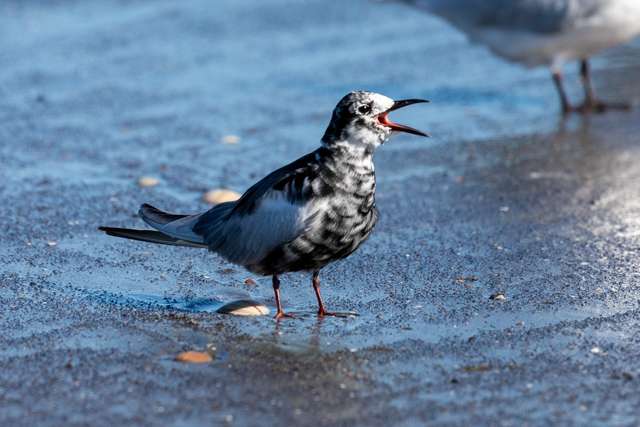
The sunny skies of California have continued to host a White-winged Tern, a beautiful marsh tern native to Eurasia and Africa. Its extended stay has delighted birders, providing a rare chance to study its plumage variations and behaviors in a North American context. Meanwhile, the vibrant Yellow Grosbeak has remained a star attraction in Colorado, drawing crowds eager to marvel at its brilliant plumage. This species is usually found in Mexico and Central America, and its persistent presence far north of its typical range is a testament to its resilience.

The southwestern state of Arizona, a biodiversity hotspot, has been particularly rich in continuing rarities. The Flame-colored Tanager, a stunning bird of high-elevation forests in Mexico and Central America, has continued to grace Arizona's canyons, offering a splash of fiery color to the desert landscape. Similarly, the iridescent Berylline Hummingbird, another species primarily found south of the U.S. border, has sustained its presence, enchanting observers with its dazzling aerial displays. These long-term stays provide crucial data on the environmental conditions that allow these vagrants to persist outside their normal ranges.
Beyond the Vagrant: North America's Rarest Resident Birds
While the excitement of vagrant sightings often captures the headlines, it's also important to acknowledge North America's own critically rare and endangered resident birds. Any sighting of these species, though not "vagrant" in the traditional sense, is a truly momentous and rare event due to their perilously small populations.
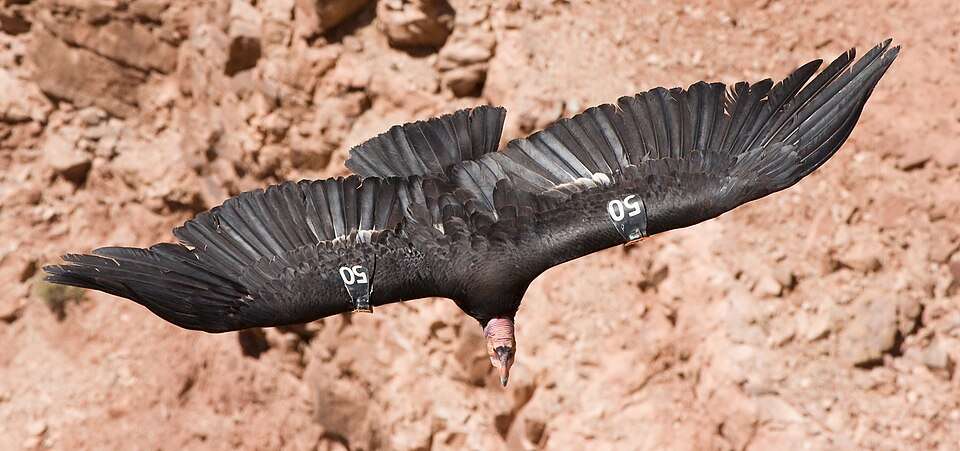
The colossal California Condor, the largest land bird in North America, continues its slow but hopeful recovery from the brink of extinction. Every sighting in the skies of California, Arizona, Utah, and Baja California is a testament to decades of dedicated conservation efforts. Similarly, the elegant Whooping Crane, with its towering stature and haunting call, remains one of the rarest birds on the continent. Its survival hinges on ongoing conservation programs that protect its limited breeding and wintering grounds.

The diminutive Kirtland's Warbler, a gem of the jack pine forests, possesses one of the smallest and most restricted breeding ranges of any North American bird. Its reliance on specific forest habitats makes it incredibly vulnerable, and each nesting season is a critical period for its continued existence. In the western United States, the Gunnison Sage-Grouse, endemic to a small region of Colorado and Utah, faces immense pressure from habitat loss and fragmentation. Its unique mating displays, known as leks, are a rare spectacle, and its survival is a barometer for the health of the sagebrush ecosystem. Finally, the Island Scrub-Jay, with the smallest range of any North American bird, confined to just one island off the coast of Southern California, highlights the fragility of insular species. Its entire population exists within a single, vulnerable ecosystem.
The Future of Vagrancy: Climate Change and Avian Adventures
The unprecedented number and diversity of vagrant sightings in 2025 raise pertinent questions about the long-term trends in avian migration and distribution. Climate change is undoubtedly playing a role, altering weather patterns, ocean currents, and habitat availability, which can all influence a bird's migratory path. As the planet warms, we may see more species expanding their ranges or being pushed into new territories. Understanding these shifts is crucial for conservation planning and for predicting how bird populations will adapt to a changing world.
The year 2025 serves as a powerful reminder of the dynamic and unpredictable nature of the avian world. Each rare sighting is a story of resilience, navigation, and sometimes, pure chance. For birdwatchers, these vagrants are not just entries on a life list; they are invitations to connect with the wild, to marvel at the wonders of migration, and to appreciate the delicate balance of ecosystems across continents. As the year progresses, North American birders will undoubtedly remain vigilant, binoculars in hand, eager to witness the next unexpected avian adventurer to grace their shores. The saga of the vagrants continues, promising more excitement, more scientific discovery, and more unforgettable moments for all who dare to look up.
Need some gear to help you spot these amazing birds. Read our binoculars review.
