
Every autumn, the birding community braces for the annual update to the eBird/Clements Checklist of Birds of the World. The 2025 revision, implemented in late October, was no exception, bringing a fresh wave of scientific reclassification that affects everything from the organization of family lists to the coveted totals on a birder's life list. Driven primarily by advancements in genetic sequencing and integrated analyses of vocalizations, plumage, and distribution, the 2025 update resulted in a net gain of 22 species worldwide (40 new splits versus 18 lumps), underscoring the dynamic nature of avian systematics.
For birders in the United States, this update introduces several significant changes that will necessitate revisions to checklists, field guides, and, most importantly, our understanding of North American avian diversity.
The Major North American Splits: A New Trio
Three species changes stand out as being of the most consequence to birders across the ABA (American Birding Association) area, potentially adding new species to many birders’ state and life totals.
1. The Warbling Vireo Divide: Eastern vs. Western
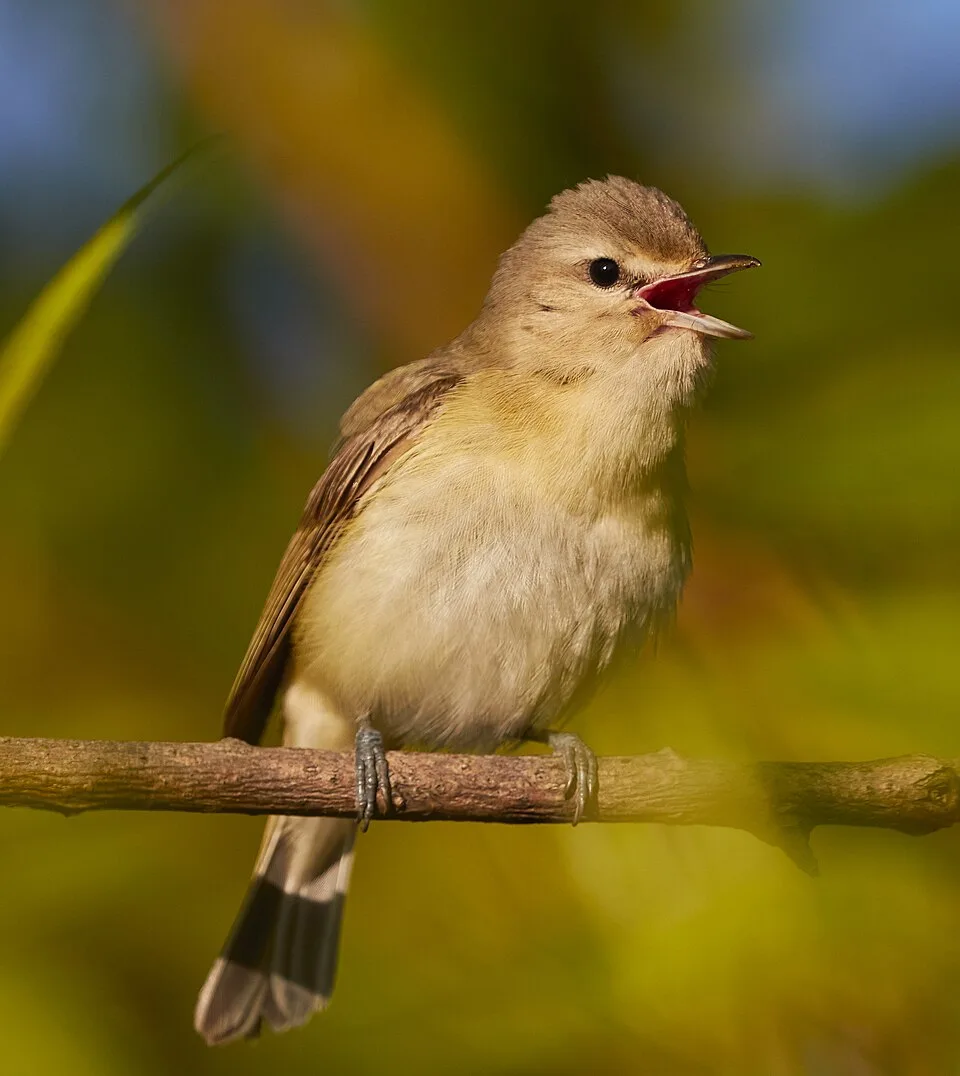
Perhaps the most anticipated change in this update is the official split of the Warbling Vireo (Vireo gilvus) into two distinct species.
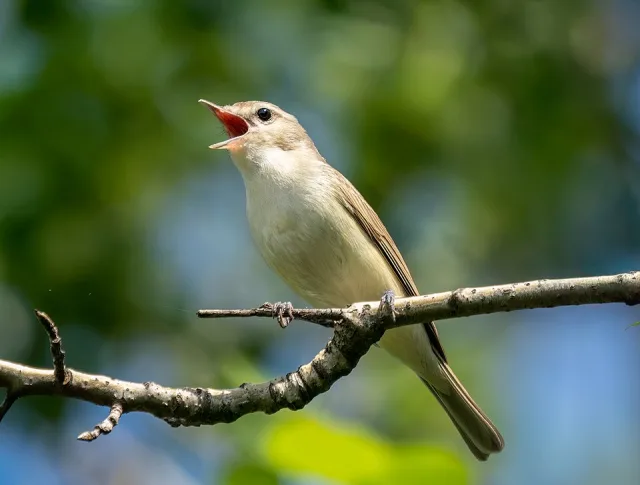
Eastern Warbling Vireo (Vireo gilvus)
Western Warbling Vireo (Vireo swainsoni)
This split has been expected for years, primarily due to the substantial difference in song between the two populations, a factor now strongly supported by genetic evidence. The breeding range splits roughly along the Rocky Mountains. The Eastern Warbling Vireo inhabits lowland watercourses and riparian habitats from the Great Plains eastward, while the Western Warbling Vireo is a bird of mountain forests, often near riparian areas adjacent to pines. While plumage differences are subtle (Western birds tend to average shorter-billed, darker-crowned, and more colorful), the song remains the best—and often only reliable—way to differentiate them in areas where their ranges overlap.
2. The Whimbrel's New Namesake: Hudsonian Whimbrel
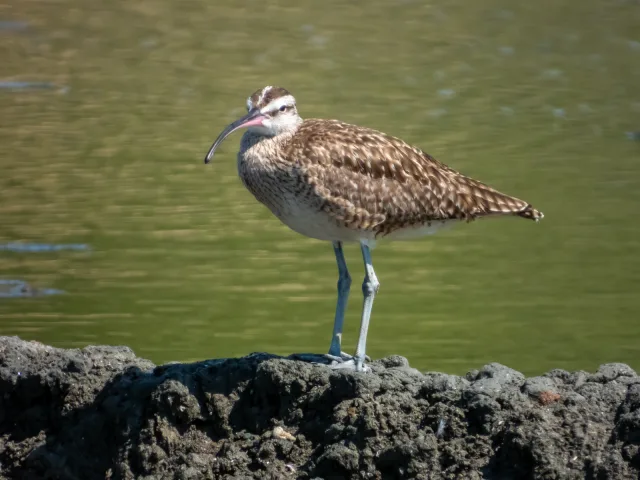
The Whimbrel (Numenius phaeopus), a widely distributed shorebird, has been split into two species, necessitating a common name change for the form regularly seen in the Americas.
Hudsonian Whimbrel (Numenius hudsonicus): This is the form expected in the Americas, breeding in the far northern tundra.
Eurasian Whimbrel (Numenius phaeopus): This is the form found in the Old World.
The most reliable field mark separating the two forms is the rump color: the Hudsonian Whimbrel has a dark rump, while the Eurasian Whimbrel has a white rump. Although the Hudsonian form is the common migrant along US coasts, the Eurasian form is known as a rare vagrant, particularly in the Bering Sea region and the northeastern U.S. Birders who have previously recorded the white-rumped form now have a true rarity to add to their North American lists.
3. Yellow Warbler Refined: Northern Yellow Warbler
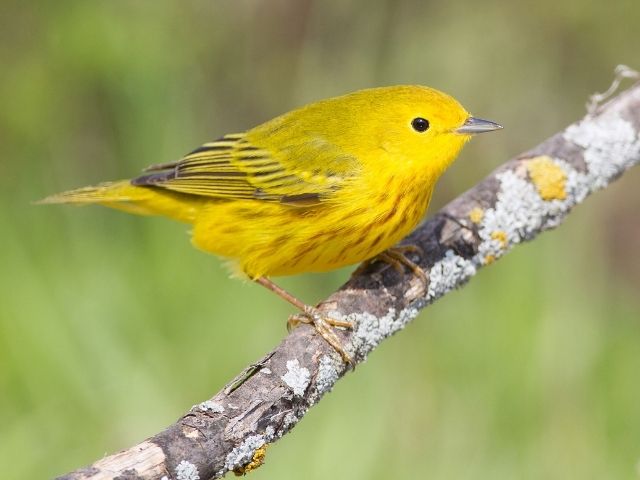
The widespread and familiar Yellow Warbler (Setophaga petechia) has been divided, primarily to separate the migratory populations from the resident Neotropical forms:
Northern Yellow Warbler (Setophaga aestiva): This migratory population breeds across the mainland ABA Area (Canada, the United States, and northern Mexico). Adult males of this species lack the rust-colored crown.
Mangrove Yellow Warbler (Setophaga petechia): This resident species is restricted to coastal mangroves in the Neotropics, including the "Golden" and "Mangrove" groups found in southern Florida and southern Texas, respectively.
The vast majority of US birders will now be reporting the Northern Yellow Warbler. This split highlights how genetic work continues to refine species boundaries, recognizing long-resident, isolated populations as full species.
Notable Global and Regional Splits
While the focus for US birders is often on ABA-area birds, the global nature of the eBird/Clements checklist means that birders with records from the Neotropics or elsewhere will see significant shifts.
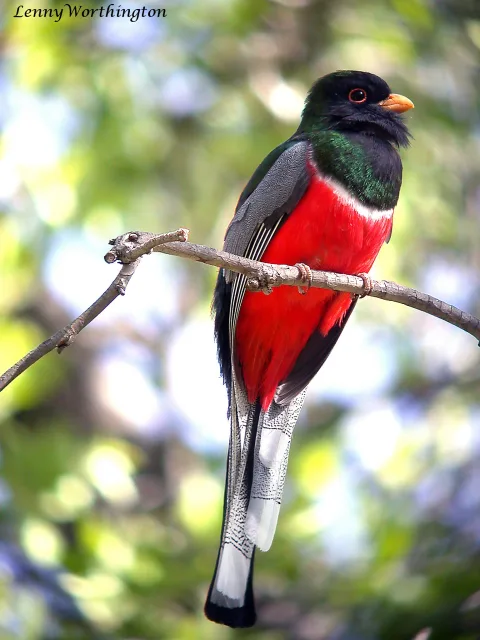
Coppery-tailed Trogon
The beautiful Elegant Trogon (Trogon elegans) of the Southwest’s "sky islands" returns to an older name in the US and Mexico, based on clear distinctions in calls and subtle plumage differences:
Coppery-tailed Trogon (Trogon ambiguus): The form found in the United States (e.g., Cave Creek Canyon, AZ) and Mexico.
Elegant Trogon (Trogon elegans): The form found throughout Central America.
Any US-based records of Elegant Trogon have now been updated to Coppery-tailed Trogon, adding a new species to the North American list.
Herons and Aracaris
Birders who have traveled to the Galápagos Islands or Central America will also benefit from several other splits:
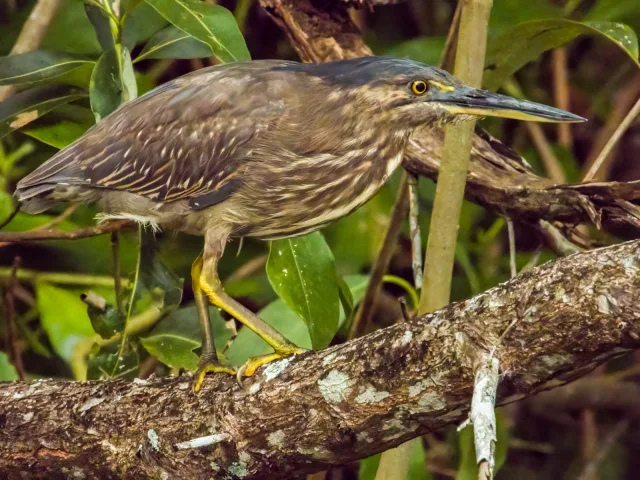
Striated Heron Split: The widely distributed Striated Heron was split into three, with the Lava Heron (Butorides sundevalli) of the Galápagos Islands now recognized as a full species.

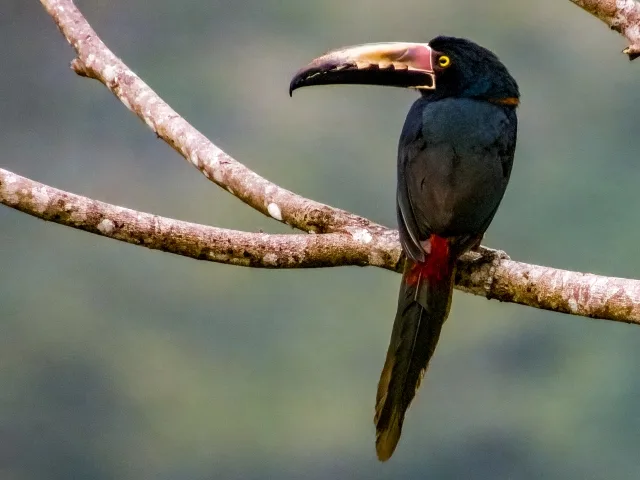
Striated Heron Pale-mandibled Aracari Split: Collared Aracari (Pteroglossus torquatus) has been split, with the western populations now recognized as Pale-mandibled Aracari (Pteroglossus erythropygius).
The Lumps and Other Changes
Not all changes result in new species; some result in the consolidation of two or more species into a single one—a process known as "lumping." The 2025 update saw 18 species removed through lumps, though none were as impactful to the core ABA list as the major splits.
The annual revision also includes numerous genus-level changes and the addition of Identifiable Subspecies Groups (ISSFs). These groups, such as the various Dark-eyed Junco or Yellow-rumped Warbler forms, are crucial for birders to report, as they provide critical data for researchers and ensure automatic checklist updates if those subspecies are ever split into full species in a future taxonomy revision.
Taxonomy as a Tool for Conservation
The continuous evolution of the eBird/Clements taxonomy is more than just an exercise in listing; it is fundamental to avian conservation. Every taxonomic split represents the recognition of a unique, evolutionarily distinct population that may have a restricted range or unique threats. By elevating a subspecies to a full species, conservation attention and funding can be directed specifically toward its survival.
The 2025 update, with its net gain of 22 species and a new global total of 11,167 species, reinforces the reality that bird life is far more complex and diverse than previously understood. For US birders, the challenge and excitement of identifying an Eastern Warbling Vireo versus its Western counterpart, or seeking out the rarely seen Eurasian Whimbrel, connects them directly to the latest scientific discoveries and the global effort to document and protect the world's avifauna. The eBird platform ensures that every checklist submitted immediately reflects this evolving understanding, making the citizen scientist a direct partner in the future of ornithology.
